Tell us about the job
Takes about a minute. No obligation.
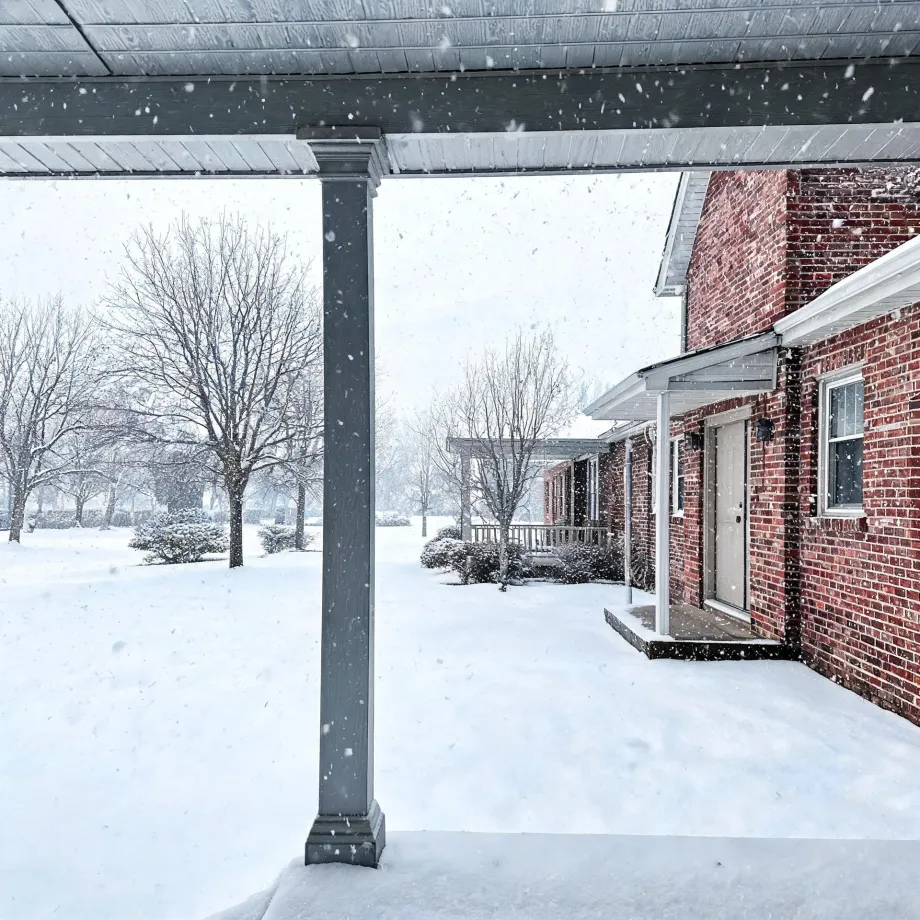
A boiler running through a long heating season puts the most wear on the parts that fire and re-fire every time the thermostat calls: the burner, the ignition assembly, and the heat exchanger. Homes in Newport County, RI run heat about eight months a year, from October through May. By late spring, those components have cycled through cold snaps, deep freezes, and the long shoulder months where the system runs briefly but often. A contractor diagnosing a repair here checks ignition reliability and burner condition first, because that is where accumulated wear shows up before it migrates to anything else.
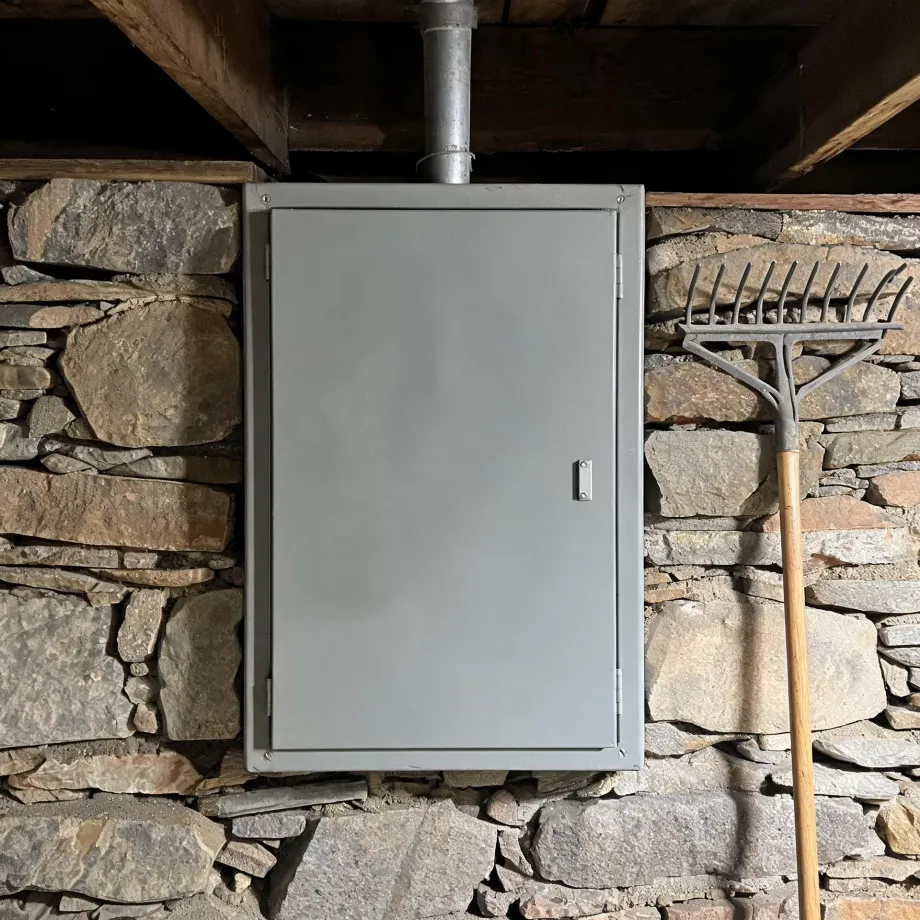
Boilers in older housing stock carry the history of every repair and conversion made before this one. Half the homes in Newport County, Rhode Island were built in 1963 or earlier (2020-2024 ACS 5-year). A house built in that era was heated by a system whose pipes, zones, and radiators have been modified by hands the current owner never met. When a contractor opens the boiler, what decides the repair is whether the parts that system now requires are still in production, and what the distribution loop looks like once the cover is off. A corroded fitting or a zone valve added in a different decade can change the scope of the job entirely.
The Parts of a Boiler a Contractor Checks During Repair
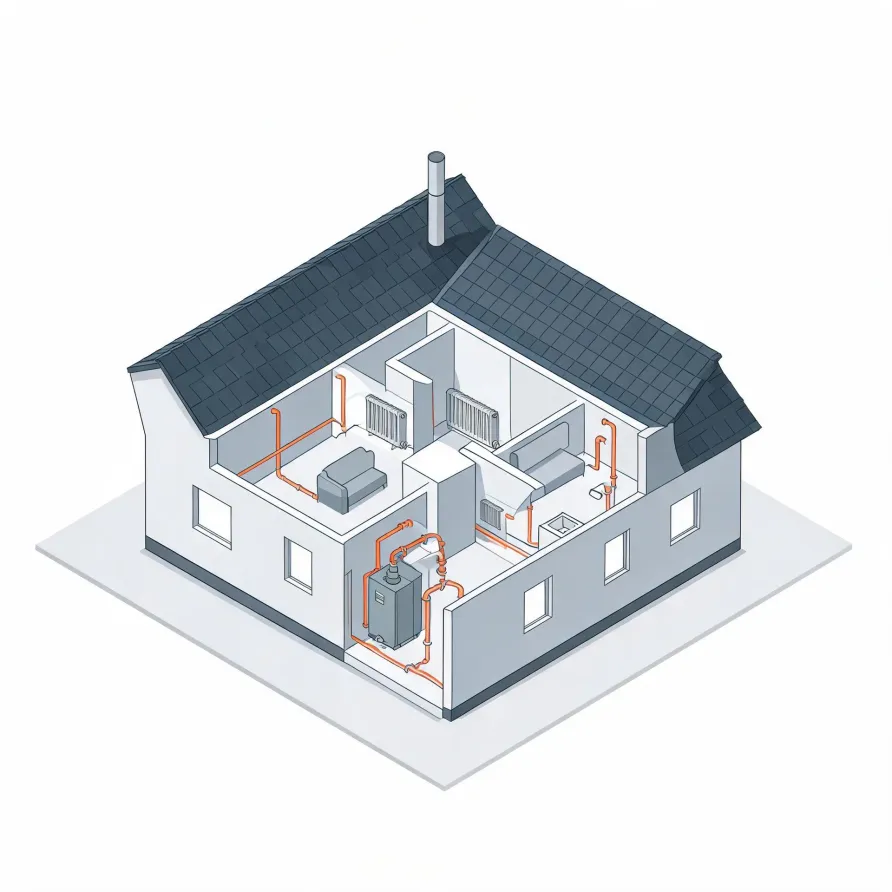
The boiler itself sits in the basement or a mechanical room and is the piece a contractor goes to first. Inside it, the burner and heat exchanger are the components most likely behind a heating failure or strange noise. The pressure relief valve, mounted directly on the unit, is another early stop.
From the boiler, supply pipes carry hot water to radiators or baseboard units in each room, and a circulator pump mounted on the return line pushes water back through the loop. The expansion tank, usually hanging near the boiler, absorbs pressure changes as water heats and cools. Each of these is a point a contractor will examine when tracing the fault.
The drawing shows a typical boiler layout, and a licensed contractor determines which components and connections apply to your specific system.
Find a contractor in Newport CountyNewport County, by the numbers
58 severe weather events were recorded in Newport County, Rhode Island between 2015 and 2024.
NOAA National Centers for Environmental Information, Storm Events Database, bulk CSV export, events 2015-01-01 through 2024-12-31.Half the homes in Newport County, Rhode Island were built in 1963 or earlier (2020-2024 ACS 5-year).
U.S. Census Bureau, 2020-2024 American Community Survey 5-Year EstimatesNewport County, Rhode Island holds 43,663 housing units (2020-2024 ACS 5-year).
U.S. Census Bureau, 2020-2024 American Community Survey 5-Year EstimatesOwners occupy 67.9% of the occupied homes in Newport County, Rhode Island (2020-2024 ACS 5-year).
U.S. Census Bureau, 2020-2024 American Community Survey 5-Year EstimatesCodes & Licensing That Govern Boiler and HVAC Repair in Newport County, Rhode Island2 sourced rules and standards
Licensing Rules for HVAC Repair in Newport County, Rhode Island
A Rhode Island master licensee needs no separate sheet metal licence while the air handling equipment is ten (10) tons or less, or the heating equipment does not exceed 250,000 BTUs; above either figure the sheet metal work must be subcontracted to a licensed sheet metal contractor.
Rhode Island requires a licence from the Department of Labor and Training to work in the mechanical trades: nobody may hold themselves out as a master, or advertise that they will install refrigeration and air conditioning or air distribution systems, without one.
Severe Weather Events in Newport County
Extreme weather puts direct strain on boiler systems, from pressure fluctuations during cold snaps to the wear that comes from running hard through back-to-back storms. Newport County's weather record is part of what shapes how much a local boiler has to handle, and that workload is what drives repair frequency.
58 severe weather events, 2015–2024. Source: NOAA National Centers for Environmental Information, Storm Events Database.