Tell us about the job
Takes about a minute. No obligation.
Homes in Bristol County, RI run heat about eight months a year, from October through May. A boiler working through that kind of schedule puts its heaviest cycling load on the burner, the heat exchanger, and the ignition system, and those are the components a contractor checks first when diagnosing a breakdown. Seals and circulator pumps that held through October often fail by February, well into the run. A repair quote that skips those parts and prices only the presenting fault is likely to miss what drove it.
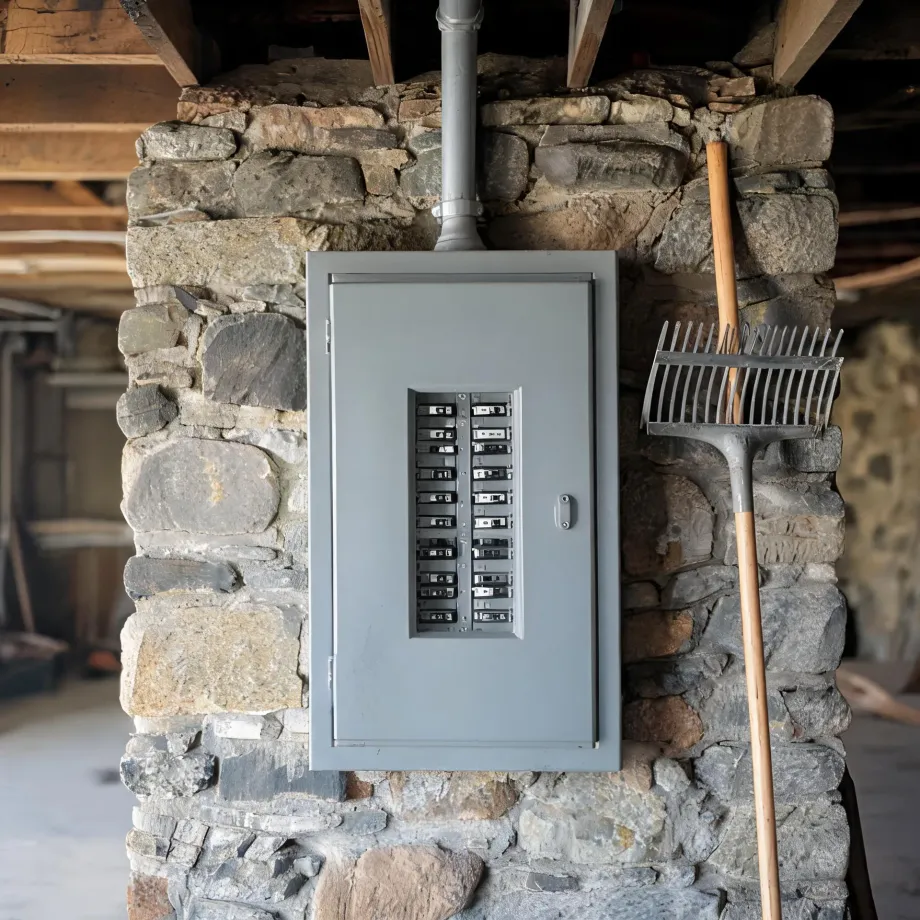
Boilers in much of Bristol County's housing stock were sized and installed for an era of heating that has since moved on. Half the homes in Bristol County, Rhode Island were built in 1957 or earlier (2020-2024 ACS 5-year). A contractor opening a unit in a house that old is working with equipment that may predate the current parts supply by a generation, and the first real question is not what failed but whether what failed can still be sourced. Cast-iron sections, older aquastat controls, and certain heat exchangers are not always available through standard distributors, which changes both what a repair costs and how long it takes.
The Parts of a Boiler a Contractor Checks First
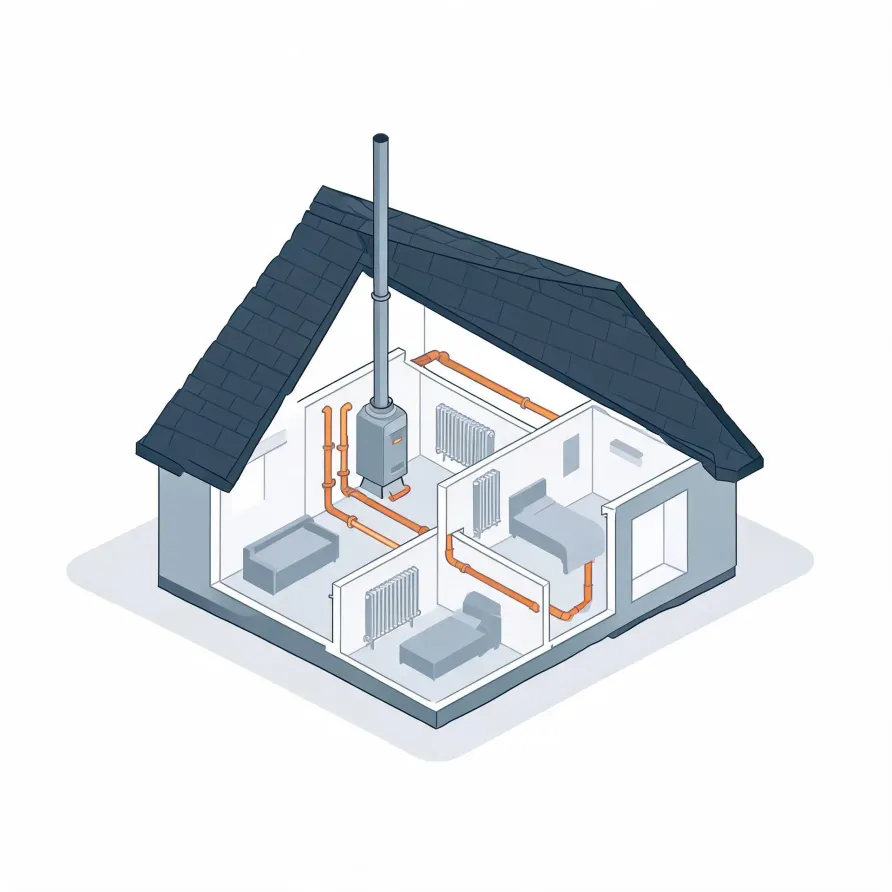
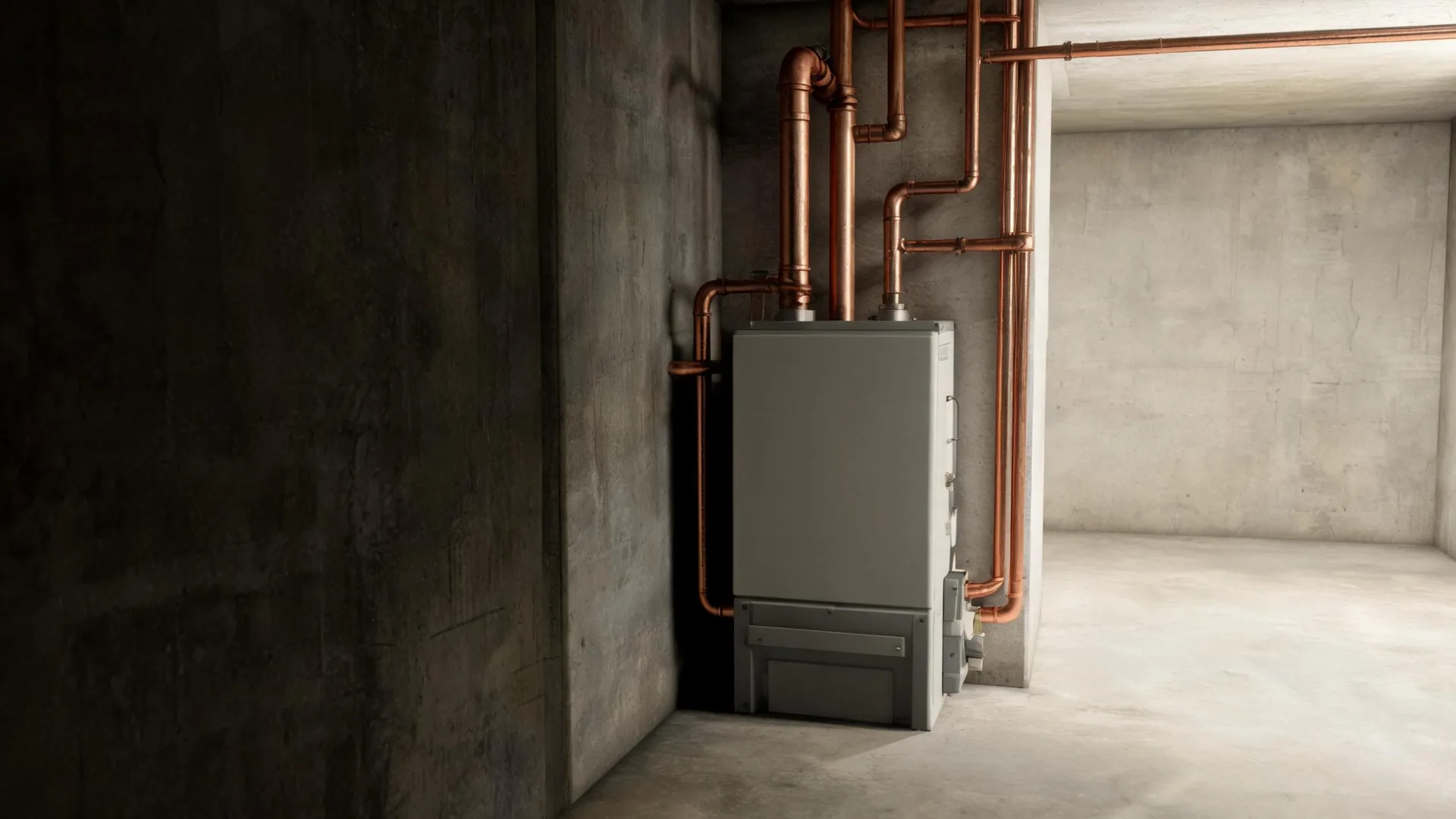
The boiler itself sits in the basement or a utility room and is the heart of the system. It heats water and pushes it out through the pipes. When a boiler short-cycles, leaks, or fails to heat at all, the heat exchanger, burner, or pressure vessel is usually where a contractor looks first.
The circulator pump moves heated water through the pipes to the radiators or baseboard units in each room. The expansion tank, typically mounted near the boiler, absorbs pressure changes as water heats and cools. The thermostat, controls, and safety valves round out what a contractor works through when tracing a fault.
The drawing shows a general layout of the system, and a licensed contractor determines what applies to the specific configuration in your house.
Find a contractor in Bristol CountyBristol County, Rhode Island, by the numbers
55 severe weather events were recorded in Bristol County, Rhode Island between 2015 and 2024.
NOAA National Centers for Environmental Information, Storm Events Database, bulk CSV export, events 2015-01-01 through 2024-12-31.Half the homes in Bristol County, Rhode Island were built in 1957 or earlier (2020-2024 ACS 5-year).
U.S. Census Bureau, 2020-2024 American Community Survey 5-Year EstimatesBristol County, Rhode Island holds 21,615 housing units (2020-2024 ACS 5-year).
U.S. Census Bureau, 2020-2024 American Community Survey 5-Year EstimatesOwners occupy 71.8% of the occupied homes in Bristol County, Rhode Island (2020-2024 ACS 5-year).
U.S. Census Bureau, 2020-2024 American Community Survey 5-Year EstimatesCodes & Standards Governing Boiler and HVAC Repair in Bristol County, Rhode Island2 sourced rules and standards
Licensing Rules for HVAC Repair in Bristol County, Rhode Island
A Rhode Island master licensee needs no separate sheet metal licence while the air handling equipment is ten (10) tons or less, or the heating equipment does not exceed 250,000 BTUs; above either figure the sheet metal work must be subcontracted to a licensed sheet metal contractor.
Rhode Island requires a licence from the Department of Labor and Training to work in the mechanical trades: nobody may hold themselves out as a master, or advertise that they will install refrigeration and air conditioning or air distribution systems, without one.
Weather Stress on Boilers in Bristol County
Outdoor conditions put a direct load on boiler systems. The harder a heating system works to hold against cold snaps and pressure swings, the more wear accumulates on parts that a contractor will eventually be called to repair.
55 severe weather events, 2015–2024. Source: NOAA National Centers for Environmental Information, Storm Events Database.