Tell us about the job
Takes about a minute. No obligation.
When a contractor opens a boiler in Kent County for repair, the ignition system and burner assembly are the first things they price, not because failures are random but because those components cycle every time the thermostat calls for heat. Homes in Kent County, RI run heat about eight months a year, from October through May. Burner wear and igniter fatigue build across every one of those cycles, so by the time a homeowner notices a fault, the heat exchanger and circulator have their own mileage behind them too. A contractor quoting a single-part fix on an older boiler here has to decide whether the surrounding components will hold, because odds favor they won't stay quiet long.
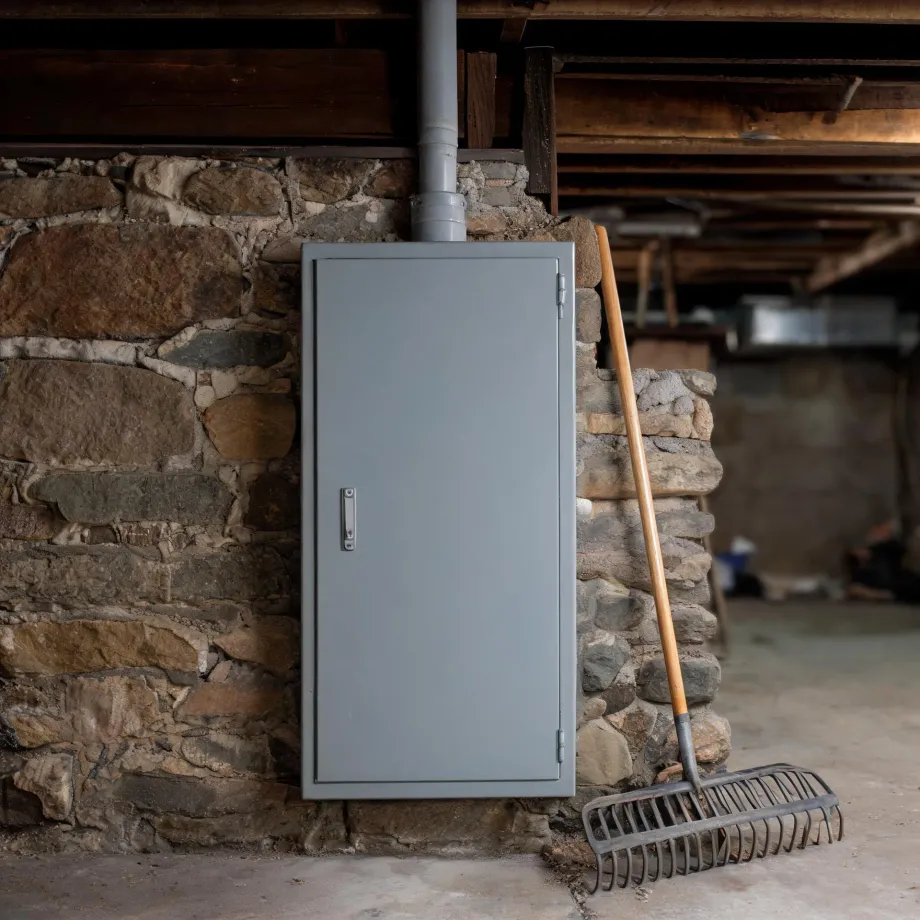
Boilers in this county get repaired inside houses that were already old before the current equipment was ever manufactured. Half the homes in Kent County, Rhode Island were built in 1967 or earlier (2020-2024 ACS 5-year). That gap between the building and what runs in it shows up the moment a contractor opens a system: the zone valves, the piping configuration, and the expansion tank are sized and arranged around decisions made for something else. If parts are no longer made for the unit in question, a contractor prices the replacement against what the existing distribution loop will accept, not against a catalog default.
The Parts of a Boiler a Contractor Checks During Repair
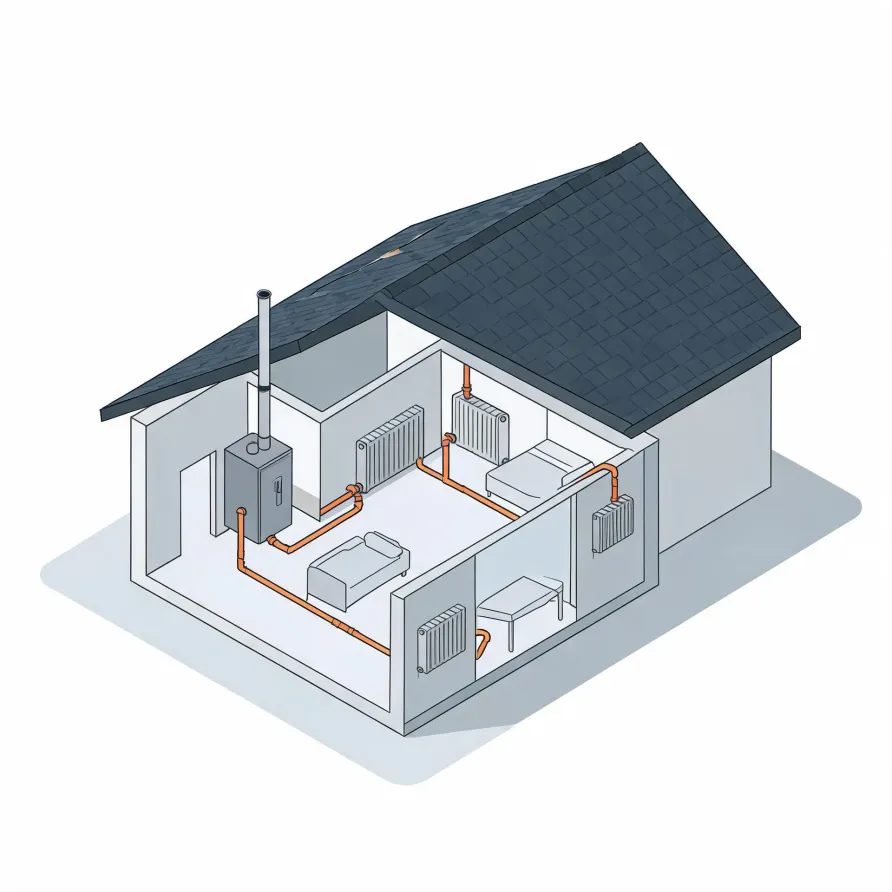
The boiler itself sits in the basement or a mechanical room and is the piece a contractor reaches first. Inside it, the heat exchanger and burner assembly are the components most likely to be at fault when a system stops heating or starts behaving erratically. A failed pressure relief valve, a cracked heat exchanger, or a burner that won't ignite all point back to this unit.
From the boiler, a network of pipes carries hot water or steam to radiators or baseboard units throughout the house, and the circulator pump is what keeps that water moving. The expansion tank, typically mounted near the boiler, absorbs pressure changes in the system, and a failing pump or a waterlogged tank are common reasons a contractor traces the complaint back to this area rather than the boiler itself.
The drawing beside this text shows the general layout of a boiler system, and a licensed contractor determines exactly which components apply to your home.
Find a contractor in Kent CountyKent County, Rhode Island, by the numbers
146 severe weather events were recorded in Kent County, Rhode Island between 2015 and 2024.
NOAA National Centers for Environmental Information, Storm Events Database, bulk CSV export, events 2015-01-01 through 2024-12-31.Half the homes in Kent County, Rhode Island were built in 1967 or earlier (2020-2024 ACS 5-year).
U.S. Census Bureau, 2020-2024 American Community Survey 5-Year EstimatesKent County, Rhode Island holds 76,529 housing units (2020-2024 ACS 5-year).
U.S. Census Bureau, 2020-2024 American Community Survey 5-Year EstimatesOwners occupy 73.1% of the occupied homes in Kent County, Rhode Island (2020-2024 ACS 5-year).
U.S. Census Bureau, 2020-2024 American Community Survey 5-Year EstimatesCodes & Standards Behind Boiler Repair in Kent County, Rhode Island2 sourced rules and standards
Licensing Rules for HVAC Repair in Kent County, Rhode Island
A Rhode Island master licensee needs no separate sheet metal licence while the air handling equipment is ten (10) tons or less, or the heating equipment does not exceed 250,000 BTUs; above either figure the sheet metal work must be subcontracted to a licensed sheet metal contractor.
Rhode Island requires a licence from the Department of Labor and Training to work in the mechanical trades: nobody may hold themselves out as a master, or advertise that they will install refrigeration and air conditioning or air distribution systems, without one.
Severe Weather Events in Kent County
Extreme weather puts real stress on boiler systems, and the record of what has hit this area shapes how hard local equipment works over time. Repair needs in Kent County track that history.
146 severe weather events, 2015–2024. Source: NOAA National Centers for Environmental Information, Storm Events Database.