Tell us about the job
Takes about a minute. No obligation.
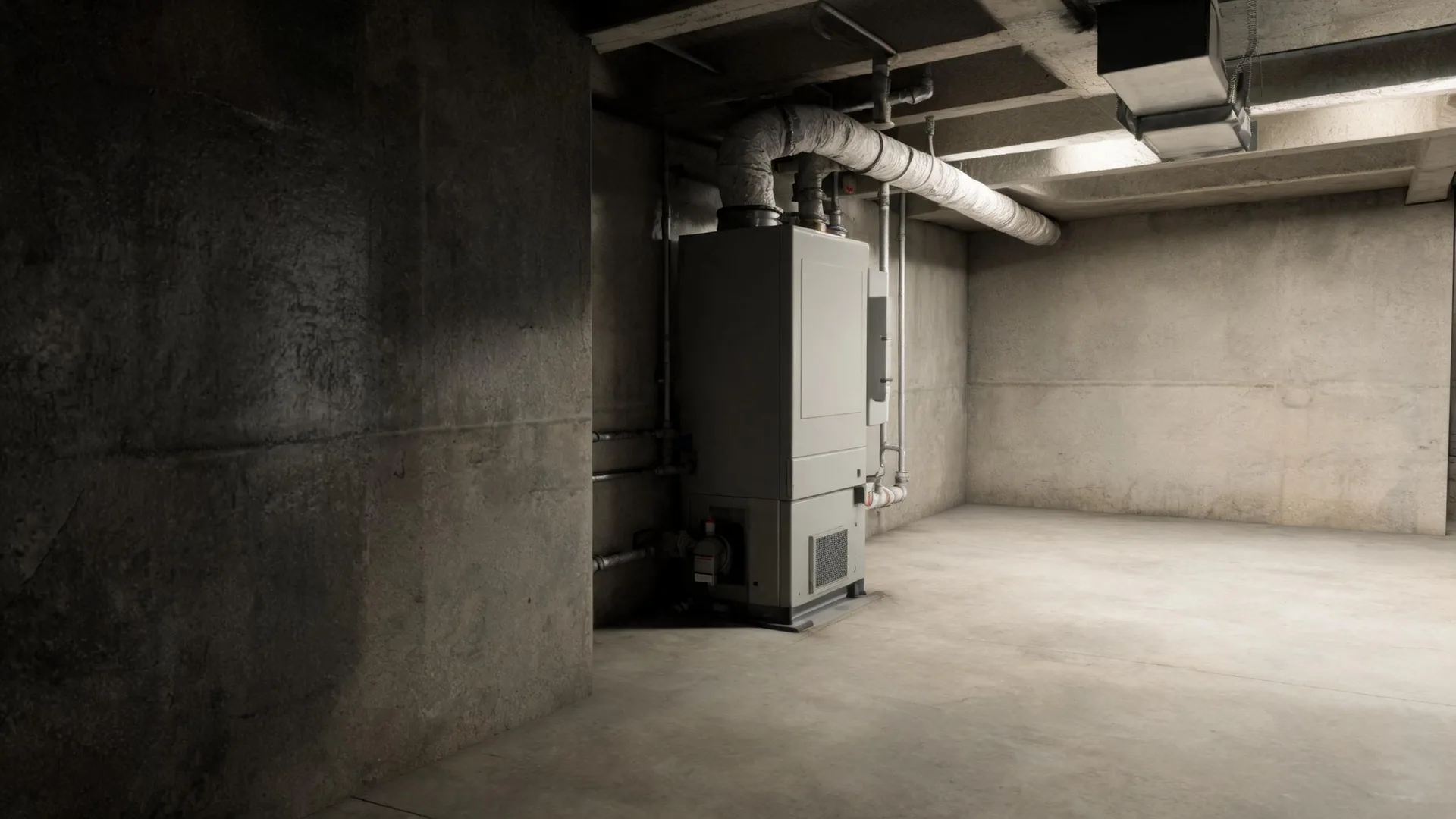
Sizing a boiler for a Washington County home requires a contractor to account for what the burner and heat exchanger are actually asked to carry. Homes in Washington County, RI run heat about eight months a year, from October through May. A burner cycling through that span accumulates wear on the ignition system and heat exchanger that a short idle summer does little to offset. A contractor quoting an installation here works out the load carefully, because a system that runs undersized will show stress on those components years ahead of schedule. Getting the capacity right at installation is what keeps that timeline from being shortened.
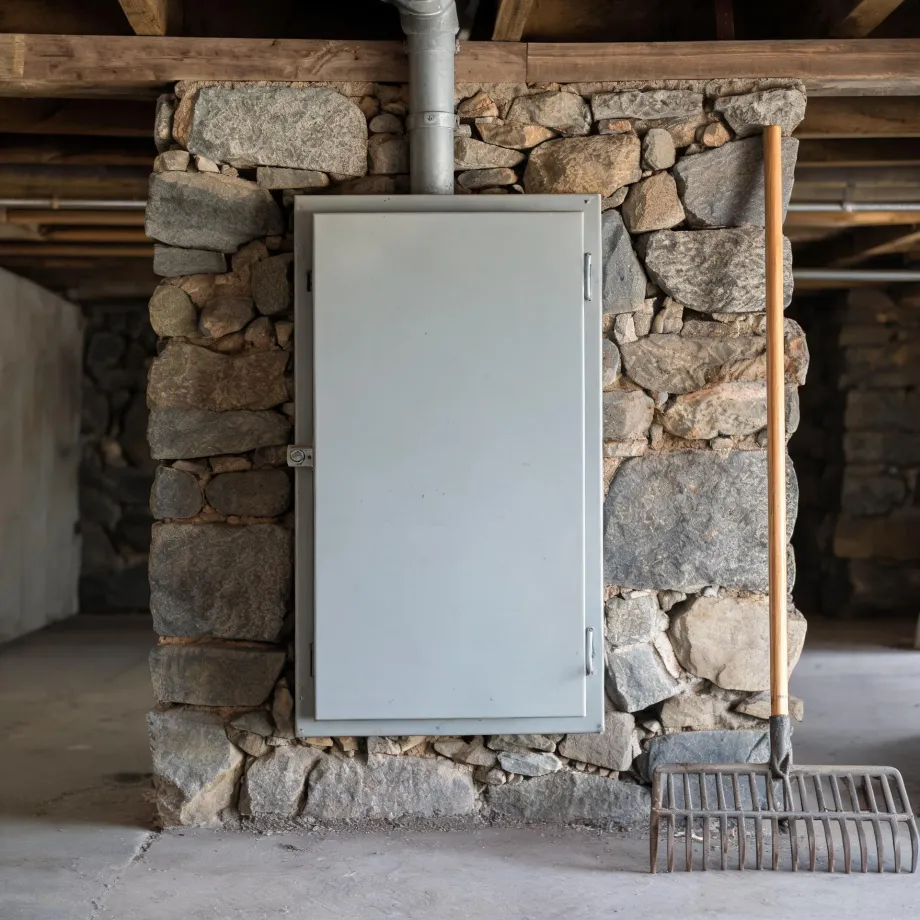
Existing ductwork is what a boiler installation turns on in this county. Half the homes in Washington County, Rhode Island were built in 1977 or earlier (2020-2024 ACS 5-year). A house built that long ago was ducted for whatever system the original owner put in, and that system is almost certainly gone. What a contractor finds behind the walls determines whether the new boiler connects to runs that can carry it, or whether the ductwork has to be reworked before the unit goes in. The electrical service in those houses is the same question: sized for a different load, and not always adequate for what a modern boiler draws.
What a Boiler Installation Puts in Your Home
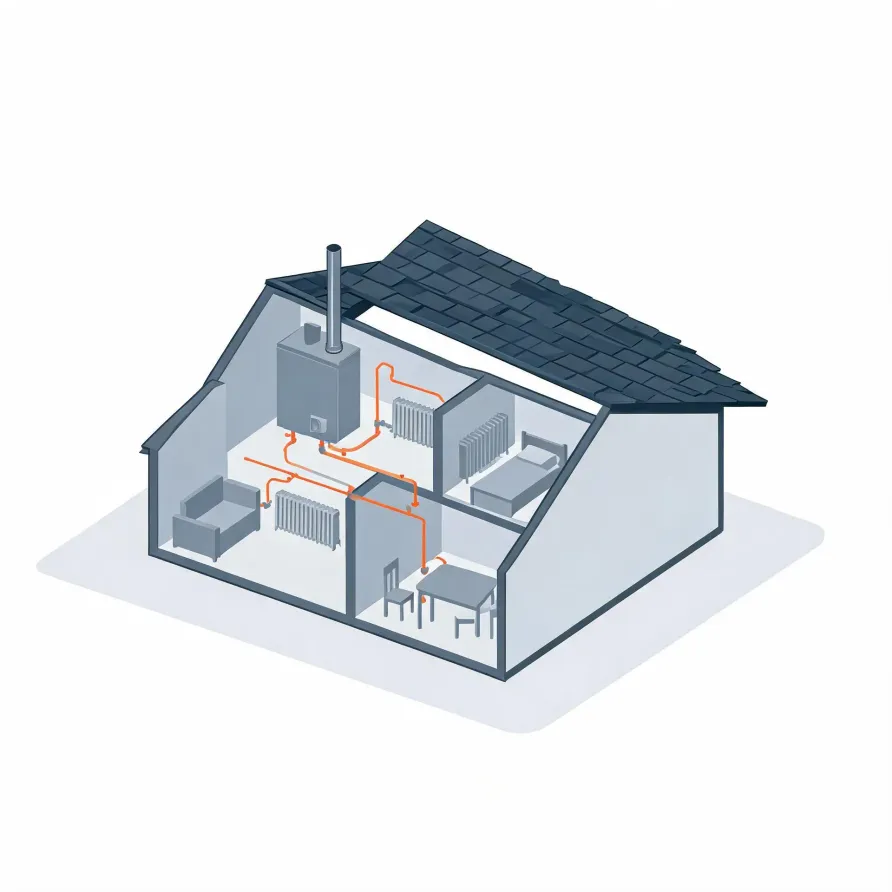
The boiler itself sits in a mechanical room, basement, or utility closet and is the unit that heats water for the whole system. Wall-mounted or floor-standing, it is the largest piece a contractor brings in. Attached to it are the supply and return pipes that carry hot water out to the house and back again.
Radiators or baseboard units sit in each room and release heat from the water passing through them. The expansion tank, pressure relief valve, and circulator pump all live close to the boiler and keep pressure stable and water moving through the loop at the right rate.
The drawing beside this text shows a typical layout, and a licensed contractor will determine exactly which components apply to your home.
Find a contractor in Washington CountyWashington County by the Numbers
166 severe weather events were recorded in Washington County, Rhode Island between 2015 and 2024.
NOAA National Centers for Environmental Information, Storm Events Database, bulk CSV export, events 2015-01-01 through 2024-12-31.Half the homes in Washington County, Rhode Island were built in 1977 or earlier (2020-2024 ACS 5-year).
U.S. Census Bureau, 2020-2024 American Community Survey 5-Year EstimatesWashington County, Rhode Island holds 66,385 housing units (2020-2024 ACS 5-year).
U.S. Census Bureau, 2020-2024 American Community Survey 5-Year EstimatesOwners occupy 77.5% of the occupied homes in Washington County, Rhode Island (2020-2024 ACS 5-year).
U.S. Census Bureau, 2020-2024 American Community Survey 5-Year EstimatesBoiler Installation Rules & Standards for Washington County, Rhode Island2 sourced rules and standards
Licensing Rules for HVAC Work in Washington County, Rhode Island
A Rhode Island master licensee needs no separate sheet metal licence while the air handling equipment is ten (10) tons or less, or the heating equipment does not exceed 250,000 BTUs; above either figure the sheet metal work must be subcontracted to a licensed sheet metal contractor.
Rhode Island requires a licence from the Department of Labor and Training to work in the mechanical trades: nobody may hold themselves out as a master, or advertise that they will install refrigeration and air conditioning or air distribution systems, without one.
Severe Weather Events in Washington County
Weather in Washington County puts real demands on heating equipment. How hard a boiler has to work, and how long it holds up, depends in part on what the local climate throws at it year after year.
166 severe weather events, 2015–2024. Source: NOAA National Centers for Environmental Information, Storm Events Database.