Why your boiler won't turn on in a Rhode Island winter

Step 1 of 3: Equipment

A boiler that won't fire in a Rhode Island cold snap usually comes down to one of a few things. The igniter can fail to spark. The pilot can drop out or the flame sensor can stop reading it. Low water pressure will shut the whole system down on purpose, as a safety measure, and so will a pressure switch or limit switch that's gone bad. Frozen condensate lines are common once temperatures sit below freezing for a stretch, since the line backs up and trips the boiler's safety lockout. On older systems, a worn thermocouple does the same thing. None of this means the boiler is finished. Most of these are single-part failures, and the boiler runs fine again once that one part is replaced or reset. What it means for you right now is that the house is going to keep losing heat until someone gets eyes on the actual cause, not just the thermostat.

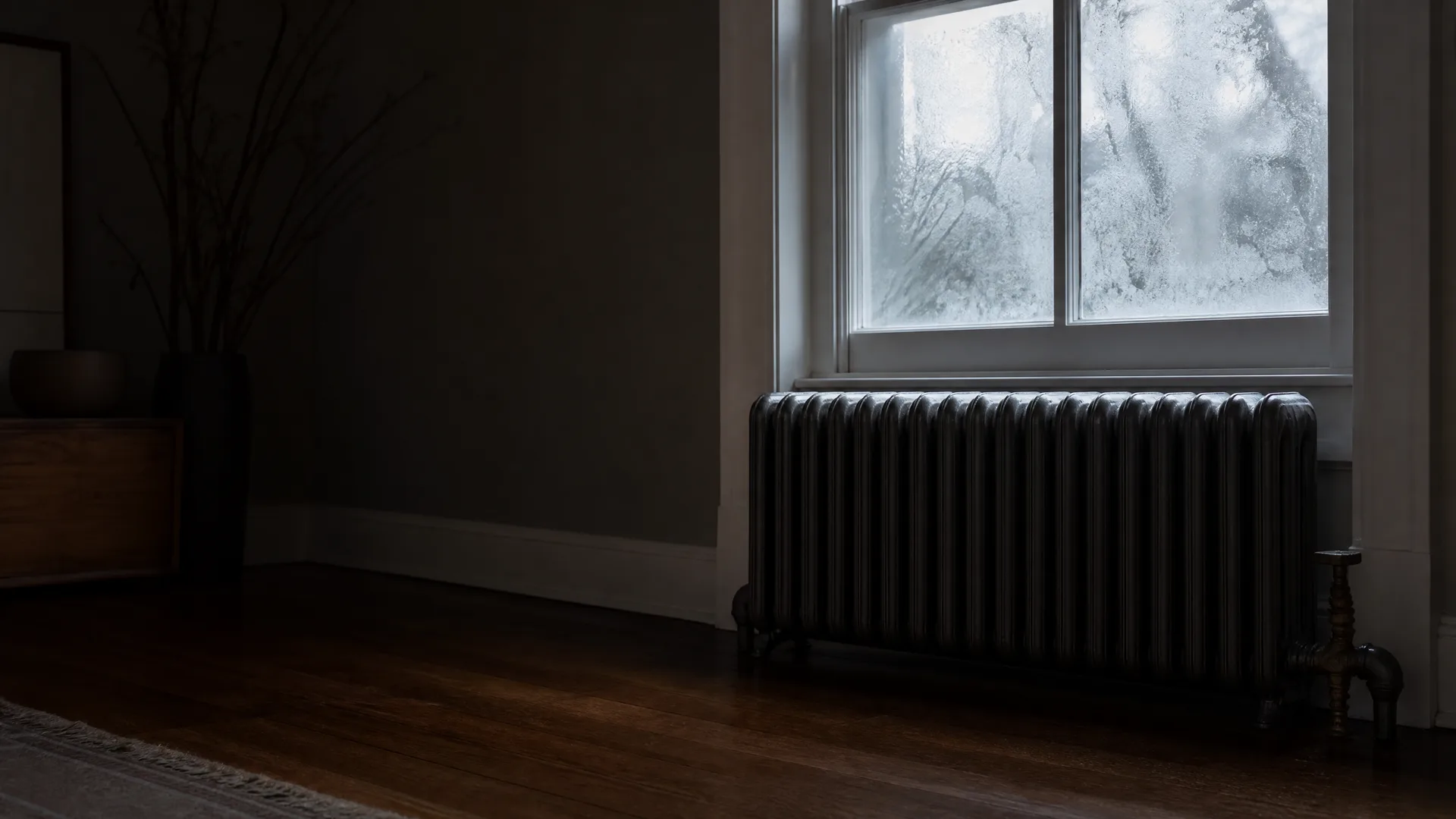
A cast-iron column radiator stands beneath a frosted window in a dim room with dark walls, a wood floor, and a vase of bare branches on a low cabinet at left.

You wake up before the sun and the house feels wrong before you're even out of bed. In the living room the radiator under the window sits cold and quiet, and the glass above it has ice on the inside. Your breath shows a little when you walk in. You put a hand on the cast iron anyway, out of habit, and pull it back fast because there's nothing there to warm it. Outside it's still dark and somewhere in the teens. You check the thermostat, bump it up five degrees, and listen for the boiler to answer. Nothing. The house holds its cold the way it held its heat all December, and now you're standing in your socks figuring out who's cold and who can wait.
Two Reasons Your Boiler Won't Fire

Pilot or Igniter Problem

  • The boiler tries to fire and nothing lights, or it lights and drops out within a few seconds.
  • You'll often hear the gas valve click or smell a brief whiff of gas and then silence.
  • A flame sensor coated with residue reads no flame even when one is burning and shuts the gas off.
  • This usually comes back the same way each cold morning until a tech cleans or replaces the part.
  • Reset switches on the boiler won't hold for more than a few minutes before it drops out again.
  • A contractor who services boilers around Rhode Island every winter can usually spot this from how the unit is behaving before taking anything apart.

Low Water Pressure or Lockout

  • The gauge on the front of the boiler reads below 12 psi, sometimes close to zero.
  • The system is designed to shut down rather than run dry, so this isn't a malfunction by itself.
  • A slow leak somewhere in the pipes can drain pressure over weeks without a single wet spot showing up.
  • Repressurizing through the feed valve can get heat back for the night, but it won't hold if there's a leak feeding it.
  • An error code or a lit lockout light on the panel usually points straight to this before you even check the gauge.
  • A local tech who knows this model line can trace where the system is losing water instead of just refilling it and leaving.
A woman with long wavy brown hair in a grey ribbed sweater sits on a couch indoors, looking toward a window, with a potted palm-like plant and fireplace behind her.
A woman with long brown hair wearing a green V-neck top and beige cardigan sits on a light sofa, looking off to the side, with a dining table, lamp and framed picture in the background.
A woman with long dark hair in a cream knit sweater sits on a beige sofa indoors, looking toward a bright window with a houseplant and framed picture in the background.
A woman with long dark hair in a green knit sweater sits on a couch indoors, smiling and looking toward a window with a blurred room behind her.
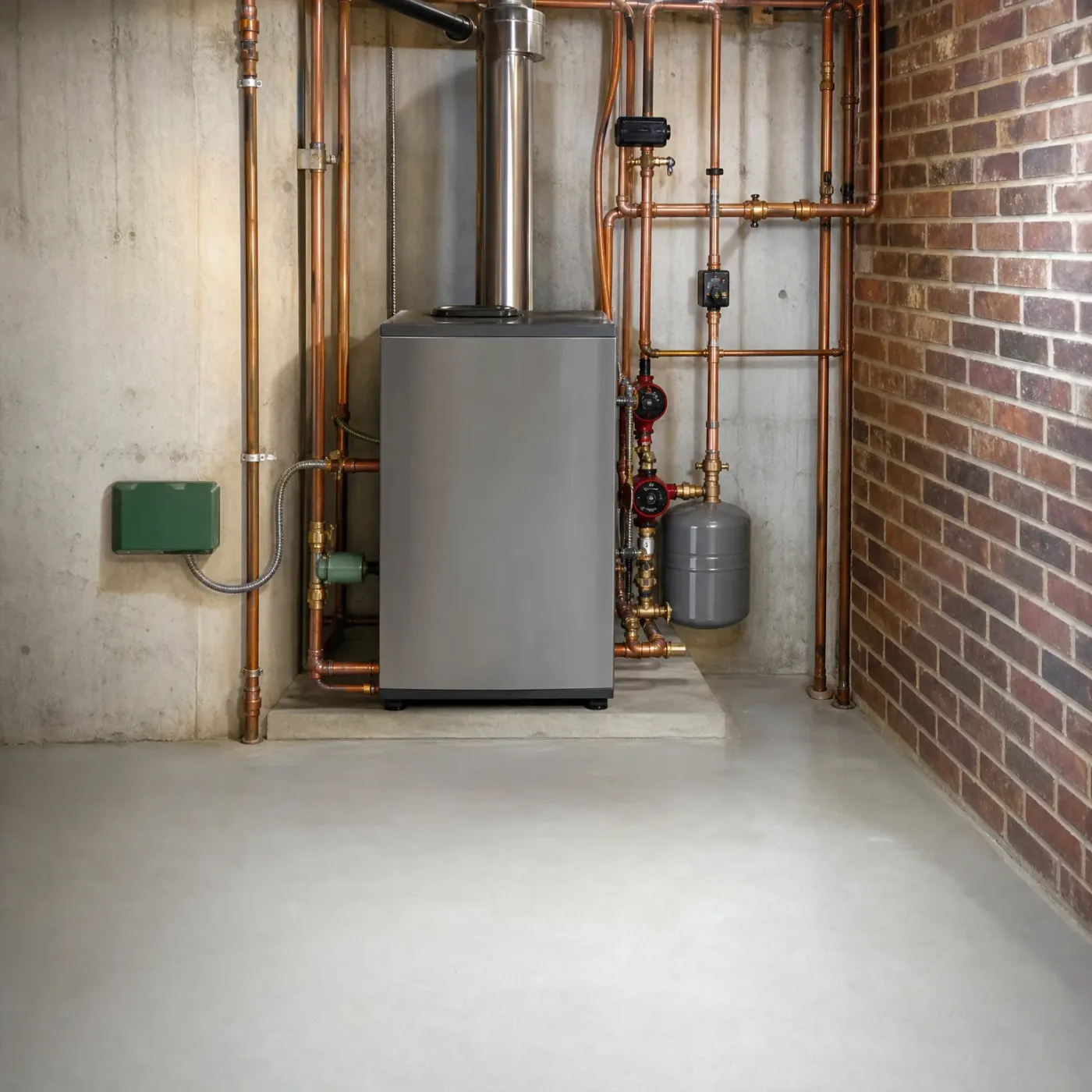
A gray boiler on a concrete pad in a basement, connected to copper piping, valves, pumps and a gray expansion tank, with a concrete wall on the left and a brick wall on the right.
A boiler like this fires, the pumps push hot water through the copper lines, and every radiator in the house warms up on its own schedule.
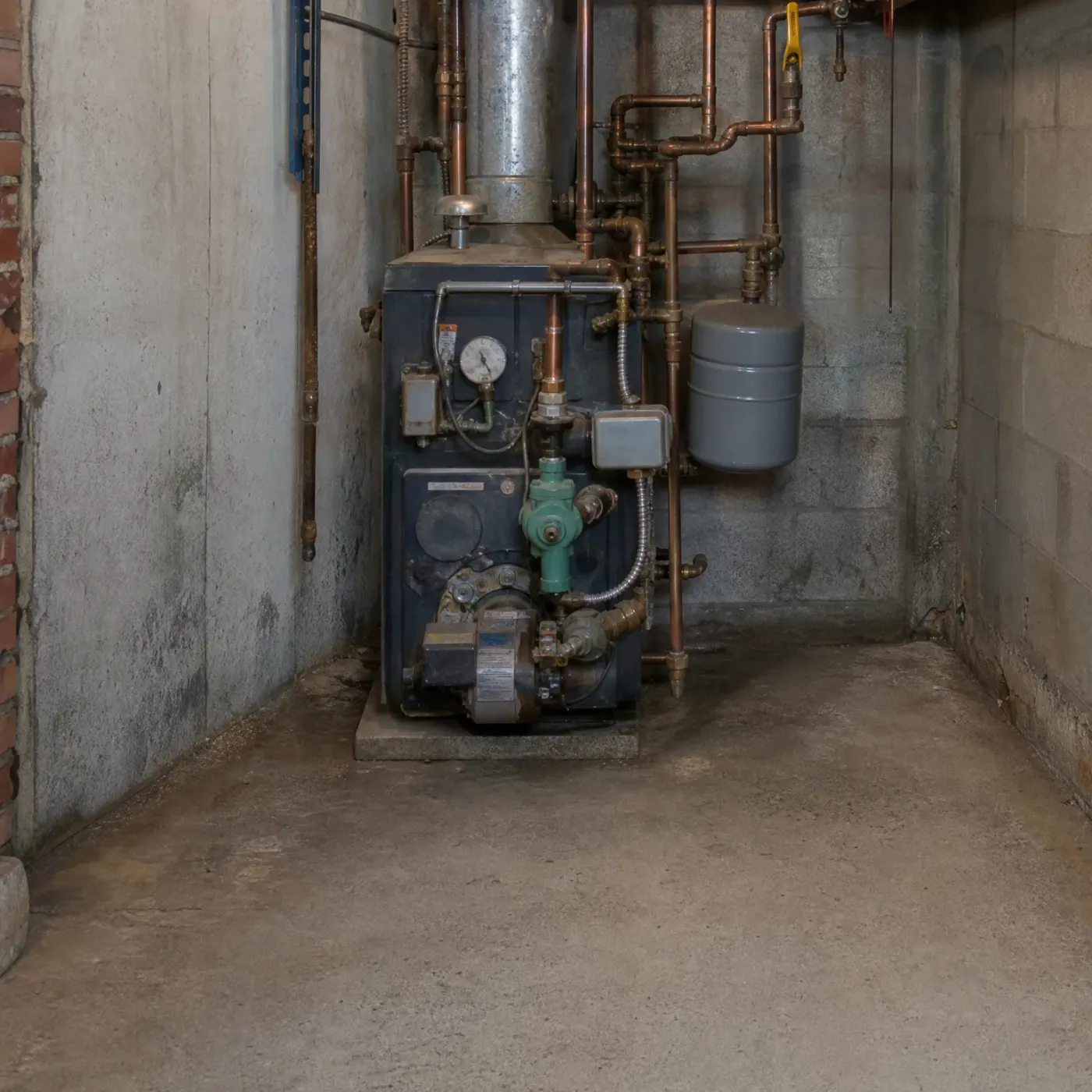
A dark cast-iron boiler with copper piping, pressure gauge, and a gray expansion tank sits on a concrete pad in a basement corner with concrete block and brick walls.
A boiler left to run for years with no one checking it can quit on the coldest morning, with nothing to carry the heat past the basement.

Most no-heat calls trace back to one of a handful of parts, and they fail in a specific order. If pressure on the gauge has dropped under about 12 psi, the boiler won't even try, because the low water cutoff is doing its job on purpose. If it tries and gives up fast, the problem usually isn't gas, it's the flame sensor, a short rod near the burner that has to see the flame quickly or the gas valve shuts back down. A weak igniter causes the same kind of failure. It still clicks, but if the glow is orange instead of white, there often isn't enough heat behind it to catch the gas every time. Newer high efficiency boilers add another point of failure: the condensate line, which can freeze solid in single digit cold and trip a safety switch before the burner ever gets a chance. And sometimes the burner is fine and never gets the signal to start, because the circulator pump is humming without actually turning.

What Actually Stops the Burner

  • Water pressure below about 12 psi usually trips a low water cutoff that stops the boiler from firing at all.
  • A boiler that lights and then shuts off in seconds is almost always losing flame signal, not losing gas.
  • The flame sensor is a short metal rod near the burner that has to read the flame within a few seconds or the gas valve closes.
  • An igniter that glows weak or orange instead of white often has just enough heat to click but not enough to light gas reliably.
  • Condensate lines on newer high efficiency boilers can freeze shut in single digit cold and trip a safety switch before any flame starts.
  • A circulator pump that hums but doesn't turn can keep the burner from ever getting the signal to start.
A gray-haired woman in a cream knit sweater stands in a dimly lit kitchen at night, looking to her right, with a round loaf of bread in the foreground and a dark window and potted plant behind her.
A woman and a sleeping child wrapped together in a cream knitted blanket on a couch, with a potted plant, framed photo and lit lamp in the background.

A pro who works on boilers

A boiler that won't light on a Rhode Island morning in January doesn't wait for a convenient time to be looked at, and most of these homes don't have a backup when the gas boiler is down. Electric heat here isn't cheap to fall back on, not with what power costs in this state. The longer a cold house sits, the more there is to worry about: frozen pipes, a burst fitting, a bigger repair than the one you started with. What helps is getting someone who already knows this equipment, not a stranger learning it on your boiler. A local contractor who services boilers all winter has seen this igniter, this pressure problem, this flame sensor before, on systems just like yours. You give your details once, and that one contractor reaches out, already knowing what they're walking into before they knock.

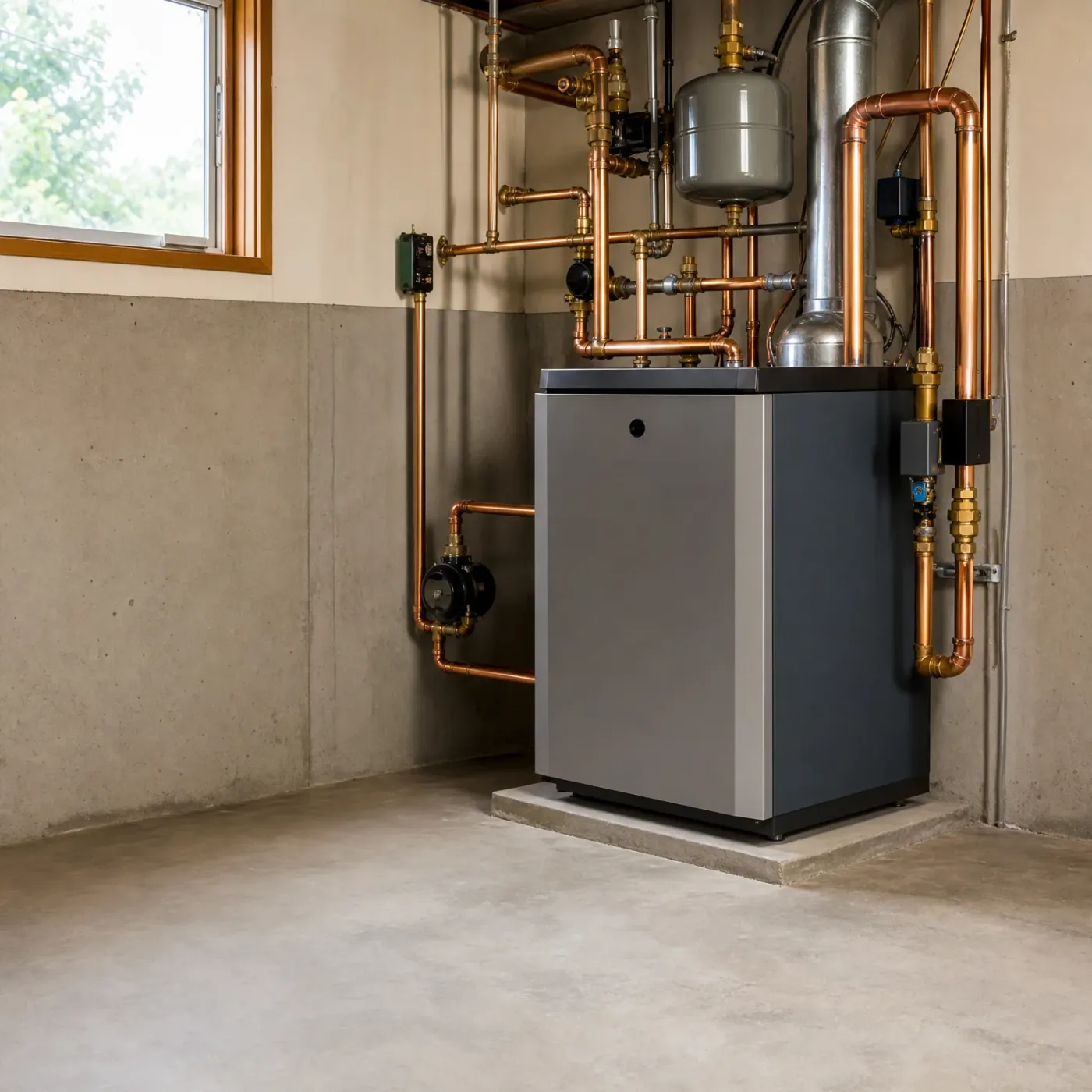
A gray floor-standing boiler on a concrete pad in a basement corner, connected to copper piping, brass valves, a circulator pump, an expansion tank, and a metal flue, with a window at upper left.

Running the way it should

A boiler like this holds steady pressure, the circulator moves water out to the radiators, and the flue draws the exhaust out through the vent. Nothing hisses, drips, or kicks on and off on its own. The pad underneath stays dry.

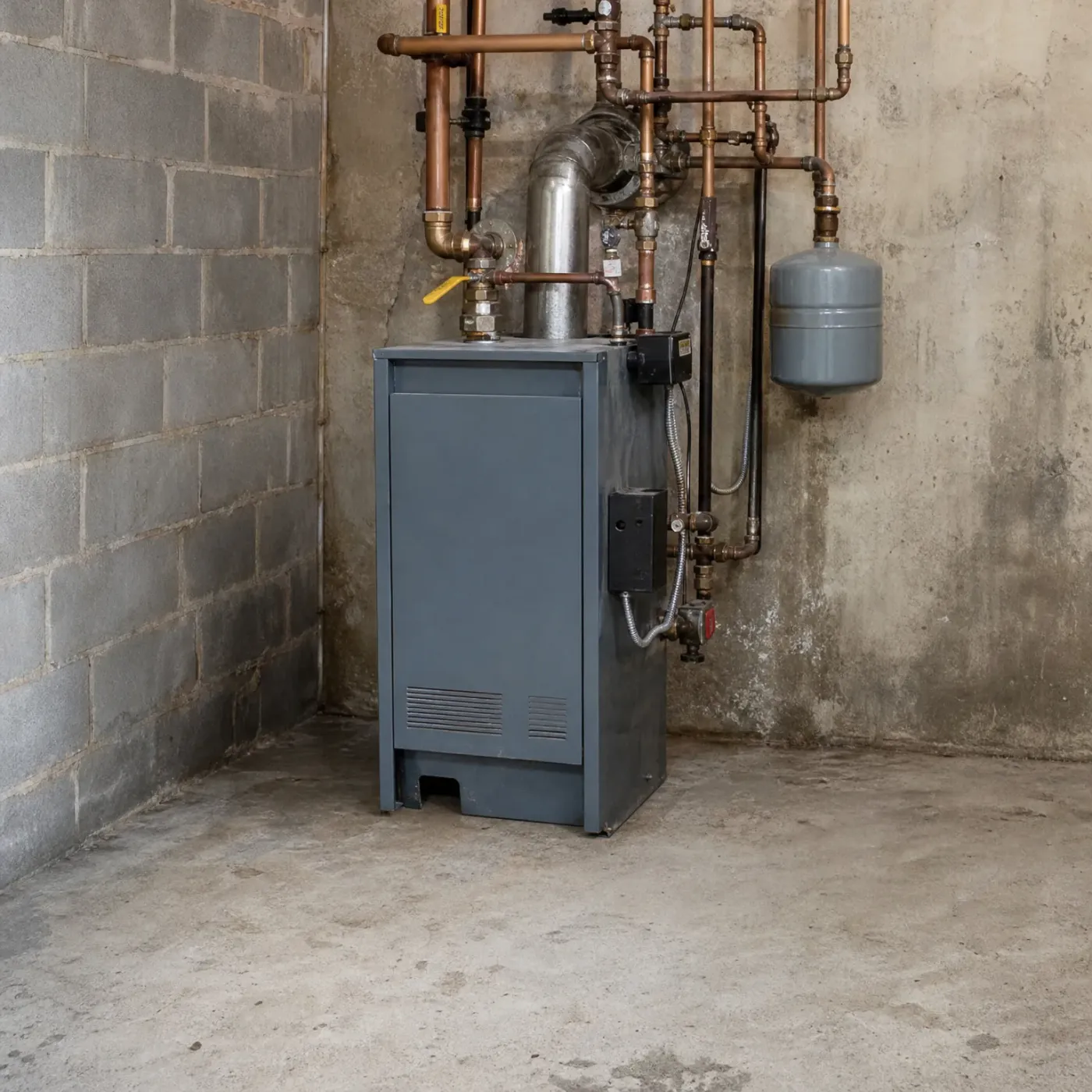
A gray floor-standing boiler in a basement corner with copper and black piping above it, a flue vent, and a gray expansion tank mounted on the concrete wall beside a concrete block wall.

Signs something's failing

Check the gauge near the expansion tank. If it reads low, or if you see water staining the concrete near the base, the boiler may be losing pressure somewhere in that copper piping. A unit that short-cycles or won't fire at all often points to the same kind of problem.

A woman in a cream cardigan and jeans stands with one hand raised facing an open front door of a gray horizontal-siding house, with a black lantern wall light, a potted shrub with yellow flowers, and a stone-faced porch column.

A cold boiler doesn't stay a one-day problem

If the boiler sat dead overnight, check the rooms where the people who need the most warmth sleep. Kids, older parents, anyone who doesn't move around much during the day feels a cold house faster than you do standing in the kitchen with a coat on. A house in the 50s overnight isn't a crisis yet, but it doesn't take many more mornings like that before pipes near outside walls are what you're worried about, not just comfort.

A boiler that failed to fire once will usually do it again, often worse, because whatever tripped it (a fouled sensor, a pressure drop, a pilot that won't hold) doesn't fix itself. Getting matched with a contractor who already knows Rhode Island boilers, who's seen this same failure in houses like yours every winter, means someone looks at the actual unit instead of guessing over the phone. One contractor calling you back beats fielding calls from three companies while your living room sits at 54 degrees.

A living room corner with a light beige sofa holding a textured taupe cushion, a large ceramic vase of olive branches by a window, a framed neutral artwork on the wall, and a dark bowl with stacked books in the foreground.
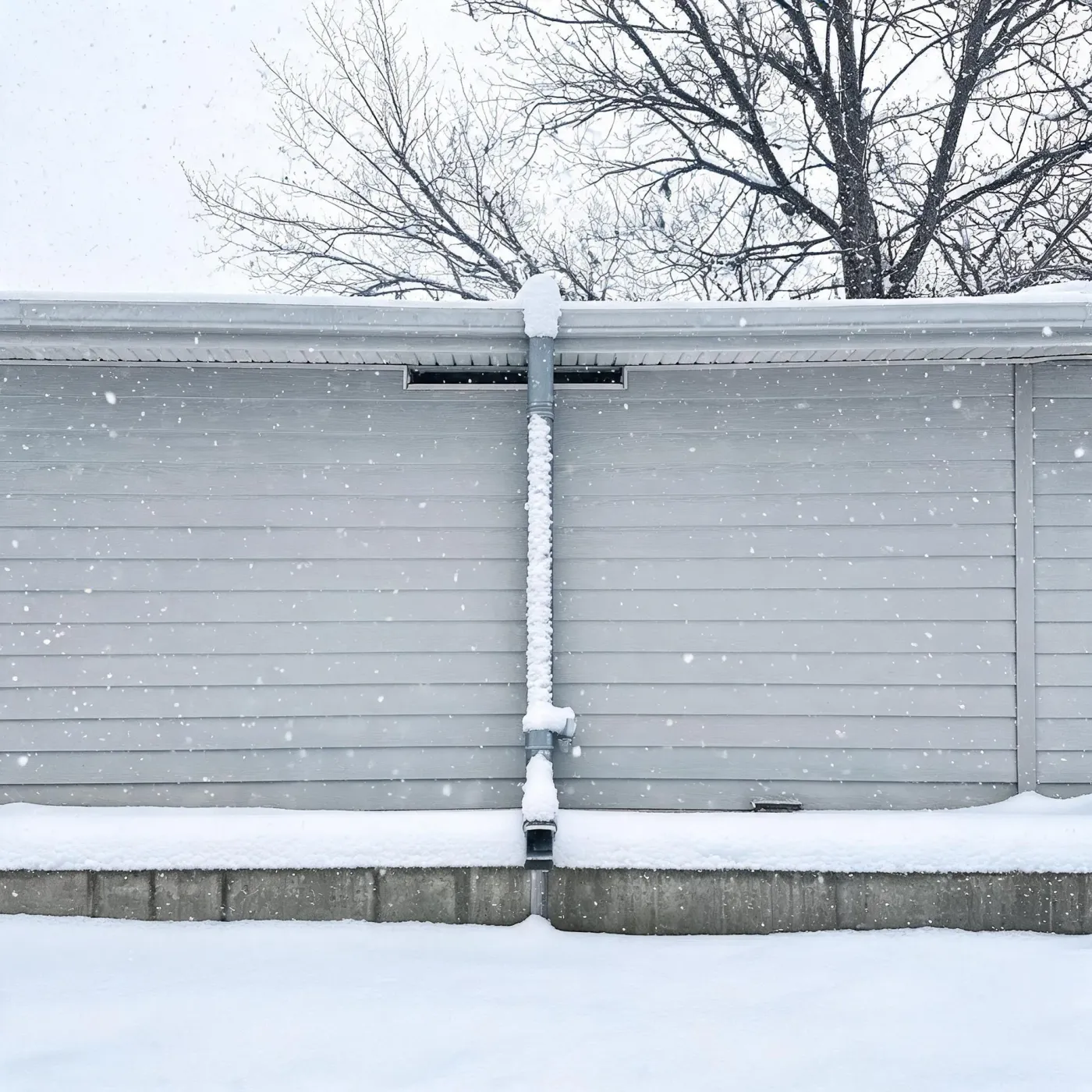
Exterior wall of a building with light gray horizontal siding and a snow-covered downspout running down its center, with bare trees behind the roofline and falling snow over deep snow on the ground.

Winter nights statewide average 23°F, according to NOAA climate data. That's cold enough that a boiler isn't just topping off heat, it's running long stretches to keep ahead of it. More runtime means more cycles through the igniter or pilot assembly, and more chances for a weak one to fail right when you need it most. It also means more strain on water pressure, since the system is working harder to push hot water out to every radiator. If yours is already marginal, a night like that is often when it finally gives out. You'll notice it first in the coldest room of the house, usually the one farthest from the boiler itself.

NOAA nClimDiv 1991-2020 county normals weighted by homes

What's going on with my boiler right now

Go stand by it. If the burner compartment is silent and the display shows an error or a blank screen, it isn't firing at all. Listen for a click followed by nothing, or a click and a brief flame that dies. Check the pressure gauge on the front. Check the radiators room by room, not just the one you noticed first, since one cold room and one cold boiler usually means the same failure, but a few cold radiators with a warm boiler points somewhere else. The longer it sits off in weather like this, the faster the house loses the heat it already had stored in the walls and the floors, and the rooms where the slowest-moving people in your house spend their time go cold first.

  1. The thermostat calls for heat and signals the control board.

  2. The control board opens the gas valve and starts ignition.

  3. The igniter sparks or the pilot lights the burner.

  4. The flame sensor confirms a flame and keeps the valve open.

Winter nights average 23°F statewide

At 23°F, the water in your radiators loses heat fast every time the boiler cycles off. That's why a short outage turns into a cold house quickly here, not over a few days. A boiler that's slow to recover or won't fire at all has less margin on a night this cold.

NOAA nClimDiv 1991-2020 county normals weighted by homes

Where this leaves your boiler

  • Low pressure, a bad igniter, a failed flame sensor, or a dead pilot account for most boilers that won't fire in a Rhode Island winter.
  • A boiler that lights and drops out within seconds is a flame sensing problem, not a gas problem.
  • A local contractor who services boilers all winter has seen these failures before and knows which part to check first.
  • One contractor takes the call for your house, so you're not fielding a round of quotes while the house is cold.
  • A cold boiler on a 23°F night doesn't wait, and the rooms with the people most sensitive to cold feel it first.
  • Getting matched with someone who works on this equipment locally, season after season, is the fastest path back to heat.

Most boilers that won't fire on a cold Rhode Island morning come down to the same handful of problems. Pressure dropped below where the system will run. The igniter failed to spark. The flame sensor stopped reading the flame that's there, so the board cuts the gas even though nothing is actually wrong with it. A pilot dropped out and won't catch again on its own. None of these are mysteries to someone who works on boilers all winter in this state. They're the calls that fill up a January schedule here, and a contractor who handles this equipment season after season knows which of these to check first, usually within minutes of seeing how the boiler is failing.

That's worth something beyond just getting the part named correctly. When you get matched, it's with one contractor, not a handful of companies calling you back at once while your house sits cold. That contractor is licensed and local, which means they know what tends to go wrong in boilers running through a Rhode Island winter, not boilers in general. You're not explaining your situation from scratch to three different people. You're not sorting through competing quotes while the radiators stay cold and the room where your kids or your parents sleep keeps losing ground. One call, one contractor who's seen this exact failure before, and a faster read on what's actually wrong with your boiler tonight.

Sunlight falls across a beige upholstered sofa with a textured woven cushion and a chunky knit throw, beside a dark wood cabinet holding a ceramic vase with green leafy branches, near a white-framed window.
A sunlit corner of a room with a wooden side table holding a ceramic vase of green foliage and a wooden bowl, beside a light upholstered sofa with a knit throw and rust-colored pillow, with window shadows cast on a beige wall.
A sunlit room corner with beige walls, a white-framed window with sheer cream curtain, wood floor with a light rug, and a woven basket holding a knit blanket.
A beige ceramic vase holding a leafy green branch sits on a wooden cabinet in a corner, with sunlight through a sheer curtain casting leaf shadows on the wall.
A grey upholstered sofa with a rust-orange velvet cushion and a textured throw sits beside a window with linen curtains, next to a wooden side table holding a pale ceramic vase of olive branches.

Get your boiler to the right pro

Your request goes to one pro, not a list of companies.

Find a local pro

No fee to send it, and nothing to sign.