
Pressure that holds steady
A boiler that's running right keeps its gauge between 12 and 15 psi and stays there. The pipes and fittings stay dry, the expansion tank holds its charge, and you're not back at the valve every few weeks topping it off.
You've bled the radiators and topped off the pressure more than once this winter, and it keeps dropping back down. That's not normal, and it won't fix itself. A boiler that loses pressure week after week usually has water escaping somewhere, or air getting in where it shouldn't, and the gauge is just telling you about it.
Boilers are sealed systems, so pressure that keeps dropping means water is getting out. It could be a small leak at a valve or pipe joint, a failing pressure relief valve letting water escape when it opens, or a fault inside the boiler itself. Sometimes the leak is small enough that you never see a puddle, just a damp patch or a faint smell near a fitting. A bleed valve left slightly open after bleeding a radiator will do the same thing. If you're refilling the system more than once every few weeks, something needs to be found and fixed, not just topped off, especially with gas prices what they are in Rhode Island this winter.
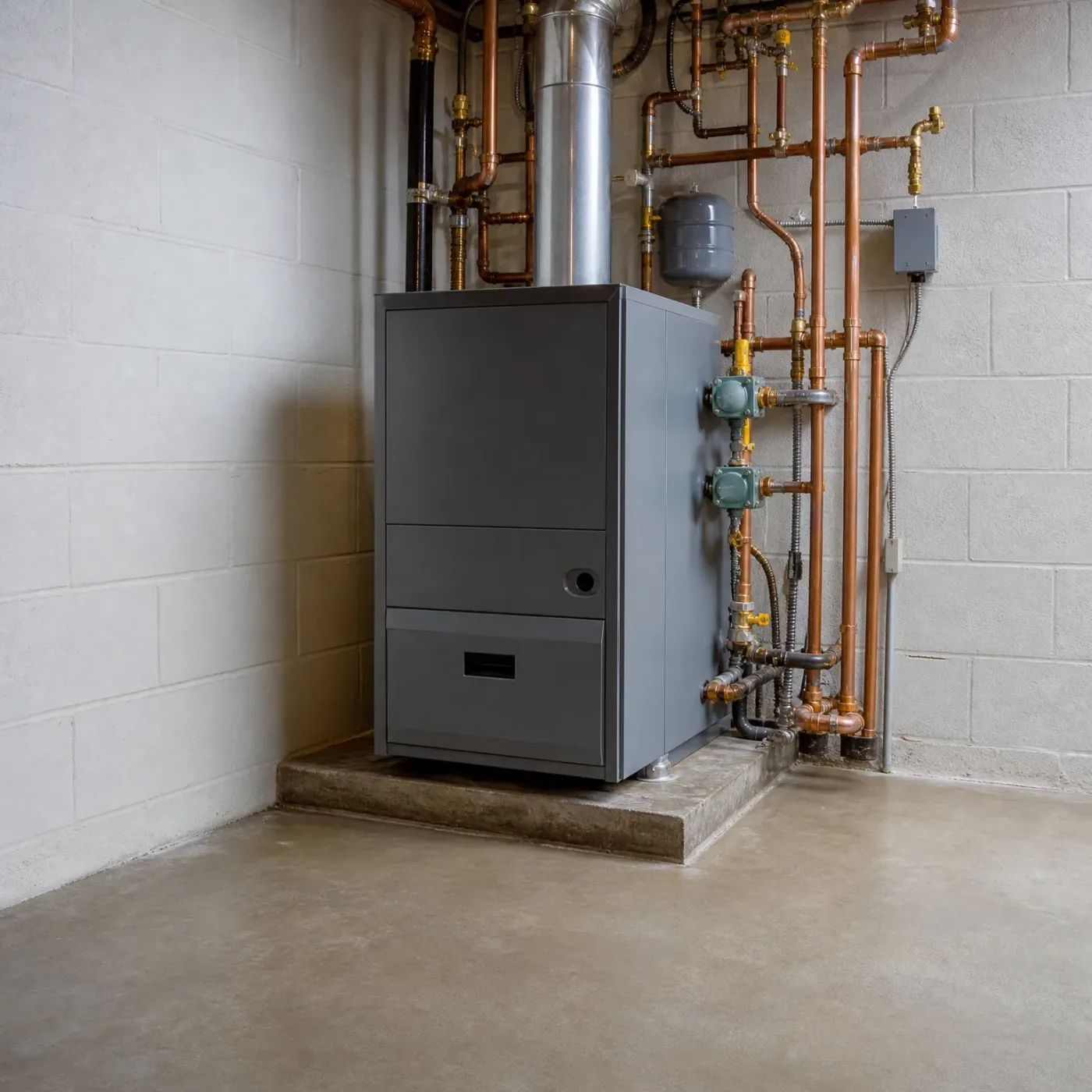
A boiler that's running right keeps its gauge between 12 and 15 psi and stays there. The pipes and fittings stay dry, the expansion tank holds its charge, and you're not back at the valve every few weeks topping it off.
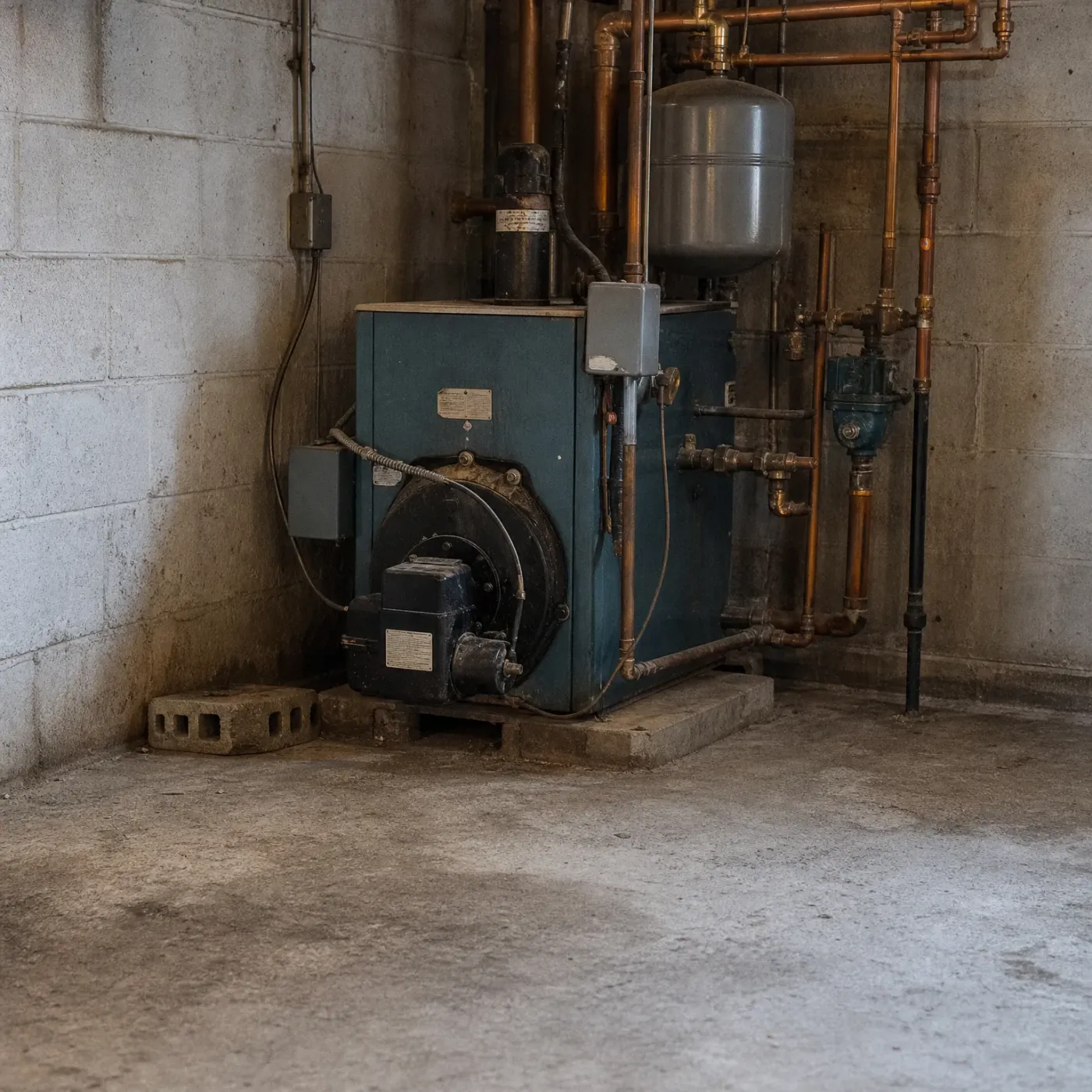
On an older boiler, pressure that won't hold usually points to a leak somewhere in that pipework, a failing expansion tank, or a relief valve letting go under heat. Left alone, the burner can short cycle or shut down on low water.




Water doesn't vanish from a closed system on its own. It's leaving somewhere, and most of the places it leaves don't show themselves right away. A cast iron section or a steel joint can weep at a pinhole for months before you'd ever find a wet spot on the basement floor. The automatic feed valve is part of why you don't catch it sooner. It's doing its job, quietly adding water to bring the system back to the pressure it's set for, which means the gauge looks fine even while you're losing water underneath it. The pressure relief valve tells a similar story. It's rated to open at 30 psi, but a worn seat can let it weep into the drain line well below that number, and that water goes straight down the pipe where you'd never see it. An expansion tank that's lost its air charge works against the whole system, since it can't absorb the water's expansion anymore, which pushes pressure higher and asks the relief valve to open more than it should. Circulator pump seals wear the same gradual way, and what gets past them tends to evaporate off the pump housing before it ever reaches the floor. One thing worth watching is when the drop happens. If the gauge falls fastest while the boiler is actually firing, that's a different problem than a slow leak somewhere in the pipes. It points toward the heat exchanger itself.


Send the request today and let a boiler pro reach out to you.
You only hire the pro if you want to.

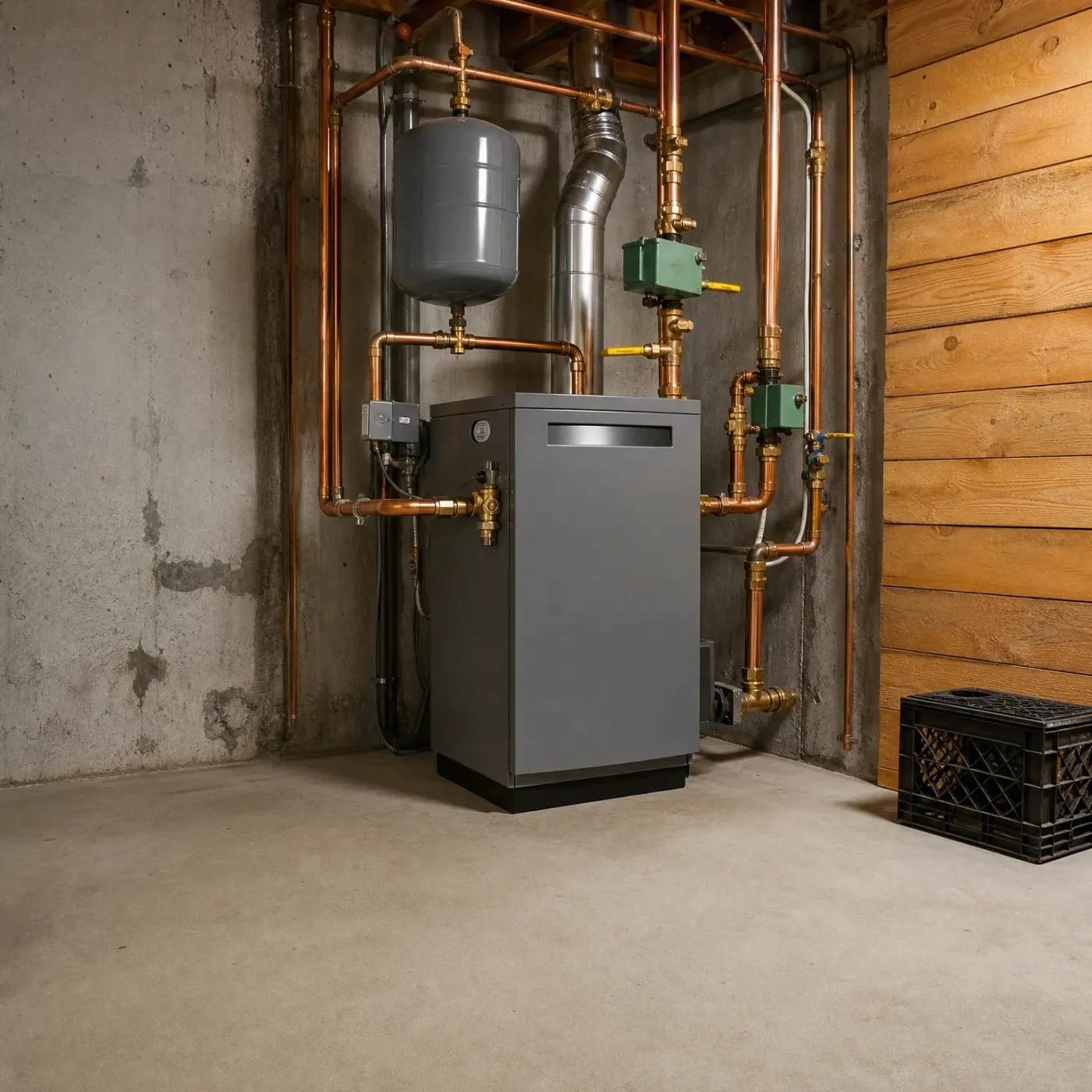
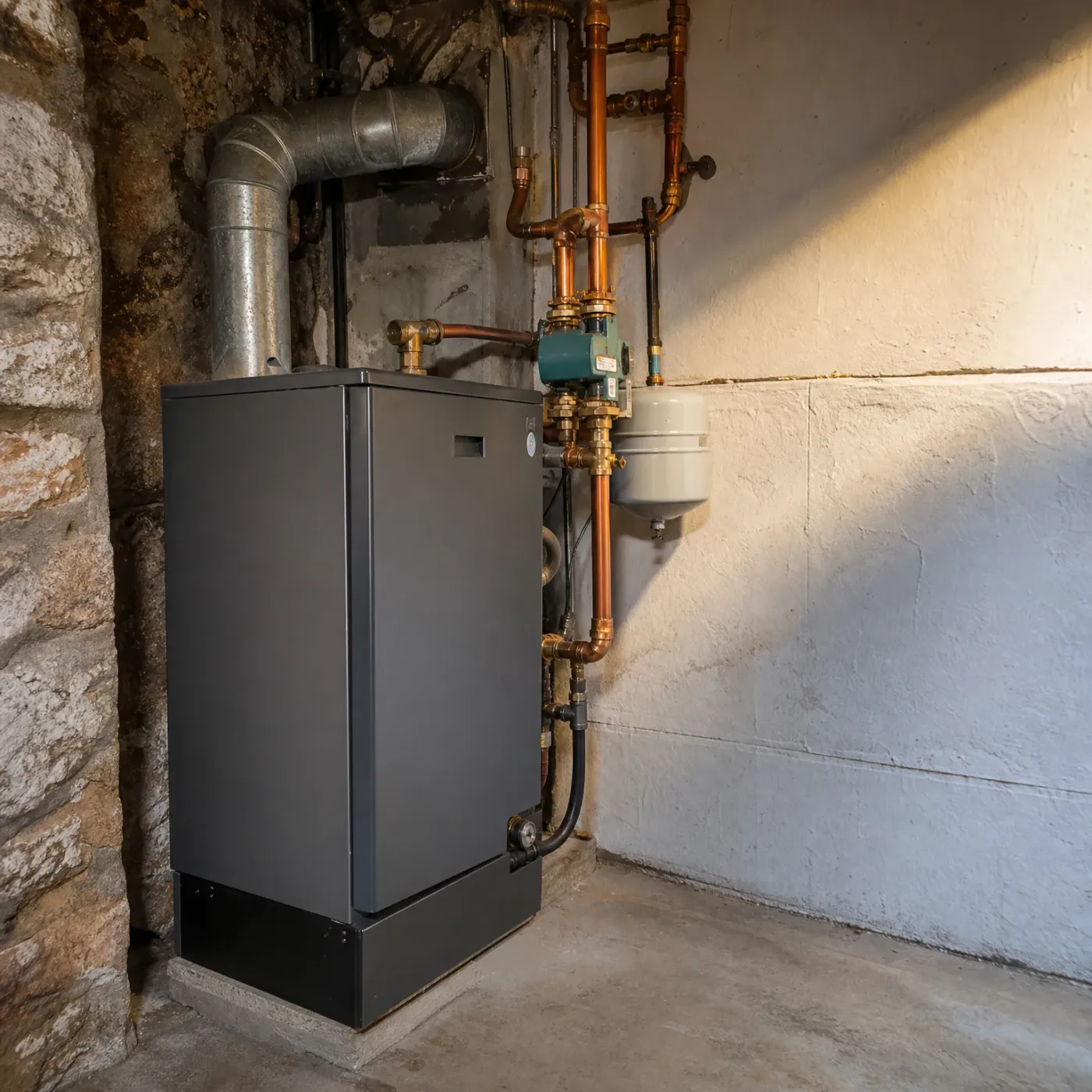
This is what a boiler looks like when nothing's wrong. The copper lines and brass fittings run clean and dry to every zone, the expansion tank holds its charge, and the gauge sits where it belongs without anyone touching it. No puddles on the concrete, no rust at the joints.

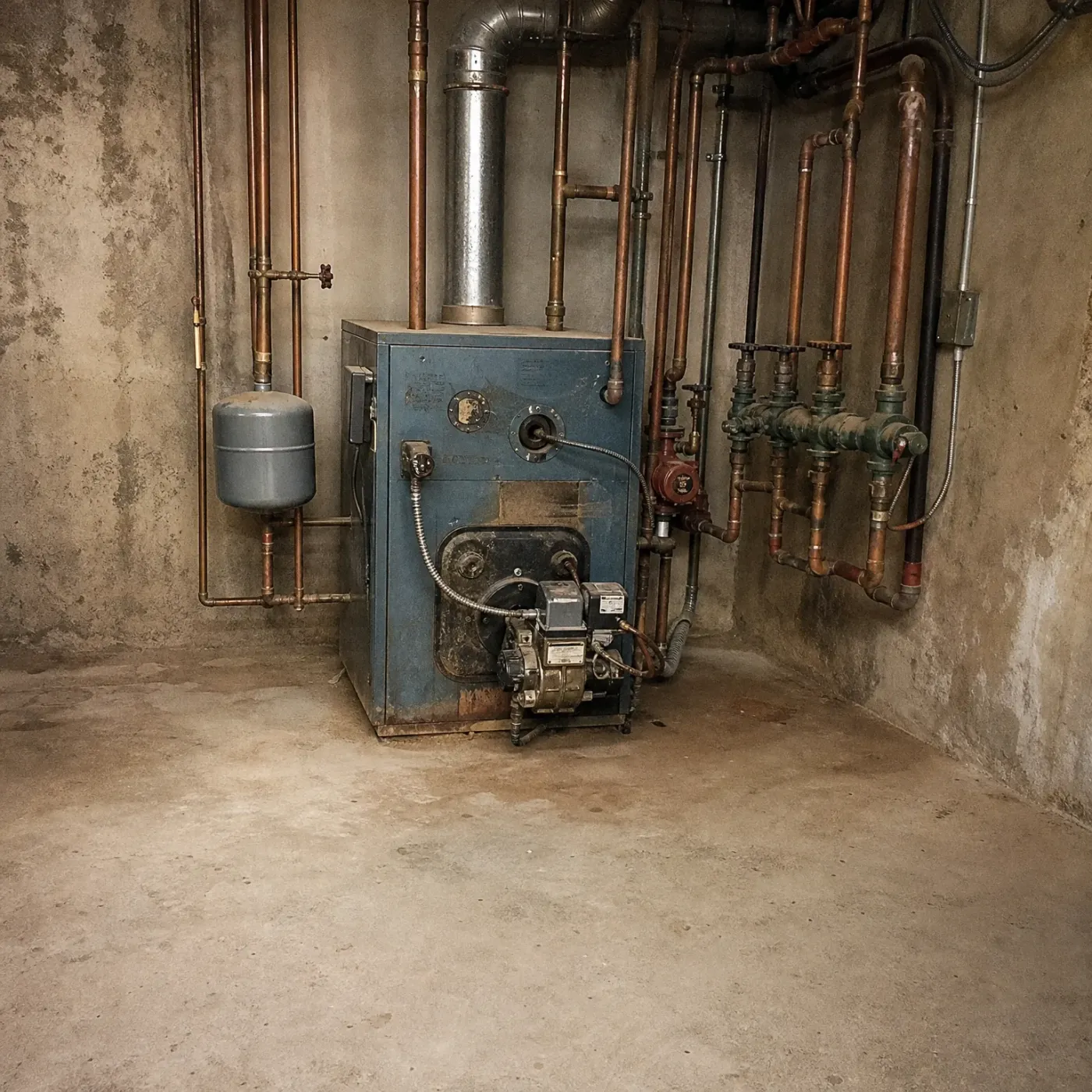
An older oil-fired boiler like this one, with a galvanized flue and copper piping tucked along the block walls, is where pressure disappears without a trace. A pinhole at a joint or a weeping valve can drip for months behind the unit before you ever see water on the pad.

A boiler that keeps losing pressure doesn't just mean another trip to the basement with a hose. If the leak is feeding water into the system to mask itself, your gas bill is paying to reheat that water every single time, and with what power and gas cost in Rhode Island, that adds up fast over a winter. If the leak is onto the floor instead, you're looking at rust on the boiler's base or a damp spot near a pipe joint that won't dry out until someone finds where the water is actually going.
Either way, waiting rarely makes it cheaper to fix. A pinhole leak at a cast iron section gets bigger, not smaller, and a feed valve that's stuck open is already hiding the real problem from you. Once you send in the form, you're not the one who has to track down which part of the system is at fault. A contractor who takes on jobs like this reaches out and takes that search off your hands.


You come down before work and the living room is cold enough that you can see your breath near the window. The cast iron radiator under it is quiet, no tick or hiss, and there's a skin of ice on the inside of the glass above it. You crouch and touch the radiator. Barely warm at the bottom, stone cold at the top. You already know what you'll find in the basement before you get there: the gauge sitting low again, under where it should be, like it was last week when you topped it off. Outside it's still dark, the kind of January morning where the oil truck's headlights are the only light on the street.
At 23°F overnight, your boiler is cycling on for hours at a stretch to hold the house warm. Any pressure that's leaking out does it faster when the system runs that much, so a drop that took weeks in October can show up in days now.
NOAA nClimDiv 1991-2020 county normals weighted by homes
A boiler that keeps losing pressure has water going somewhere it shouldn't, whether that's a pinhole leak in a pipe joint or a feed valve that's stuck covering for one. Topping off the gauge every few weeks isn't a fix, it's a sign the system is already compensating for something a contractor needs to look at directly. Rhode Island winters don't let up once they start, and a system running for hours at a stretch overnight will push a slow leak into a fast one. Once you send in the form, you're done chasing this down on your own. A contractor who handles boiler repair gets matched to what's actually happening in your basement, and from there it's their job to find the leak and stop it. You don't need to know whether it's the expansion tank or a joint in the cast iron before you ask for help. You just need the dropping gauge to stop being something you deal with alone.
Get the boiler repair search off your mind today.
Asking costs nothing, and the choice to hire stays yours.
