Why your boiler is leaking water in Rhode Island

Step 1 of 3: Equipment

A leaking boiler usually comes down to pressure or a worn seal. If the pressure relief valve is dripping, the system is holding too much pressure, often because the expansion tank lost its air charge or the pressure was set too high when it was last filled. If the leak is coming from the boiler itself, a gasket or seal inside has likely worn out, or a fitting has corroded over time. Water near the circulator pump usually means the pump seal has failed. In Rhode Island, most boilers run on gas, and a gas-fired boiler with a leak needs attention quickly, since water near the burner or controls can affect how safely it fires. A small drip rarely stays small. Left alone, it corrodes the parts around it and can turn into a bigger repair, so it is worth having someone look at where the water is actually coming from before you decide what it needs.

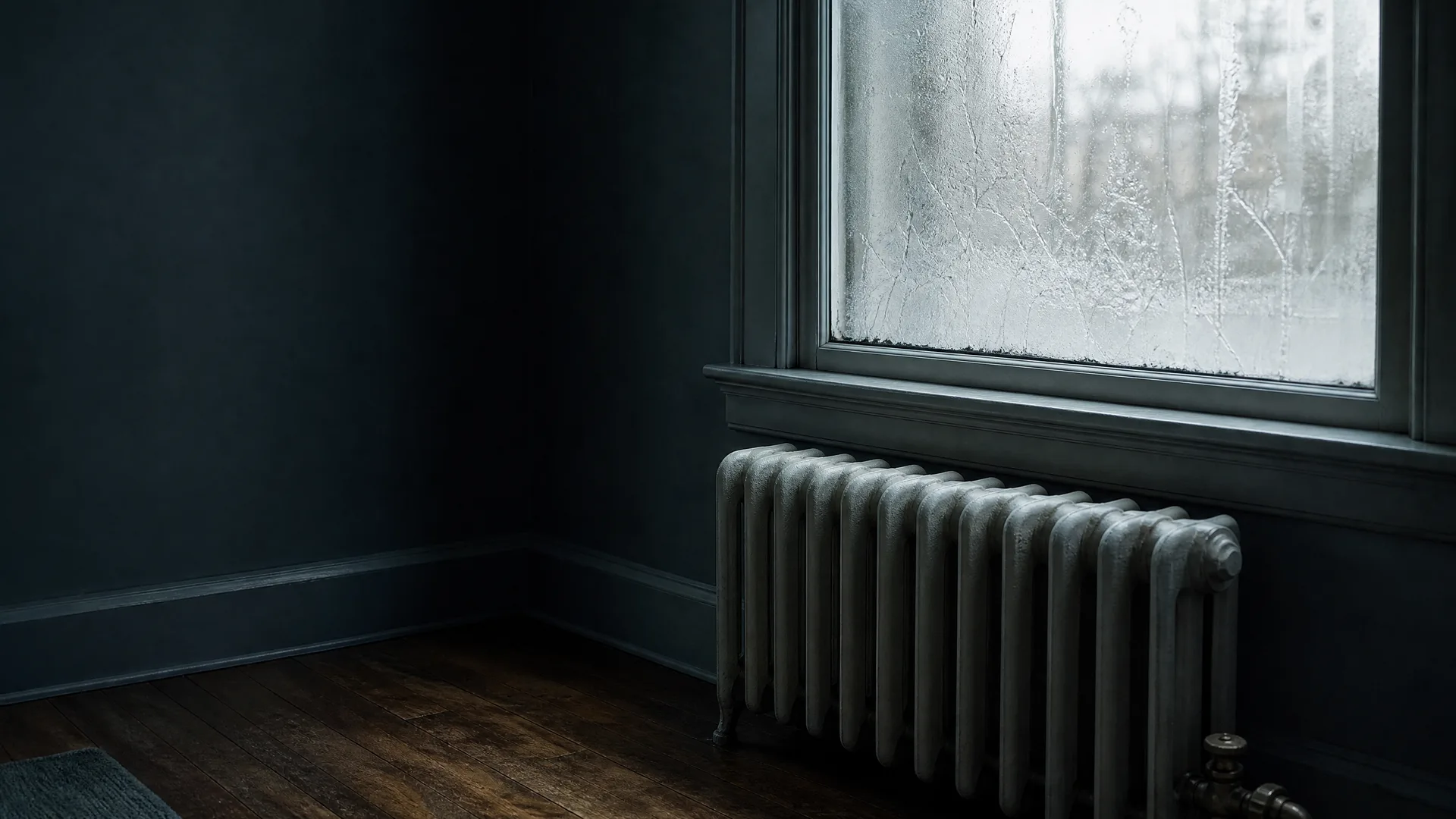
A cast iron column radiator under a condensation-covered window in a dim room with dark walls, dark baseboard trim and a worn wood floor.

You're up before the rest of the house, coffee in hand, and the living room floor is cold under your socks. The radiator under the window has ice feathering across the inside of the glass above it, and that's when you see it: a dark ring spreading on the floor at the radiator's base. You press a towel to it and it comes away wet. Outside it's still dark, maybe ten degrees, the kind of Rhode Island morning where the boiler should be running nonstop. You check the pressure gauge before anyone else is even awake, already doing the math on how long you can wait before someone needs to come look at it.

Leak Now: Call or Watch

Call now

  • A leak that's getting worse by the hour can mean a cracked heat exchanger or a fitting that's let go, and that water can reach wiring or the burner.
  • Rhode Island winters don't pause for a slow weekend, and a boiler that shuts itself down on safety leaves you without heat until someone opens it up.
  • Water pooling near the gas valve or the electrical connections is a reason to shut the system off and get someone out rather than wait and watch.
  • A contractor can tell you in one visit whether it's the pressure relief valve, a seal, or something inside the heat exchanger, instead of you guessing at it for days.
  • Finding someone on short notice, explaining what you're seeing, and getting a straight answer is the work a same-day match takes off your hands.

Watch it first

  • A few drops at a union fitting or valve stem over a day or two often means tightening a connection, not an emergency repair.
  • If the boiler is still heating the house and holding pressure where it should, a slow drip gives you time to track where it's coming from.
  • Marking the spot and the date, then checking back tomorrow, tells a contractor more than a guess over the phone would.
  • Catching it early, before the leak grows or spreads to a part that's harder to reach, usually means a smaller job once someone looks at it.
  • You still avoid the back and forth of calling around and repeating the same description to three different companies once you're ready to move on it.
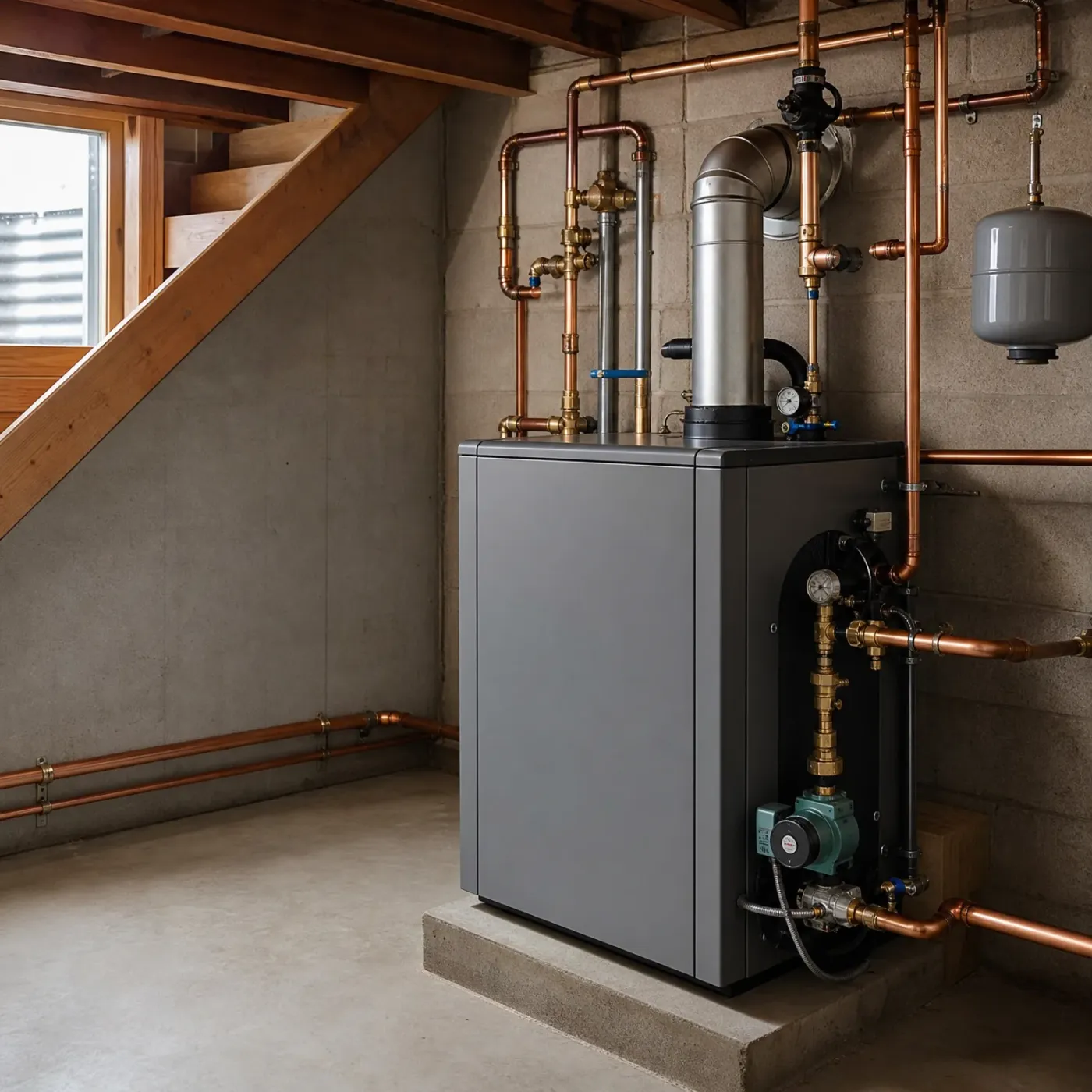
A gray and blue floor-standing boiler in a basement corner, with a metal flue pipe and copper and black piping, valves, and a gray expansion tank mounted on an unfinished wood-framed wall beside a concrete wall.

Running the way it should

No moisture at the base, no drip from the relief valve. Pressure holds steady on the gauge and the pipes going into the expansion tank stay dry. This is what lets the boiler carry the house through a Rhode Island winter without a second thought.

A green oil-fired boiler with a flue pipe, burner and circulator pumps sits on a concrete pad in a basement corner, surrounded by copper piping and an expansion tank against concrete walls.

Losing water somewhere

A damp patch on the concrete pad or a trail down the flue pipe means water is getting out where it shouldn't. It could be the pressure valve, a loose fitting at one of those copper joints, or a seal that's given out inside the unit itself.

A woman with long blonde hair in a light blue shirt leans back on a beige sofa with her eyes closed, in a softly lit living room with cushions and a blurred plant and shelf in the background.
A woman with long dark hair in a gray knit sweater sits on a gray sofa with a cushion, looking toward a window in a living room with framed pictures and a lamp in the background.
A woman with long dark hair in a light grey knit sweater sits on a sofa indoors, looking to her right, with a framed landscape picture, a potted plant and a curtained window behind her.
A woman with long dark hair leans back against a gray sofa with her eyes closed, in a living room with a curtained window, a potted plant, and a dark screen in the background.
A gray boiler on a concrete pad in a basement, connected to copper and black pipes with valves, gauges, a circulator pump, a flue, and a wall-mounted expansion tank, beside a wooden staircase.

Matched to your boiler job

Skip searching for a boiler pro and answer a few questions instead.

A local pro who knows boilers gets your details and gets in touch.

Fill out one form

No fee to send it, and nothing to sign.

What is that puddle by the boiler telling you

You'll notice it at the base of the unit first, a damp patch on the floor or a rust colored stain creeping across concrete. Sometimes it's the gauge glass or a fitting weeping slowly, sometimes it's a steady drip you can hear before you see. Check the pressure relief valve pipe too, that's a common spot for water to show up. If you catch rust forming on nearby pipes or the boiler's own casing, the leak has been going on longer than today. Left alone, a small leak can work into wiring near the burner or let the system lose enough pressure that it stops heating the house altogether, which matters a lot once a Rhode Island cold snap sets in.

  1. Pressure builds past the limit the pressure relief valve is set to hold

  2. The valve opens and discharges water through its drain pipe to relieve that pressure

  3. Repeated opening wears the valve seat until it drips even at normal pressure

  4. Water travels down the discharge pipe and collects at the base of the boiler

Winter nights average 23°F statewide

At 23°F overnight, your boiler is running long stretches to keep the house warm, and that means more cycles of pressure building and easing in the system. A seal or valve that's already worn is more likely to show a leak under that kind of steady load.

NOAA nClimDiv 1991-2020 county normals weighted by homes

Where the water actually starts

Most leaks trace back to one of a few spots: the pressure relief valve, the circulator pump seal, or a fitting where two pipes join. The relief valve sits on top or on the side of the tank and drains through a pipe aimed at the floor. The circulator pump has a seal around its shaft that wears out over years of spinning. Fittings loosen slightly as the system heats and cools over and over. Finding which one it is usually means watching the system run, not just looking at a dry puddle after the fact.

Why a small drip doesn't stay small

A seal or valve that's weeping a little now is under the same pressure swings every time the boiler fires, and that wear only moves in one direction. Rhode Island winters mean the burner is cycling for months straight, and every cycle pushes a little more water past a seat or a seal that's already giving. What starts as a stain you notice once a week can turn into a steady drip, and a steady drip near the burner or wiring is a different problem than a damp spot on the floor.

An older woman with short gray hair in a cream cable-knit turtleneck sweater smiles while looking to the side in a wooden kitchen, with a round loaf of bread on a board in the foreground and a lit candle by a dark window.
A woman and a child wrapped together in a knitted gray blanket on a couch, with the child's head resting on her shoulder and a lit table lamp and houseplant in the background.

Where this leaves you

  • A leaking boiler almost always traces back to pressure, a worn seal, or a fitting that's loosened over time.
  • The relief valve, the circulator pump, and the pipe joints are the three places water most often starts.
  • A drip that's stayed small and steady is different from one that's spreading, and that difference decides how urgent the repair is.
  • Rhode Island's cold stretches put steady load on a boiler, and a valve or seal already worn is more likely to show it now.
  • Finding the source matters more than guessing, since a relief valve and a failing seal call for different repairs.
  • Instead of searching through contractors and explaining the leak over and over to each one, you can get matched with one who already knows what to check first.

A boiler leak has a source, and it's almost always one of three things: a relief valve easing off too much pressure, a circulator pump seal that's worn through, or a fitting that's loosened at a joint. Which one it is changes what gets fixed and how. A relief valve that drips under normal pressure gets replaced. A pump seal that's failed gets the pump rebuilt or swapped. A loose fitting gets tightened or repacked. None of those are the same job, and treating one like another wastes a visit.

What matters right now is how the leak is behaving. A damp patch that hasn't grown in a few days is worth watching and scheduling around. Water that's spreading, or showing up anywhere near the burner or the wiring, isn't something to sit on through a Rhode Island cold snap. Either way, the next step is the same: someone needs to look at where the water is actually coming from before anything gets opened up or replaced.

That's the part that usually eats the time, calling around, describing the same drip to three different companies, waiting on quotes that don't line up. You can skip that here. Instead of tracking down who's available and explaining the leak from scratch each time, you get matched with a contractor suited to this kind of repair, and they reach out to you directly.

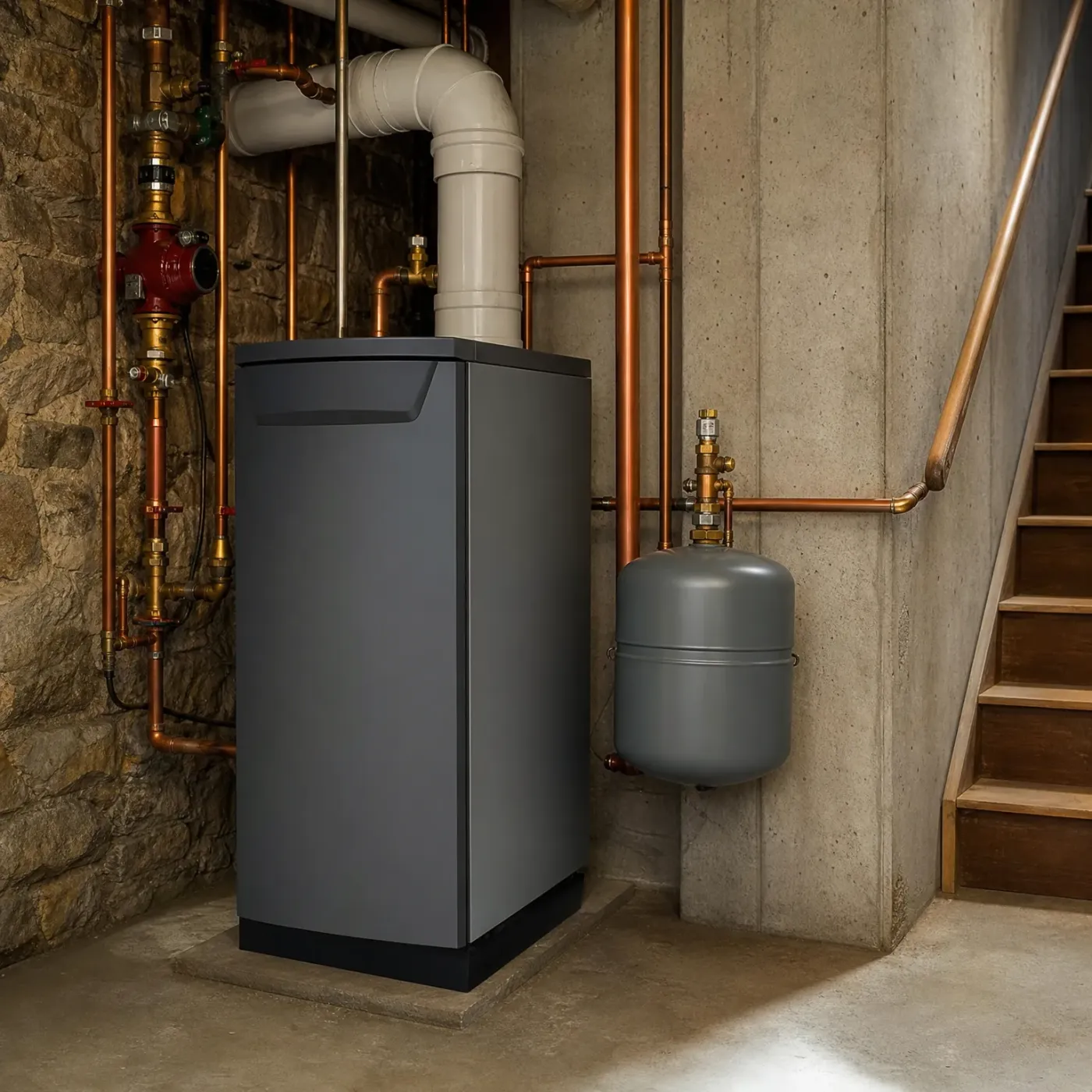
A gray boiler unit on a concrete pad in a basement, with copper piping, valves, a white flue pipe, a gray expansion tank, a stone wall at left and wooden stairs at right.

A boiler pro near you

Skip the search

One form replaces the calls you'd make to find a boiler pro.

Sending the form costs nothing.