
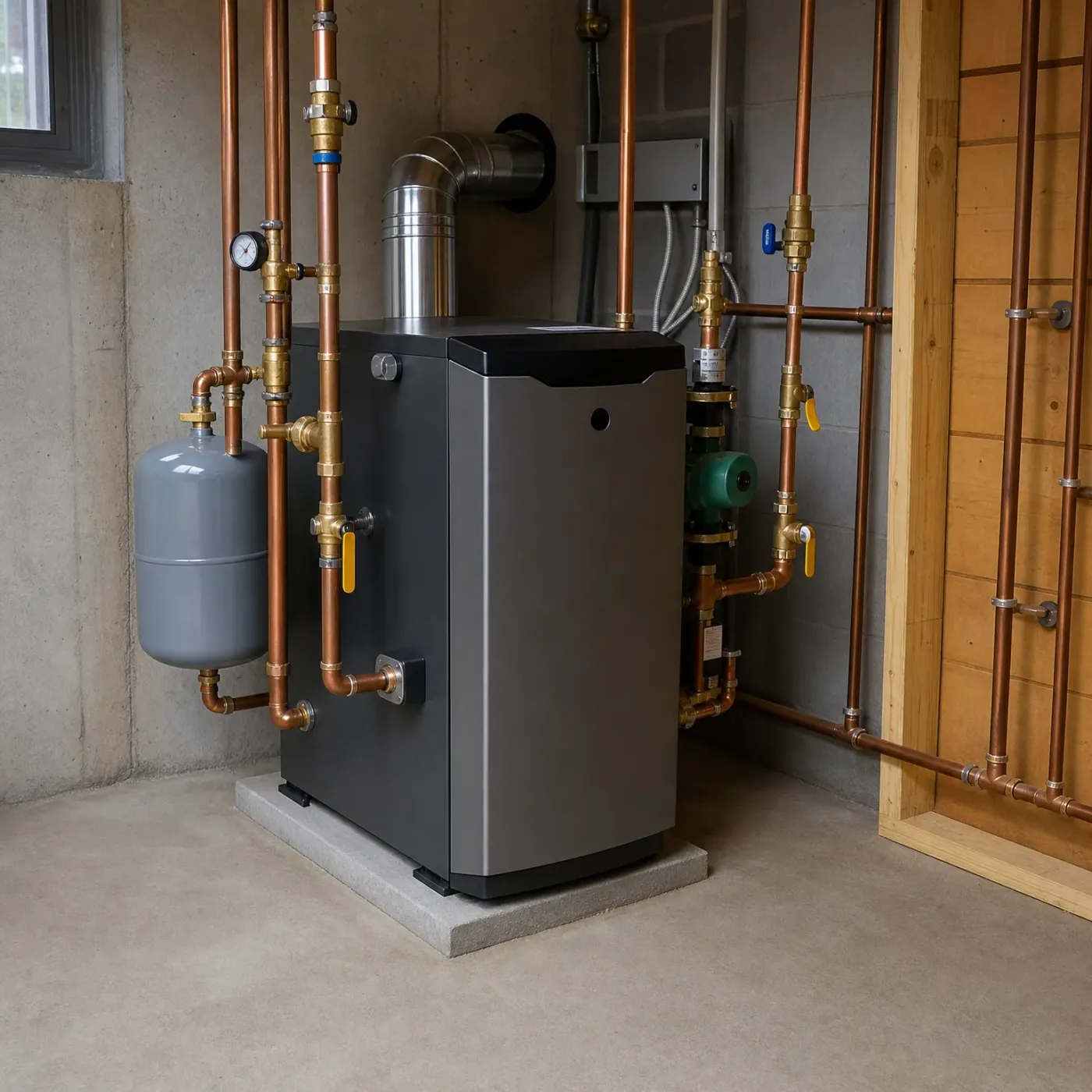
Running clean
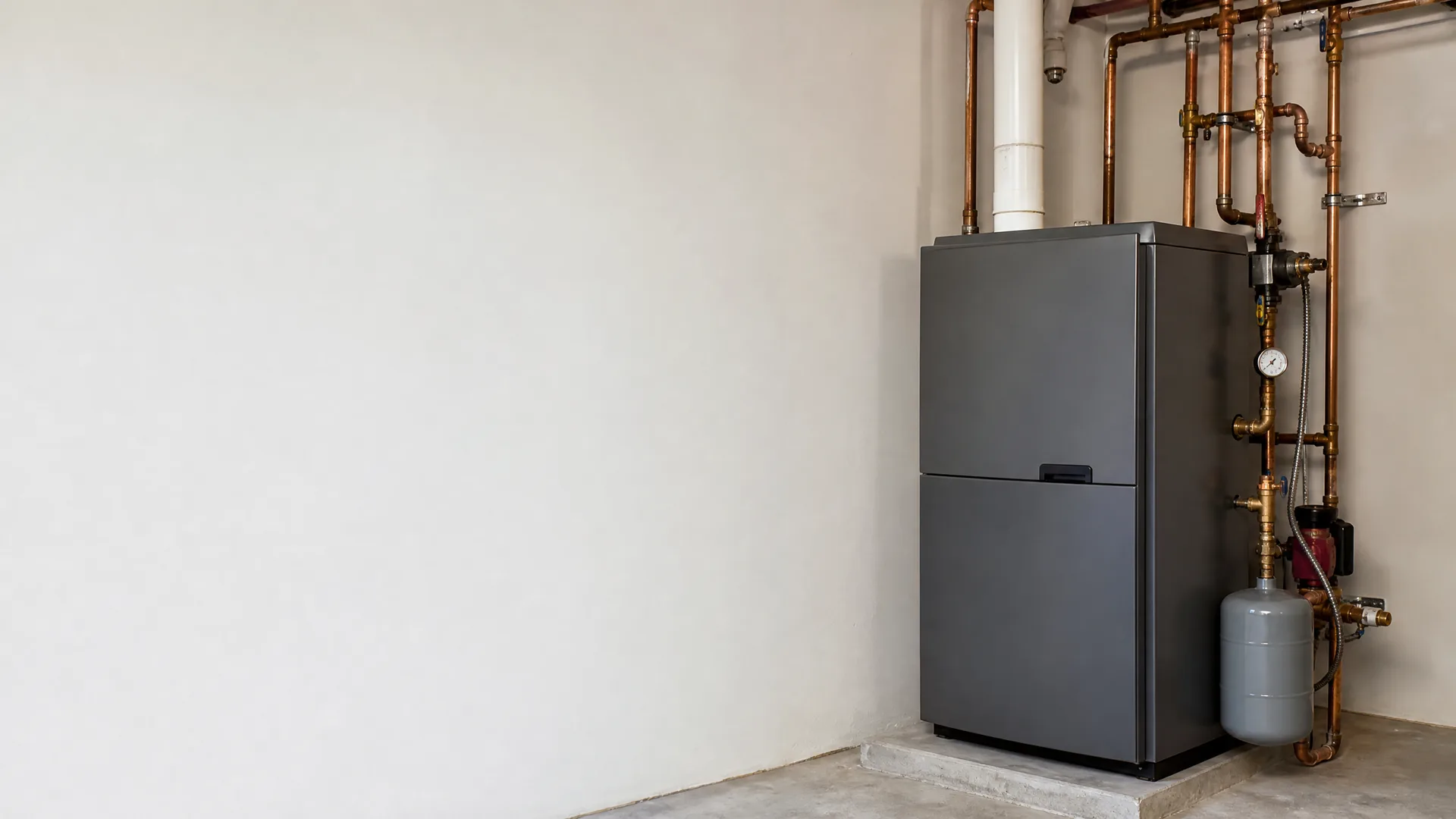
Water moves across the heat exchanger evenly and carries heat away as fast as the burner makes it. No popping, no rumbling, just the quiet hum of the circulator pump pushing water through copper to the radiators.
Hand off the search today
That rumbling, popping sound from your boiler means something inside it is heating unevenly, usually scale or sediment baked onto the heat exchanger. It's not dangerous in the next five minutes, but it's not normal either. This page gets into what causes it and what it means for the unit. Skip the search for who can look at it: send the form and stop calling around.
Send it todayThat sound is water boiling against a hot surface it can't escape fast enough, trapped under a layer of scale or sediment on the heat exchanger. Rhode Island's water runs harder in some towns than others, and over years that mineral content settles out and bakes onto the metal every time the boiler fires. Once that layer builds up, heat can't transfer evenly into the water around it. Pockets of water flash to steam and collapse, and that's the rumbling and popping you're hearing. It gets worse the longer it sits, because the buildup keeps the heat exchanger running hotter than it should, which stresses the metal and shortens its life. Most gas boilers in this state run hard from October through April, so a kettling boiler that goes unaddressed through a full winter is working against itself the whole time. Catching it now, while it's a noise and not a crack, is the difference between a cleaning and a replacement.
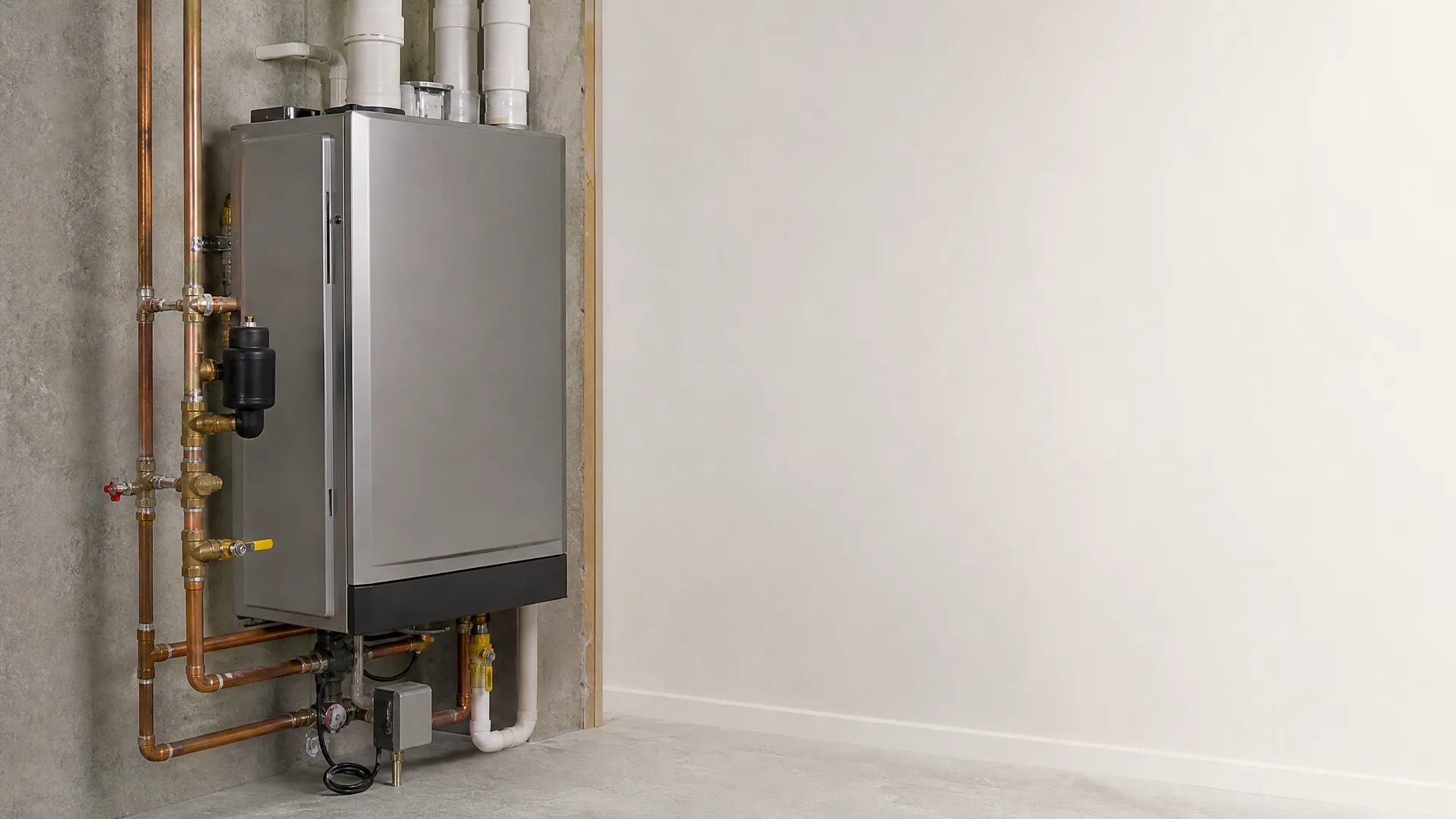
A clean heat exchanger lets water move across its surface and carry heat away as fast as the burner makes it. Scale breaks that. It's a poor conductor, so heat backs up at the metal instead of passing into the water evenly. The water right against that spot flashes to steam, then collapses as cooler water reaches it. That collapse is the knock you hear. The thicker the scale gets, the more surface it covers, and the more often that cycle repeats.
Boiler water isn't static. It circulates, but sediment that breaks loose from scale or old piping settles wherever flow slows down, usually along the bottom of the heat exchanger. That's also where the burner's heat concentrates first. A layer there insulates the metal from the water above it, so the metal gets hotter than the water does. Kettling tends to get louder over time because that layer keeps building unless something removes it.
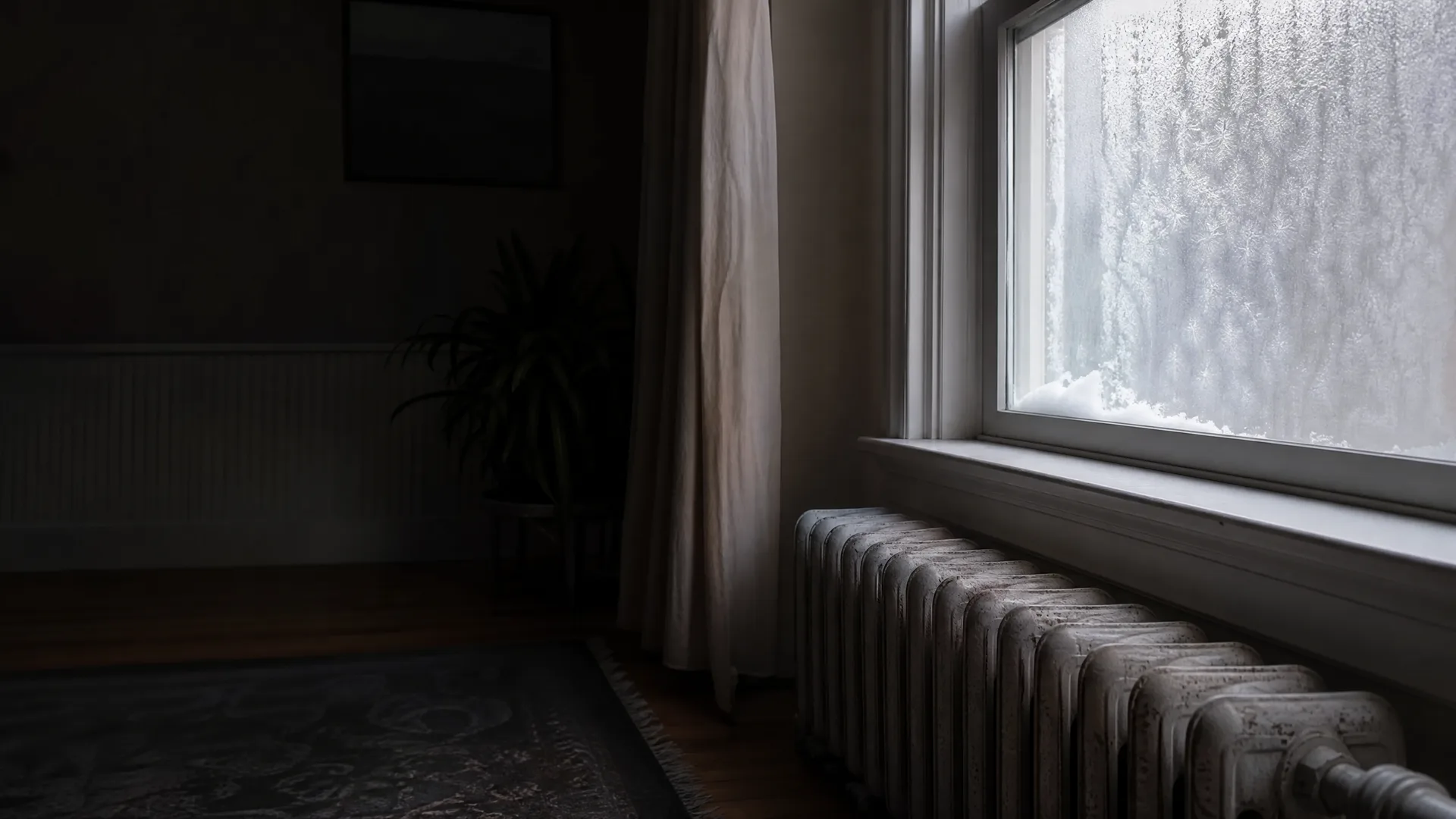
You're up before the rest of the house, and the living room is cold enough that you can see your breath near the window. The radiator under it is ticking and popping, louder than it was last night, and you stand there a second with your coffee just listening. Ice has formed on the inside of the glass, a thin fan of it in the corner of the pane. Outside it's still dark, a January morning like a dozen others this winter. You put your hand near the radiator and it's hot, too hot in spots, and that knocking keeps going like something trapped in there is trying to get out.
One form replaces the calls you'd make to find a boiler pro.
You're not committing to anything by asking.
A boiler's cycle looks simple from the thermostat's side. It calls for heat, the burner fires, and warm water moves through the house. Inside the cast iron exchanger, that process depends on even contact between water and metal. The circulator pump keeps water moving across the hottest part of the exchanger, carrying heat away as fast as the burner produces it. Scale breaks that contact. It builds up in a thin layer on the inside of the exchanger, and water right against that layer heats faster than it can move away. That water flashes into small pockets of steam, and when those pockets collapse back into the surrounding water, they make the popping and rumbling you hear. This can happen dozens of times in a single burner cycle. The aquastat, which controls when the burner fires, only reads the temperature of the water leaving the boiler. It has no way to tell that part of the exchanger is running hotter than the rest, so it keeps calling for heat on a normal schedule while that one section overheats. Over years, the minerals that settle out of the water filling the system bake onto the cast iron and thicken, which is why kettling tends to start gradually and then get more frequent. A boiler that's also cutting on and off faster than usual is often fighting the same uneven heat, the burner shutting down on a high limit before the rest of the house ever gets warm.




The thermostat calls for heat, and the burner fires first.
The circulator pump pushes water across a scaled heat exchanger.
Scale slows water right where the metal runs hottest.
Trapped water flashes to steam faster than it can clear.
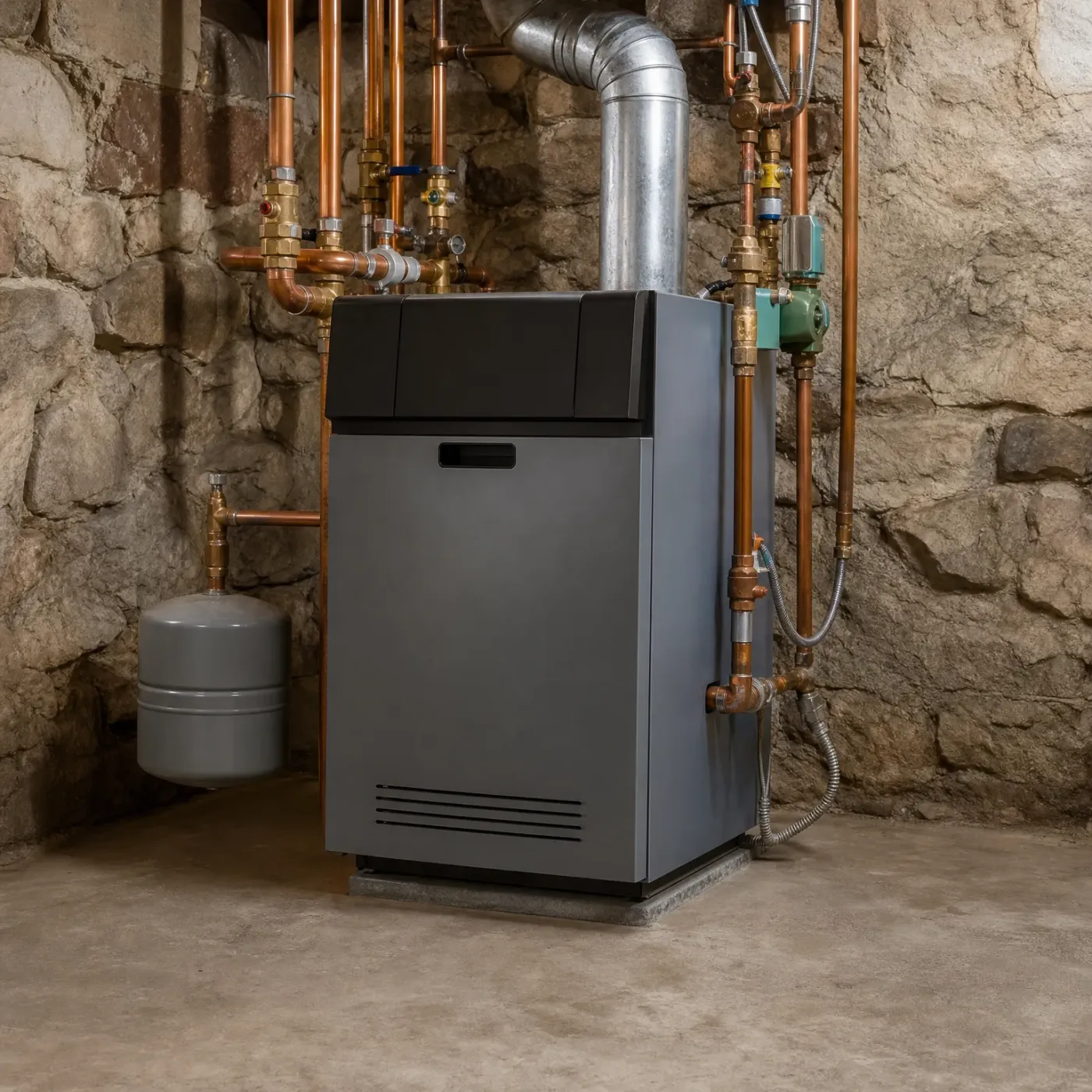
Water moves across the heat exchanger evenly and carries heat away as fast as the burner makes it. No popping, no rumbling, just the quiet hum of the circulator pump pushing water through copper to the radiators.
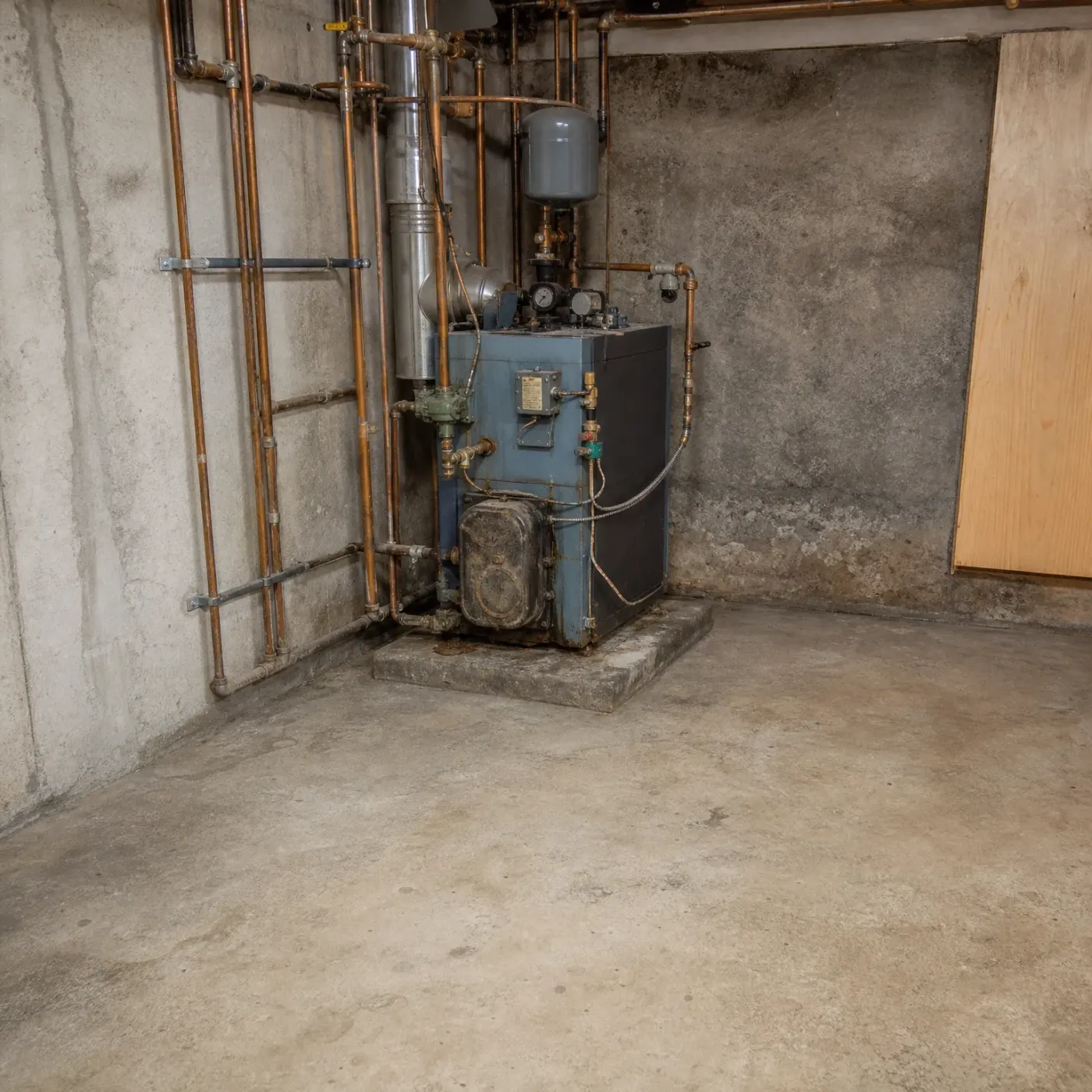
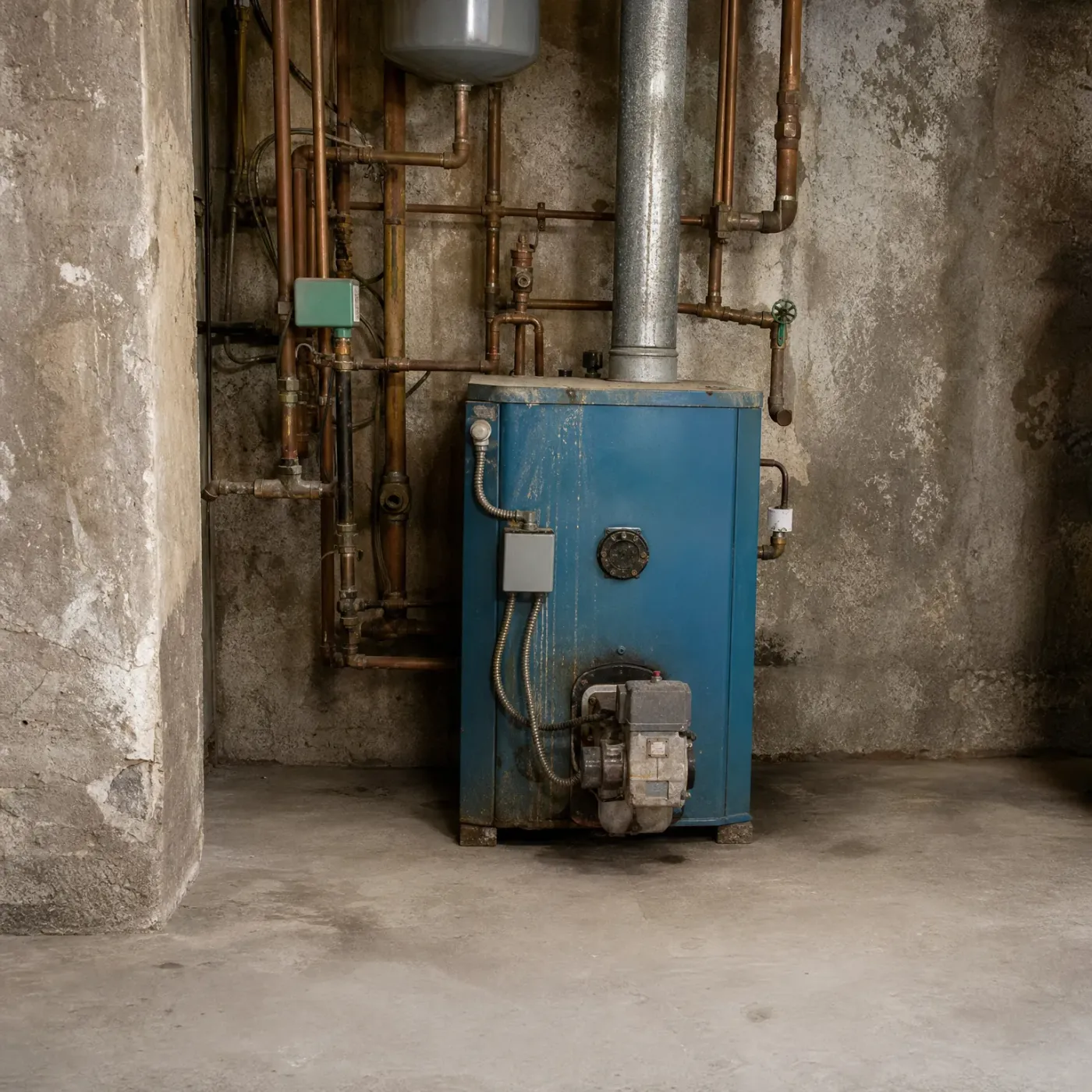
Sediment baked onto the heat exchanger traps water against a surface too hot for it to escape. It flashes to steam and collapses, and that's the rumble working up through the flue pipe and into the house above.
Winter nights here average 23°F, so your boiler is running long hours to keep up, not just kicking on now and then. Every one of those hours pushes more heat through that scaled exchanger, which is exactly where kettling gets worse.
NOAA nClimDiv 1991-2020 county normals weighted by homes

That popping under the radiator is water flashing to steam against a heat exchanger coated in scale. It will keep getting louder, and the boiler will keep working harder to heat the same house, until someone cleans or replaces that exchanger. Nothing about that changes on its own.
Right now your options are to call around to a few boiler companies, explain the kettling and the noise and when it started to each one, wait on quotes, and sort through who actually works on your system and who's free this week. Send the form instead and that part is off your plate. A licensed contractor who services boilers in Rhode Island takes it from there, and you go back to waiting on a knock instead of a callback.



Send one request and you're done looking
Describe what your boiler is doing once, in one form.
