What your boiler pressure should be in Rhode Island
One form instead of hunting for a pro who does boiler tune-ups.
Most boilers want between 12 and 15 psi when the system is cold. If the gauge on yours reads lower, it's losing water somewhere or the feed valve isn't doing its job. If it's climbing past 20, that's worth a look too. Either way, the number on your gauge right now tells you something specific about what's going on inside that system.
A boiler running low on pressure can short cycle or stop heating certain rooms. One running high can trip the relief valve, which means water on your basement floor and a drop in pressure right after, so the gauge looks fine again even though something is wrong. Rhode Island winters don't leave much room for a boiler that's guessing at its own pressure for weeks before anyone notices.
Finding out why the number is off usually means someone opening up the system, checking the expansion tank, the feed valve, the relief valve, and tracing where water might be getting out. That's not a weekend project with a wrench and a guess. It's also not a quick phone search either. You'd normally be calling a few heating companies, describing the same symptoms three or four times, waiting on quotes that don't line up with each other, and trying to figure out which contractor actually knows boilers instead of just furnaces.
Submitting a request here skips that part. It goes to one licensed contractor working in Rhode Island, someone who deals with boiler pressure complaints every heating season and already knows the handful of things that usually cause it. You're not fielding calls from five different companies trying to win the job. You get matched with the one who can actually look at your system.
The pressure reading is where this starts, not where it ends. What matters is what's causing the number to sit where it does, and that's easier to find out with someone who already knows where to look.
What psi should my boiler pressure be at?
Your boiler has a pressure gauge on the front, usually with a needle sitting somewhere between numbers you've never had a reason to think about. Now you've noticed it, and you want to know if it's where it should be before you decide whether to worry about it or just keep an eye on the thermostat tonight.
It should read between 12 and 15 psi when the boiler is cold.
That range is what most residential boilers are built to run at when the system is cold and not actively heating. Once the burner fires and the water heats up, the needle will climb a few psi higher, and that's normal. What matters is where it sits before that happens. A reading under 12 usually means the system has lost some water, through a small leak or an automatic feed valve that isn't keeping up. A reading over 15 when cold means too much water got into the system, and that pressure will only climb further once the heat comes on. Either way, the gauge is telling you something worth checking before the coldest months put more strain on the system.
Why the needle moves at all
Water expands when it heats up. A cold boiler holding 12 to 15 psi will climb a few pounds once the burner's been running, and that's normal. The expansion tank is what absorbs that swing. If the tank's bladder has failed or lost its air charge, the system has nowhere to put that expansion except the pressure gauge, and you'll see it climb higher than it should every time the heat comes on.
Where the water actually goes
A boiler that keeps needing water added isn't holding onto what you're giving it. Sometimes it's visible, a damp spot near a fitting or a valve. Often it isn't, because the system is venting a small amount of water as steam through the pressure relief valve or losing it slowly through a joint that only weeps under pressure. A contractor who services boilers in Rhode Island through the winter knows which fittings on which brands tend to go first.
Winter nights average 23°F statewide
At 23°F, your boiler is running long stretches most nights from December through February. That's more hours for the pressure to climb as the system heats and more chances for it to drop back once it cools. Check the gauge cold, before the burner has fired that morning.
NOAA nClimDiv 1991-2020 county normals weighted by homes
A gauge sitting outside 12 to 15 psi doesn't tell you which part failed. It could be the feed valve, the expansion tank, a pinhole leak in a pipe you can't see, or an auto feeder stuck open and masking a bigger problem. Figuring that out means someone who works on boilers in Rhode Island homes every winter and knows which of those usually goes first on a system like yours. Finding that person yourself means calling around, explaining the same gauge reading to each one, and sorting through quotes that don't agree with each other. This connects you with one local, licensed contractor instead, so you're not fielding five calls about a pressure problem you already described once. With gas prices and electric rates what they are here, a boiler that's losing water or running on a failing expansion tank costs you more every month it goes unchecked. Get the gauge looked at before the next cold stretch asks more of it.
A gauge that holds steady at 12 to 15 psi, cold, week after week, means the system is sealed and the expansion tank is doing its job. You can stop checking it so often.
A gauge that keeps drifting back down means you're topping it off by hand every few weeks. That's water leaving somewhere, through a valve, a fitting, or a spot you haven't found yet, and it won't fix itself before the cold nights in December.
Before you get your boiler maintenanceAfter you get your boiler maintenance
Pressure holding where it should
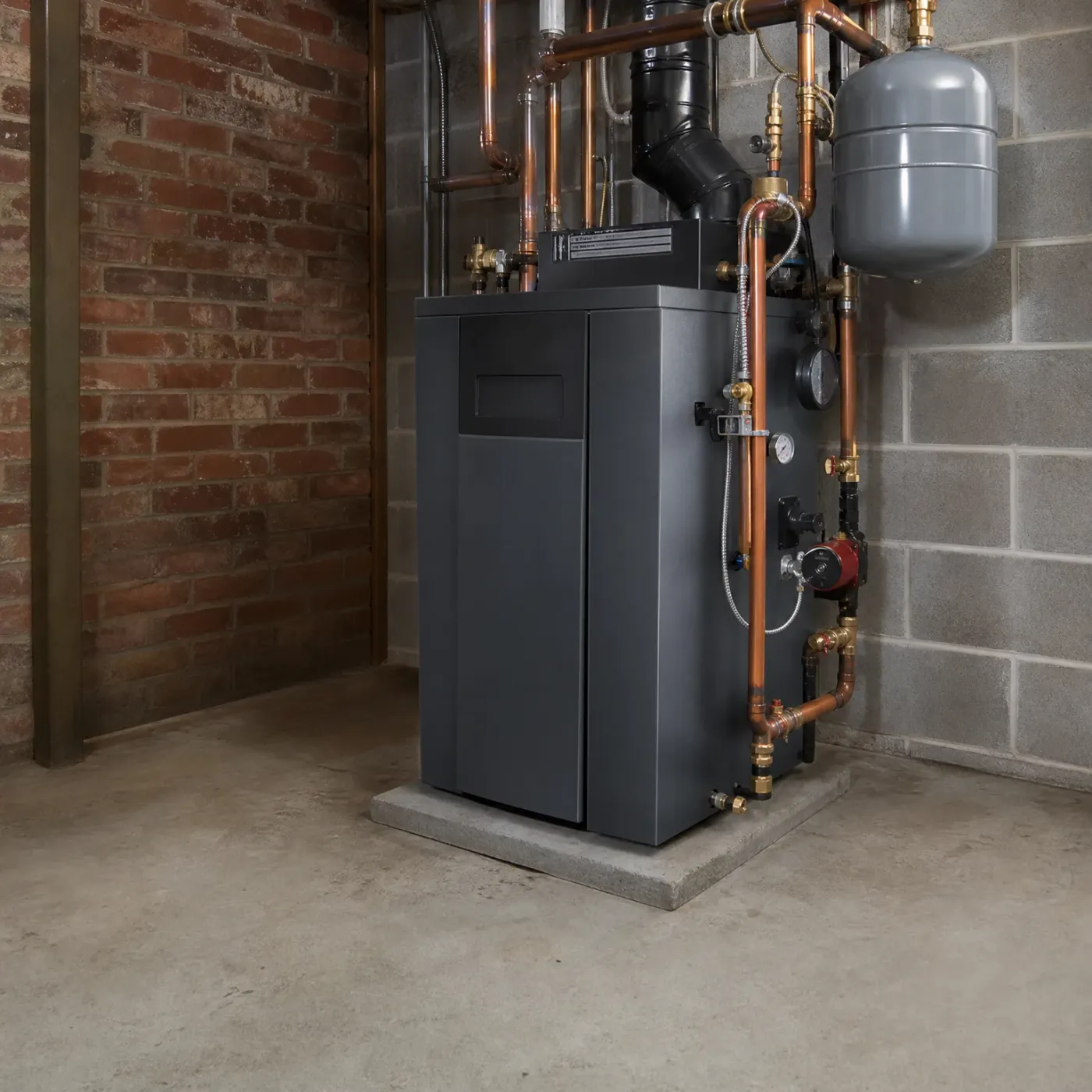
This is what a boiler looks like when the gauge stays put. The copper lines are tight, the expansion tank is doing its job, and nothing on that cinder block wall is weeping or rusted. A system in this shape doesn't need you checking the gauge every week.
Pressure that won't stay put
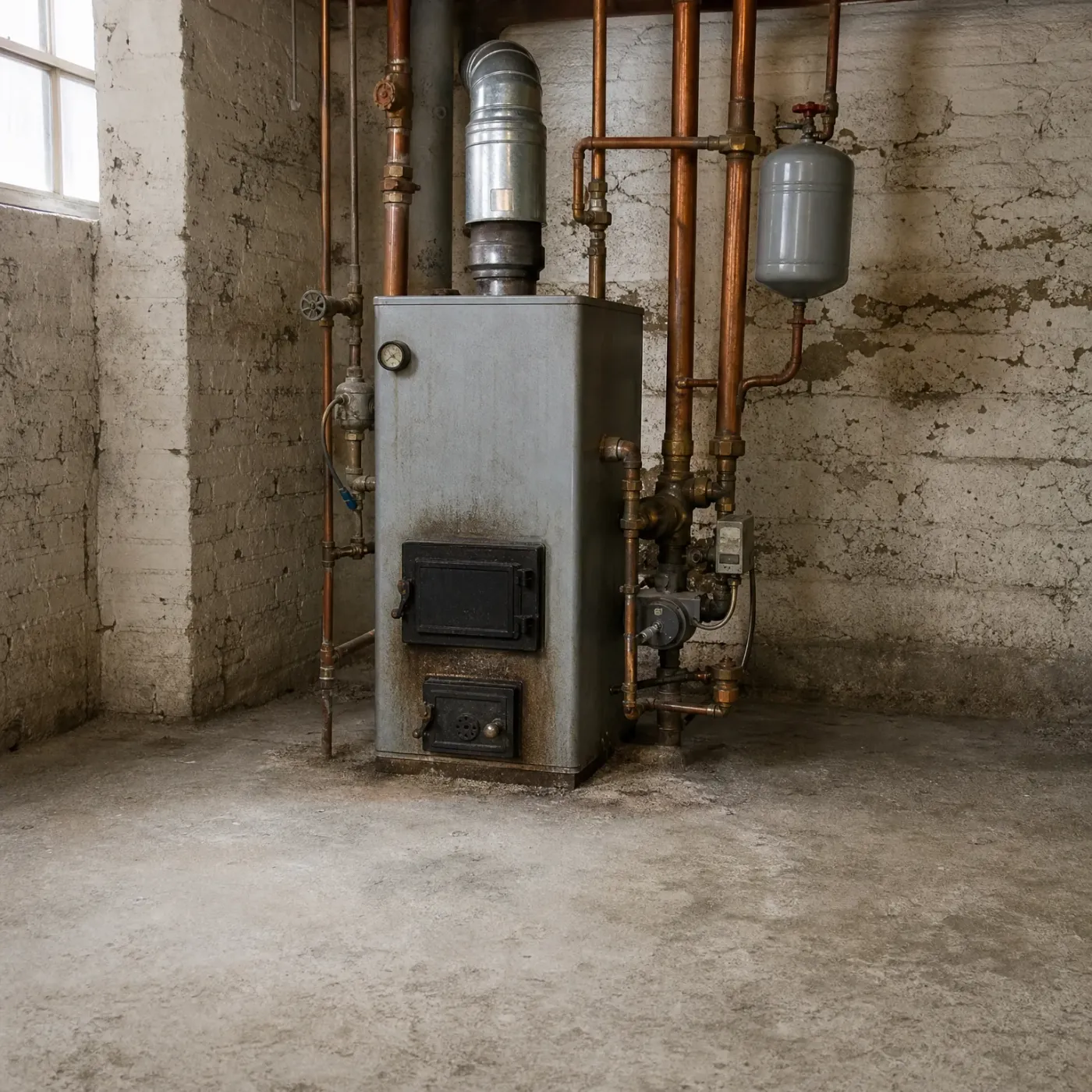
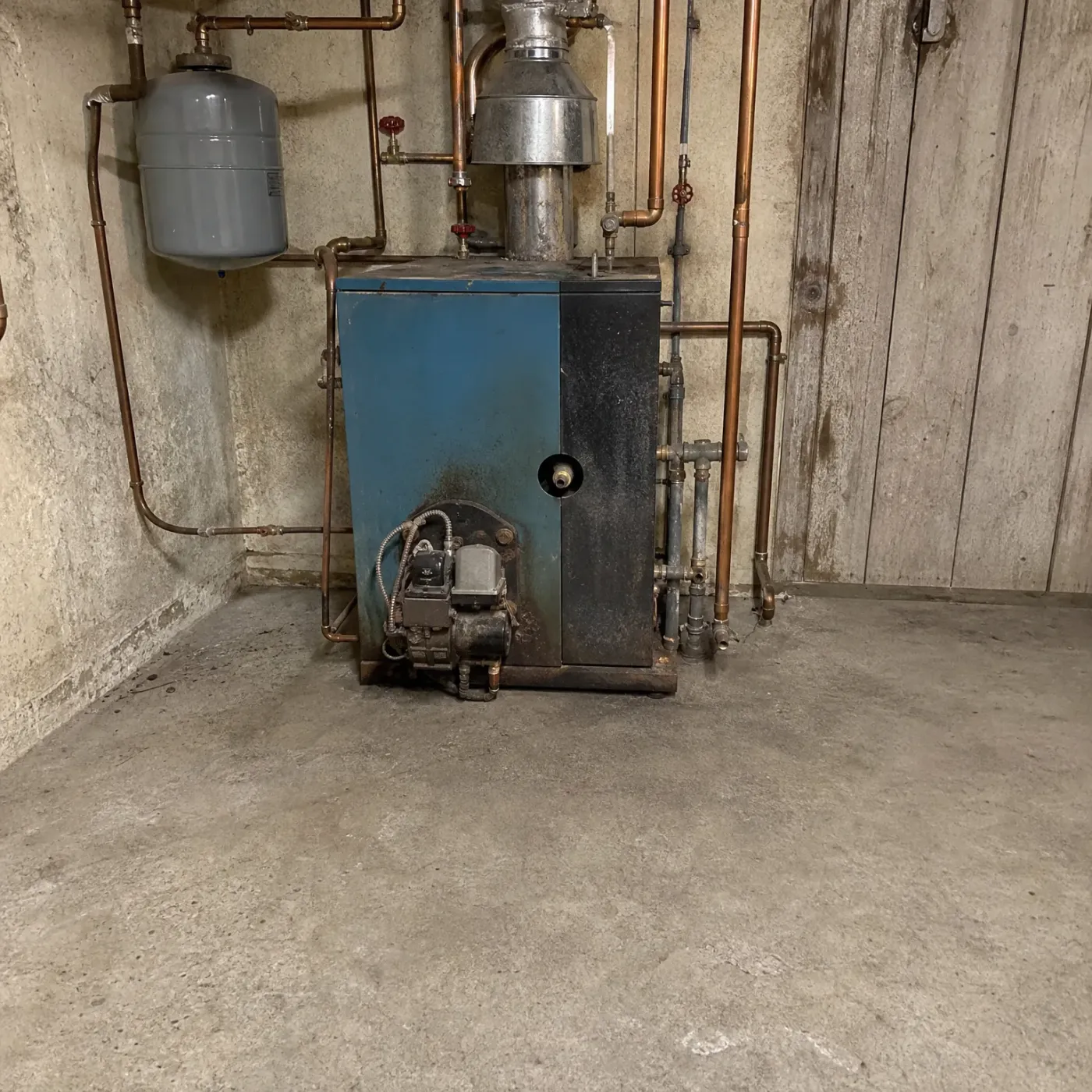
An older boiler like this one has had more years for a joint to loosen or the expansion tank to lose its charge. If yours is topping off on its own or the gauge keeps sliding, something in that pipe run is letting water out and it won't find itself.
12 to 15 psi cold is the number to know, and now you know it. A gauge that holds there means the boiler's sealed up right. A gauge that won't stay there means something, the feed valve, the expansion tank, a slow leak somewhere in the pipes, needs a look from someone who can actually trace it. That's not a job for guesswork, and it's not one you have to figure out by calling around either. A contractor working on boilers in Rhode Island basements all winter has seen most of what makes a gauge drift, and when you request service here, you're handed to one licensed local contractor who takes care of it, not a pile of callbacks from companies you have to sort through yourself. You get one call, from someone who already knows what to check first. The gauge on your boiler will keep doing what it does. Whether you have to think about it again mostly comes down to whether someone qualified has looked at what's behind it.
Boiler Maintenance
Skip the calls to every shop
Step 1 of 3: Equipment
A local pro who services boilers gets in touch about the tune-up.
Say what's going on with your boiler, and a pro who works on them reaches out.
One request and finding someone for the tune-up is handled.
Send the form, and lining up the boiler tune-up stops being yours to chase.
Fill out one short form instead of calling around.
Explain the job once and skip repeating it on every call.
Your request goes to one pro, not a list of companies.
The pro who reaches out is licensed in Rhode Island.