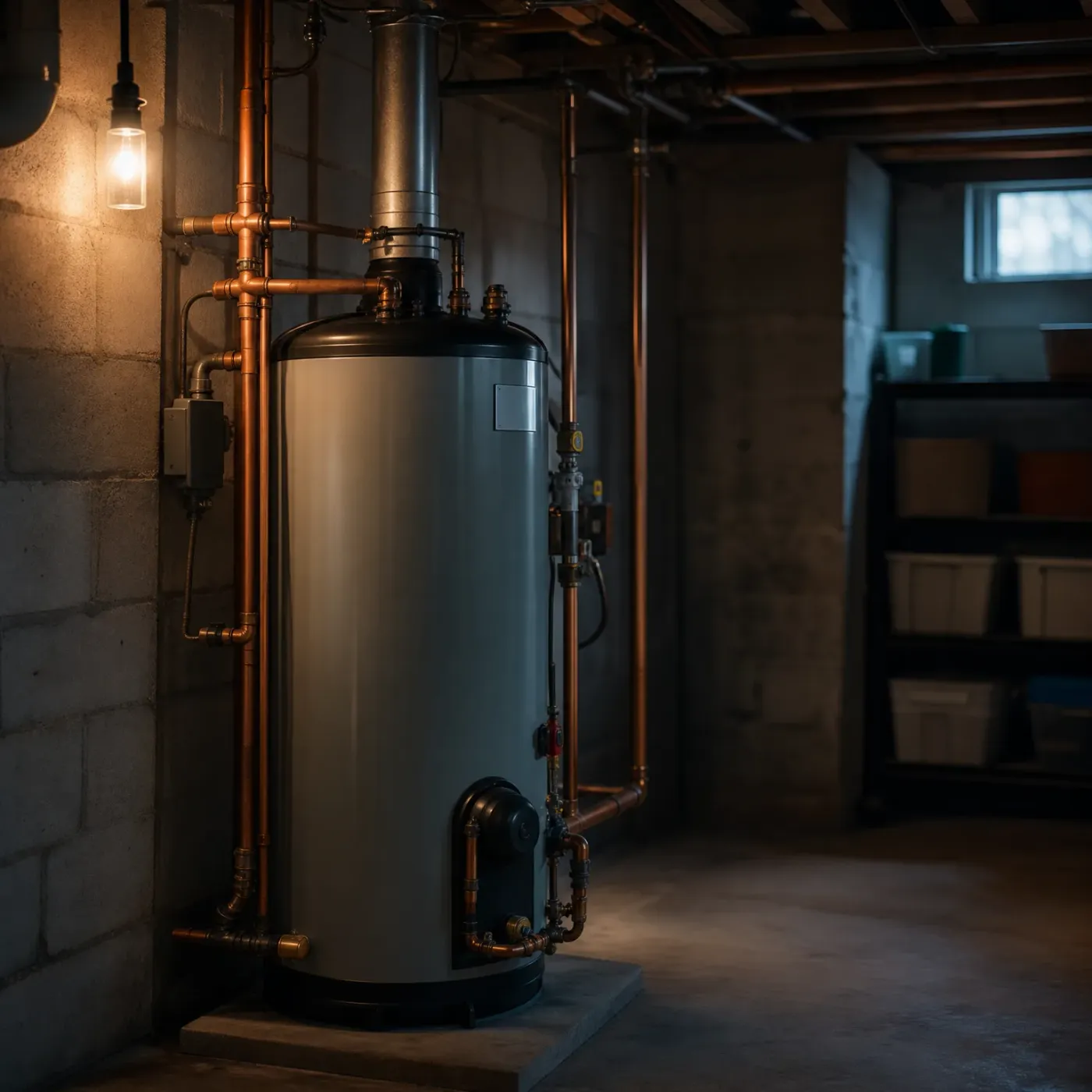
A cylindrical water heater or boiler with a flue pipe and copper piping stands on a concrete pad in a dim basement with concrete block walls, a hanging bulb at left and a shelving unit with bins at right.

One request and it's handed off

What a boiler tune-up covers before a Rhode Island winter

Before the cold sets in, a boiler tune-up checks the parts that keep it running through a Rhode Island winter: the burner, the ignition, the pressure, the vents, the water level. This page walks through what gets checked and why. Send the form once and skip the calling around for someone who can do it.

I'm done searching

A boiler tune-up before winter means a technician checks the burner, the ignition, the water pressure, the venting, and the controls while the system is still idle, before you need it every day. A boiler that sits unused for seven or eight months can develop a dirty burner, a weak ignition, or a pressure drop without showing any sign of it until the first cold night, when the house doesn't heat and you find out the hard way. Most homes in Rhode Island heat with gas, and a gas boiler that isn't firing clean wastes fuel even when it's running fine otherwise. The tune-up catches that before the bill shows up in January. It also means fewer breakdowns in the months you're relying on the boiler every day, and a technician who already knows the system if something does go wrong later in the winter. For a reader thinking ahead to the cold, this is the difference between finding out now, on your schedule, and finding out in February, on the boiler's.

A man in a gray sweater reclines in a brown leather armchair with his eyes closed, beside a wooden side table holding a mug, a folded newspaper and a potted plant, with a bookshelf and sunlit window behind him.
A man with greying hair and a dark sweater leans back on an armchair with his eyes closed and a slight smile, in a living room with a bookshelf, plant, folded newspaper and mug on a wooden table.
A man in a gray fleece jacket sits reclined in a leather chair with his eyes closed, in a room with bookshelves, a table lamp, a window, and a desk holding a folded newspaper and a dark mug.
A bearded man in a gray fleece pullover sits with eyes closed in a brown leather armchair in a living room, with a floor lamp, bookshelf, potted plants, a side table holding newspapers and a dark mug, and a bright window behind him.

A technician opens the combustion chamber and looks at the heat exchanger for soot or rust, because either one gets in the way of heat moving into your water and drives up your gas use. The pressure relief valve gets tested by hand rather than just looked at, since a valve that's stuck shut won't do its job if pressure ever climbs too high. The aquastat and limit controls get checked against what the boiler is actually doing, because a control reading wrong will cut the burner off too soon or let it run long. The circulator pump gets a look and a listen, for noise and for water creeping past the seal, which is usually how a failing pump shows itself first. Flue piping gets checked for a tight connection and a clear path to the outside, so exhaust gas actually leaves the house. And the expansion tank gets checked for waterlogging, since a tank that's lost its air cushion lets pressure swing every time the boiler fires and cools.

What the tune-up actually checks

  • A technician checks the combustion chamber and heat exchanger for soot or rust, since either one blocks heat transfer and wastes gas.
  • The pressure relief valve gets tested by hand, because a valve that sticks shut can let pressure build with nowhere to go.
  • Aquastat and limit controls get checked against actual readings, since a control that reads wrong will short-cycle the burner or run it too long.
  • The circulator pump gets inspected for noise and for water leaking past the seal, which is usually the first sign it is wearing out.
  • Flue piping and venting get checked for a solid connection and a clear path outside, so exhaust gas leaves the house instead of backing up.
  • The expansion tank gets checked for waterlogging, since a tank that lost its air cushion will cause the pressure to swing as the boiler heats and cools.
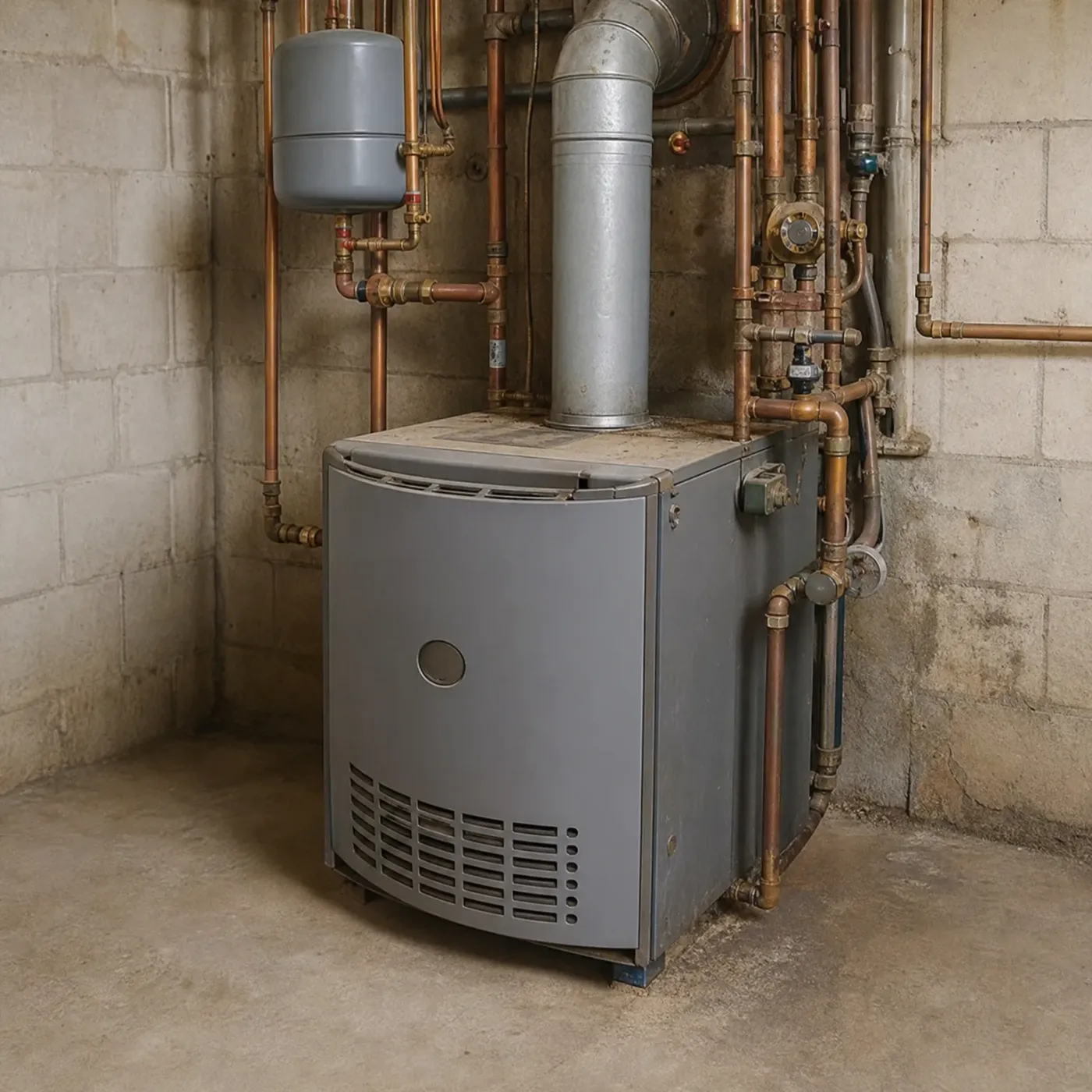
A gray residential boiler with a metal flue pipe stands in a concrete-block basement corner, surrounded by copper piping, valves and a gray expansion tank.
Before you get your boiler maintenance
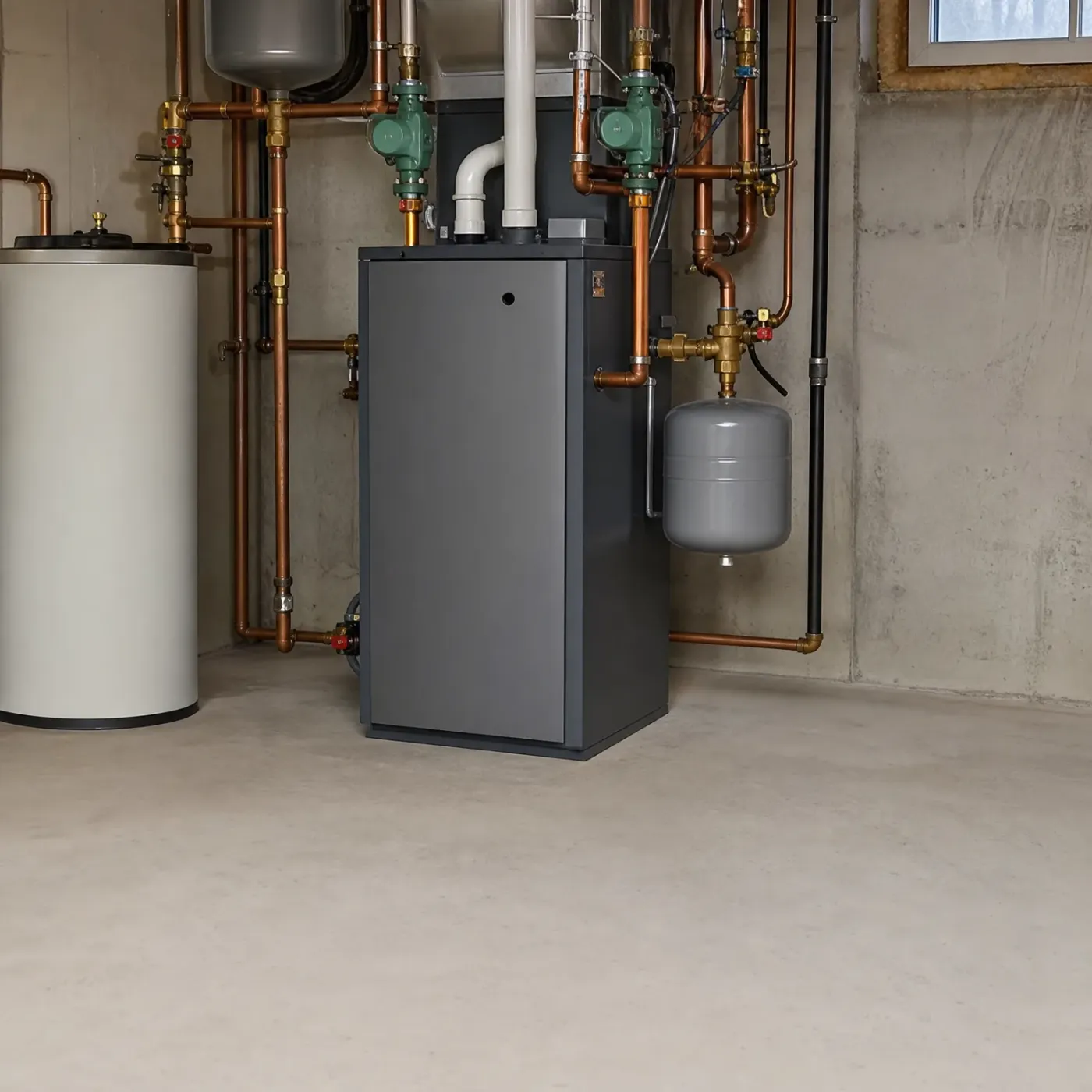
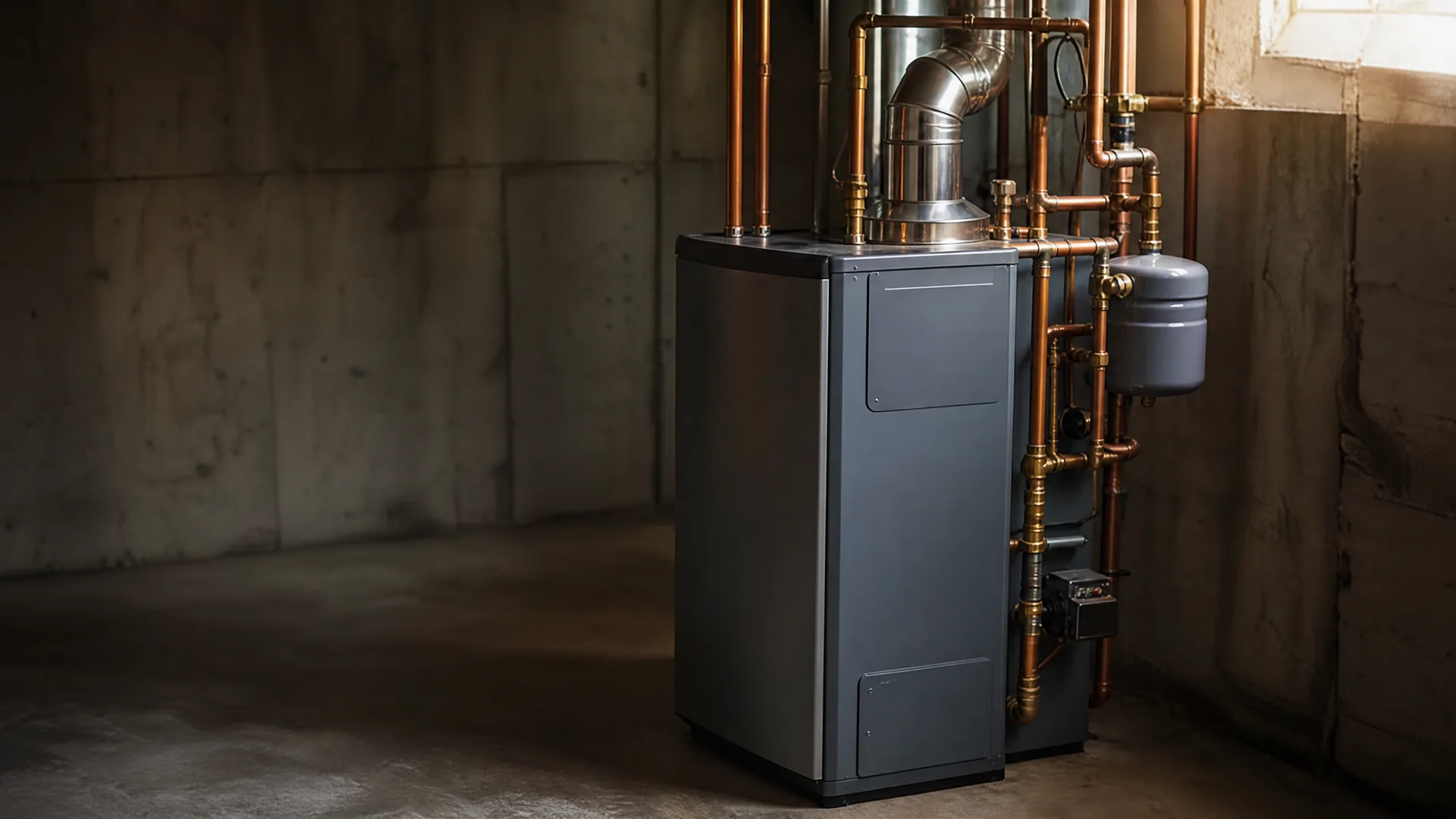
A dark gray floor-standing boiler in a concrete-walled basement, connected to copper piping, circulator pumps, a gray expansion tank, and a cream-colored storage tank to the left.
After you get your boiler maintenance

Why the venting gets checked

A boiler draws combustion air in and pushes exhaust out through its vent pipe. If that pipe is blocked by a bird nest, a dent, or even snow sitting against an exterior cap, the gases have nowhere to go. A technician checks the vent run and the termination point outside the house for blockage and for proper slope, since a vent that doesn't drain condensation back toward the boiler can corrode from the inside. This matters more in Rhode Island than in a mild climate, because once the boiler is running daily through a long winter, a vent problem shows up as soot, as a safety shutdown, or worse.

What a stuck valve costs you

Gas here runs through the same meter all winter, and a boiler that's cycling inefficiently burns more of it to hold the same temperature. A scaled heat exchanger or a dirty burner can't transfer heat as well, so the boiler runs longer to satisfy the thermostat. Electric heat strips or backup resistance elements, if your system has them, cost more to run than the boiler itself, and Rhode Island's electric rates are among the highest in the country. A tune-up catches the wear that drives that extra runtime before the thermostat is set and left for the season.

A gray-haired man with a beard in a blue button-placket shirt reclines on a couch with his eyes closed, beside a sunlit window with a green plant.
A woman in a cream knit sweater sits in an armchair with her eyes closed near a window showing yellow autumn foliage, with a mug on a round wooden side table beside her.

Done looking for a boiler pro

By November you want this done, not still on your list. Finding someone to look at a boiler isn't like finding someone to mow a lawn. You'd normally be calling around Rhode Island asking who still works on boilers, not just furnaces, checking if they can come before the first cold snap, explaining the same thing to three different companies, then sitting with quotes trying to guess which one is fair. Send this form once and that whole process is off your plate. One contractor gets your request, not a pile of them fighting for it, and you're not the one doing the legwork to find a name you can trust. What's left is the part that actually matters: someone qualified looking at the burner, the ignition, the pressure, before you're relying on that boiler every day through a Rhode Island winter.

What skipping it costs you

  • A boiler that short-cycles or won't hold pressure overnight can leave you without heat on a January morning until someone gets out to look at it.
  • If the vent pipe has a blockage a technician would have caught in the fall, you could be looking at a carbon monoxide problem instead of just a cold house.
  • Gas heats most homes in Rhode Island, and a dirty burner or fouled heat exchanger burns more of it to put out the same heat.
  • A pressure relief valve that's stuck shut is something you'd rather find out about in October than in the middle of a February cold snap.
  • Low water pressure that goes unnoticed until the boiler won't fire means a no-heat call on the coldest week instead of a scheduled visit before it.
  • Skipping the tune-up doesn't skip the problem, it just moves the repair to whenever the boiler finally tells you, usually at the worst time.

A boiler doesn't fail on a mild afternoon in October. It fails on the coldest night of the year, because that's when it's working hardest and whatever was wrong finally gives out. That's the part a tune-up changes. A technician checking the burner and heat exchanger in the fall isn't just about efficiency, though a clean burner does mean less gas for the same heat, and with what power and gas cost in Rhode Island, that difference shows up on the bill all winter. It's also about finding the things that turn into an emergency call. A blocked vent pipe caught in October is a five-minute fix. The same blockage discovered in January, after exhaust has been backing up into the house for weeks, is a different situation entirely. A pressure relief valve stuck shut, low water pressure that's gone unnoticed, a short cycle pattern that's gotten worse over the summer: none of these announce themselves until the boiler is already struggling to keep up with the cold. At that point you're not scheduling a visit, you're waiting for one, on a morning when you also need the heat to work. The system doesn't care whether you had five minutes to deal with it. It just stops when it stops. A tune-up moves that discovery to a day when a cold house for a few hours is an inconvenience, not a crisis.

Winter nights average 23°F statewide

On a 23°F night, your boiler is running most of the night to keep up. If it's cycling on a dirty burner or low water pressure, it's working harder than it should just to hold the house at temperature.

NOAA nClimDiv 1991-2020 county normals weighted by homes

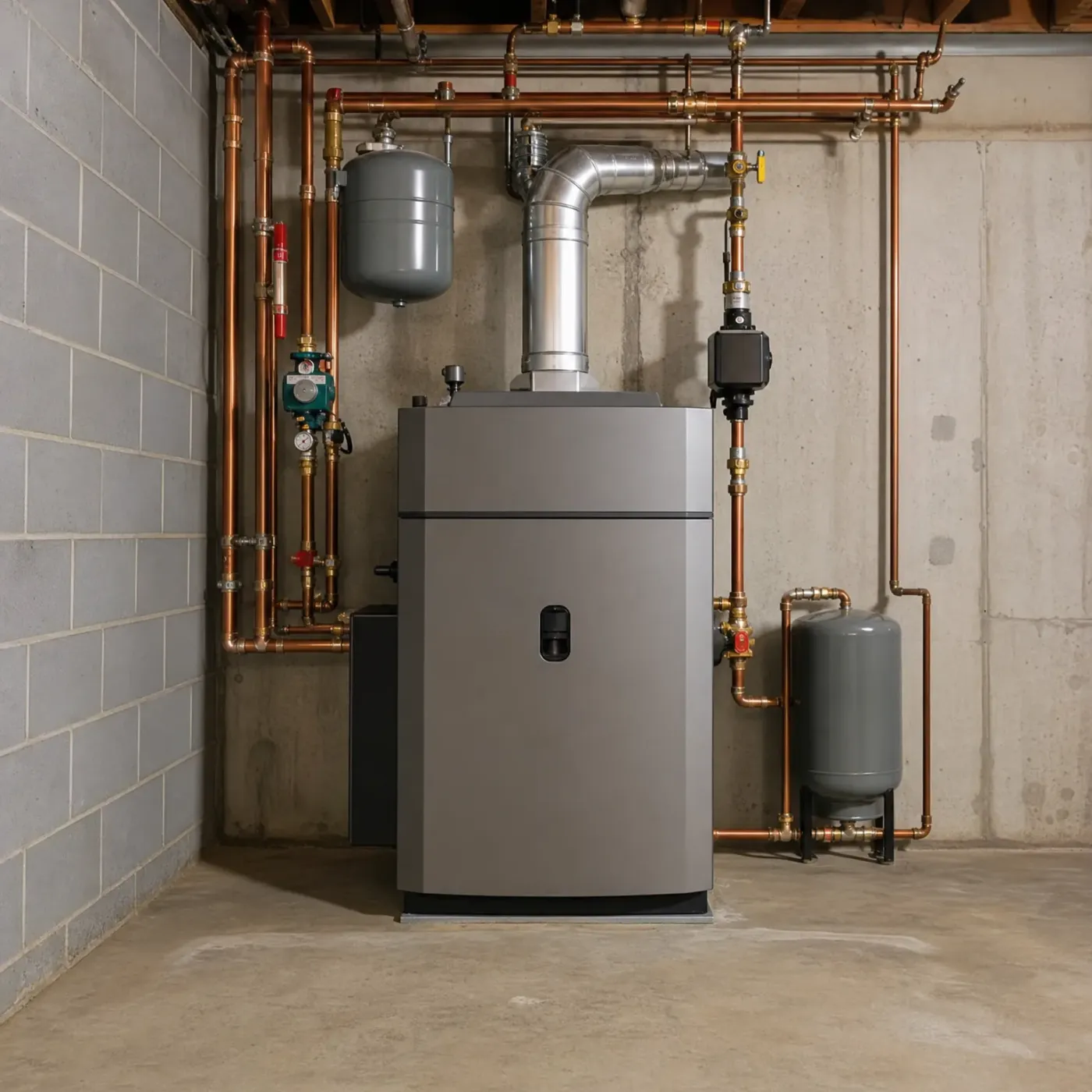
A gray boiler with a metal flue pipe stands in a basement against concrete and concrete-block walls, connected to copper piping, a circulator pump, and two gray expansion tanks.

Running the way it should

The copper piping, the gauges, the expansion tanks mounted on the wall and the floor: all of it holds steady pressure when the burner fires. A boiler maintained before winter looks like this, quiet and doing its job, through the coldest night in Rhode Island.

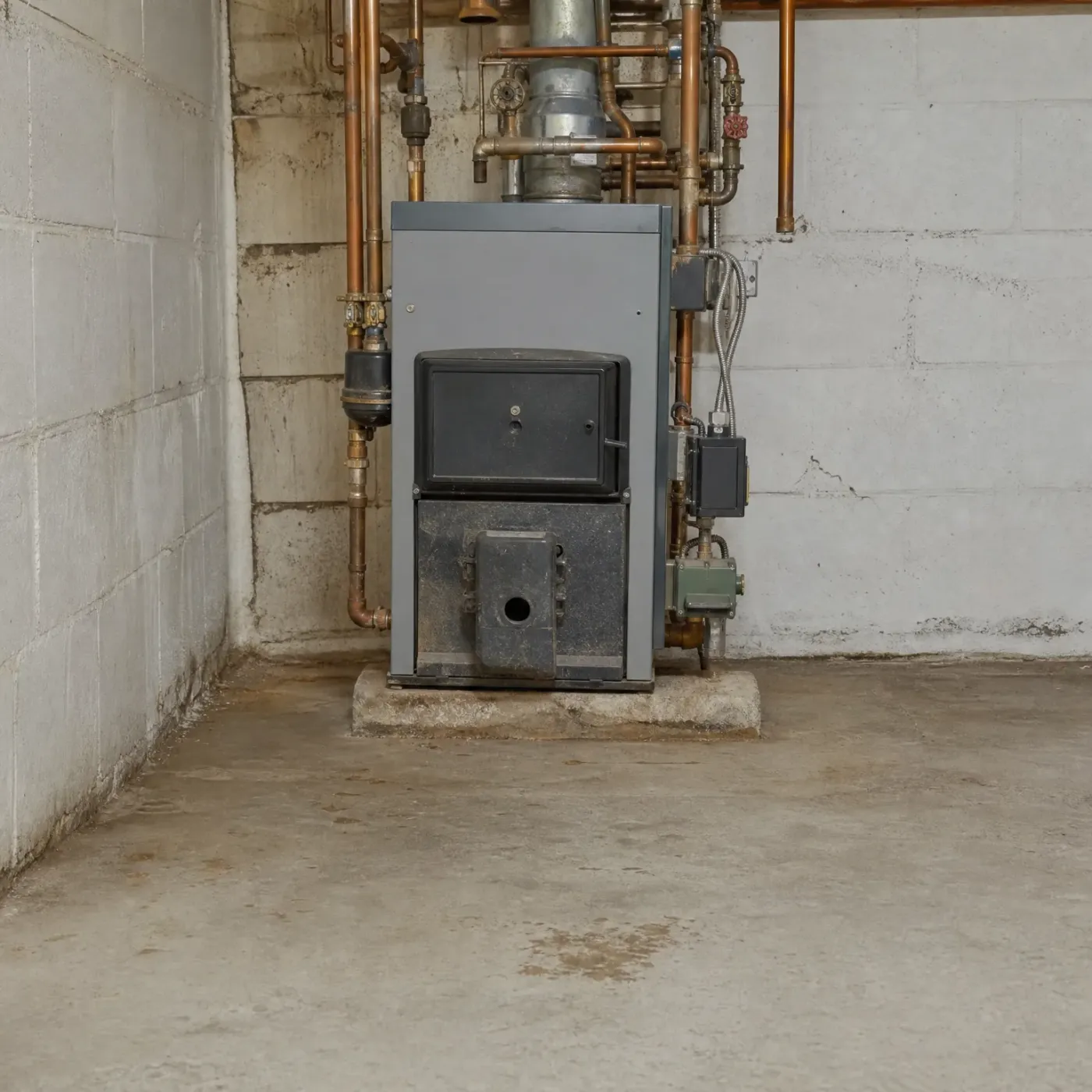
A gray boiler on a concrete pad in a basement with painted concrete block walls, copper piping, a metal flue, and electrical control boxes.

Running on borrowed time

An older boiler on a raised pad, its flue pipe and control box tied in with years of corrosion nobody's looked at. Nothing here looks broken yet. That's what makes it worth checking before January finds the weak point for you.

What's your boiler telling you right now

Go stand near it. Does it kick on and off more than it used to, or take longer to get the house warm? Listen for a bang or a kettle-like rumble when it fires, that's usually sediment sitting on the heat exchanger. Check the pressure gauge, it should sit where the manual says, not creeping down every week. A pilot or igniter that won't catch on the first try is telling you something too. None of this means you're without heat tonight. It means the parts that do the work have been sitting since spring, and whatever was slightly off in May hasn't gotten better on its own.

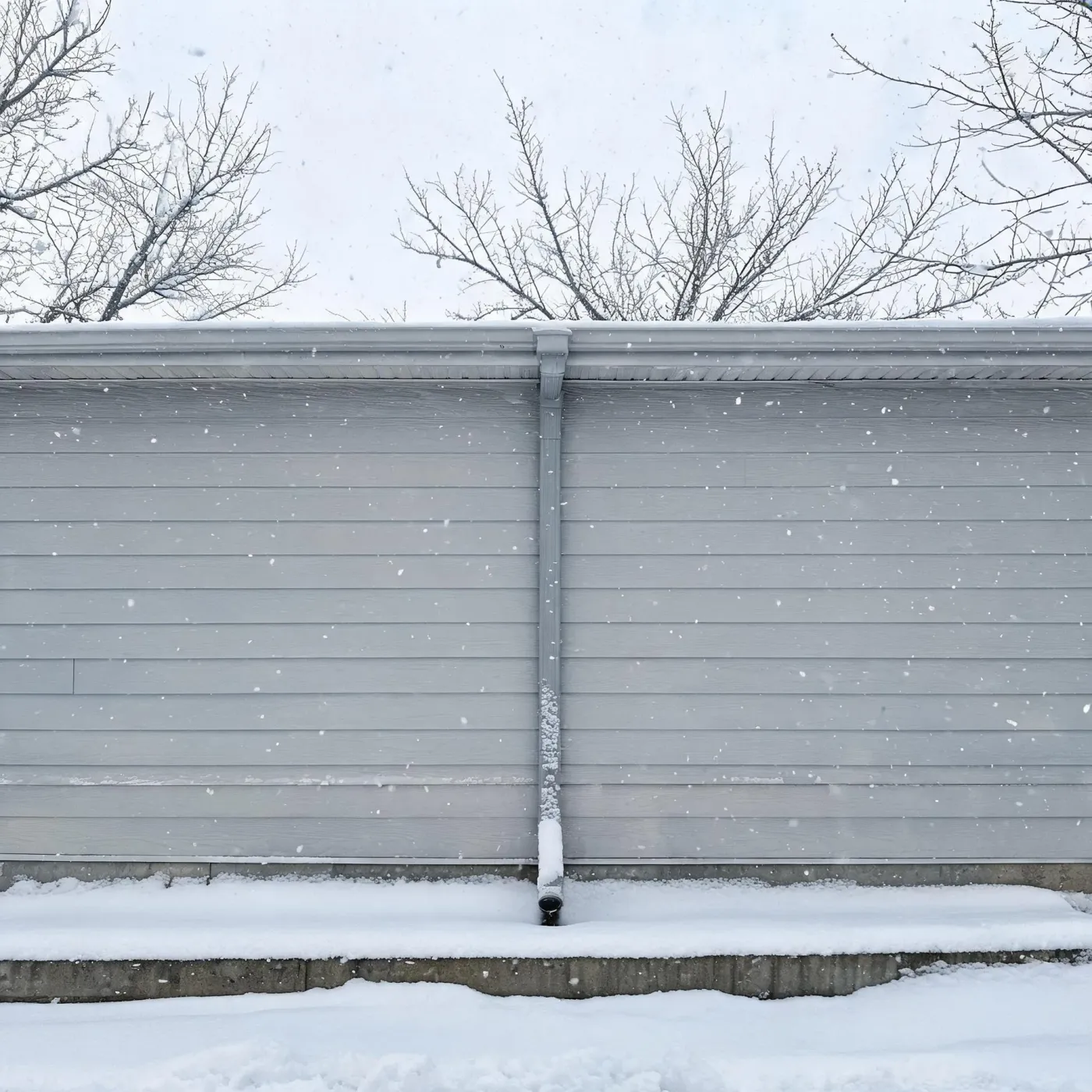
Gray horizontal lap siding on a building wall with a central downspout, seen during falling snow, with snow-covered ground and bare tree branches above the roofline.

Winter nights in Rhode Island average 23°F, according to NOAA climate data. At that temperature, your boiler isn't cycling on and off a few times an hour, it's running close to continuously to hold the house at temperature. A burner that's dirty or a pressure that's drifted low doesn't get a break to recover. It just keeps firing, longer than it needs to, to make up the difference. You'd notice it in radiators that take longer to get hot, or a boiler that seems to run most of the night without the house feeling any warmer for it. On a milder night the same issue might go unnoticed. At 23°F there's no slack left to hide it.

NOAA nClimDiv 1991-2020 county normals weighted by homes

A wooden table in the foreground holds a closed laptop and a ceramic mug of coffee, with a spindle-back wooden chair behind it, a beige wall with paneled wainscoting, a window at left, and a kitchen counter with a cutting board, bowl of fruit and greenery at right.

A tune-up before winter means your boiler is checked, not guessed at

A boiler tune-up before winter comes down to this: the burner, the ignition, the pressure, the vents, and the water level get checked while the boiler is idle, so none of it gets found out the hard way in January. That's the whole answer. Everything else on this page is what sits behind it.

Send the form once and the rest stops being your problem to solve. You won't be calling around Rhode Island asking who still works on boilers instead of just furnaces, waiting to hear back, or explaining the same bang and rumble to three different people while you compare what they'd charge. One form, and finding someone is off your list before the cold gets here.

A wooden table holding a stone vase with a bare branch, two stacked books and a small dark bowl, beside a window with green foliage outside and a sofa in the dim background.
A gray boiler unit in a concrete-walled basement, connected to copper piping, a metal flue duct, and a wall-mounted expansion tank.

It's off your list after this

Step 1 of 3: Equipment