





Is a high-efficiency boiler worth it in Rhode Island

Once you send the form, finding a pro is off your list.

Hand it off

For most Rhode Island homes, yes. Gas heats most houses here, and a high-efficiency boiler burns less of it to get your rooms to the same temperature. The old standard boiler sends a lot of heat straight out the flue. A high-efficiency model condenses the exhaust and pulls more of that heat back into your house before it vents, which is why it can hit efficiency ratings in the high 90s instead of the 80s. Over a winter that runs from October into April, that difference shows up on your gas bill every month, not just on the coldest days. It matters more if your current boiler is old enough that it was never built to condense in the first place. The upfront cost is higher than a standard replacement, but what you get back is a boiler that keeps more of the gas you pay for as heat in your house instead of letting it go up the flue.

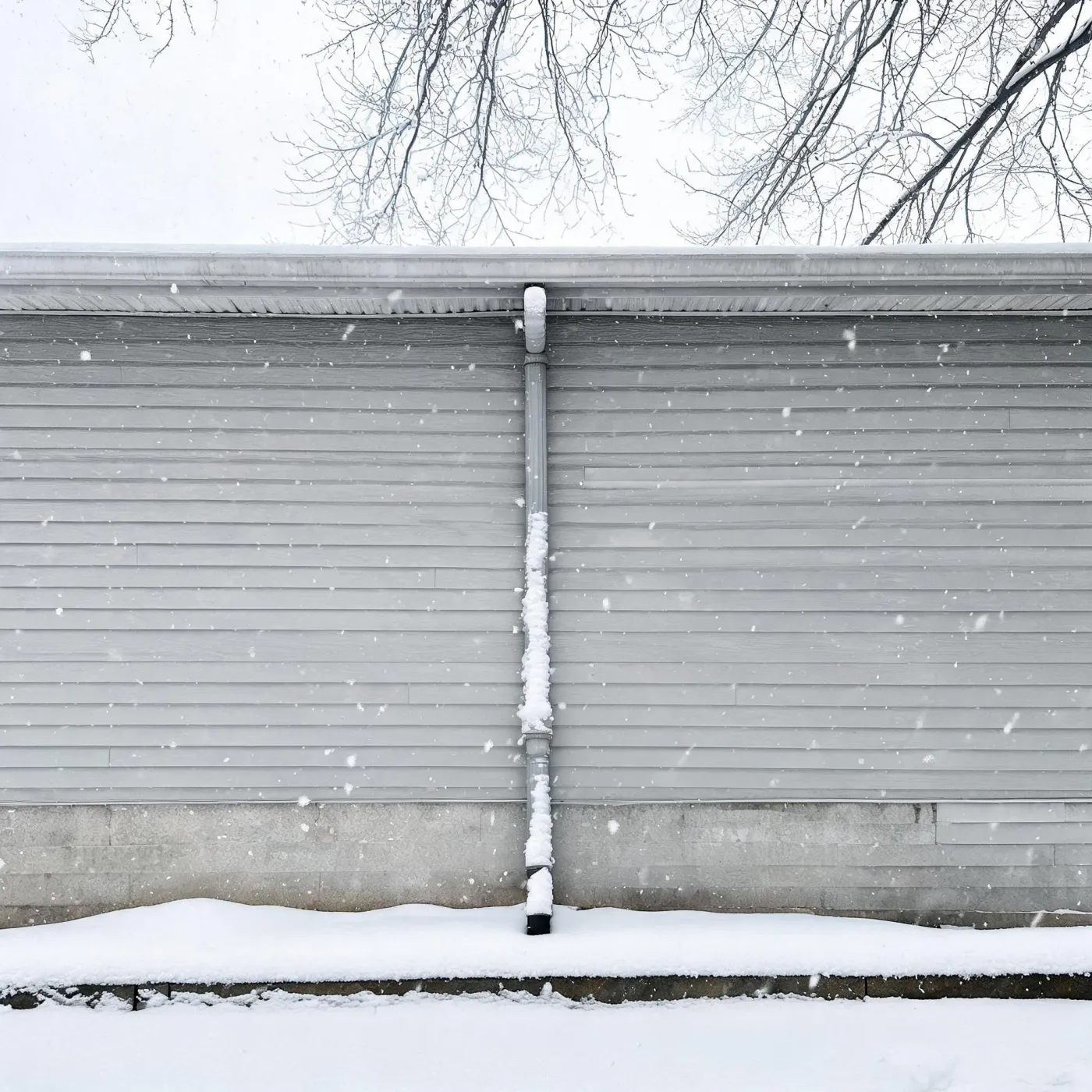
Gray horizontal lap siding on a building above a concrete block foundation, with a central downspout partly coated in snow, falling snowflakes, snow-covered ground, and bare tree branches against a white sky.

On the coldest nights your boiler runs long stretches to keep up. Winter nights average 23°F statewide, according to NOAA, and that's the kind of cold that keeps a boiler cycling on and off for hours instead of sitting idle. An old standard boiler loses a good share of that heat up the flue every time it fires. A high-efficiency model pulls more of it into your rooms before letting it go, so it doesn't have to run as hard or as long to get the house back up to temperature. You'd notice it most on nights like these, when the old unit never seems to shut off.

NOAA nClimDiv 1991-2020 county normals weighted by homes

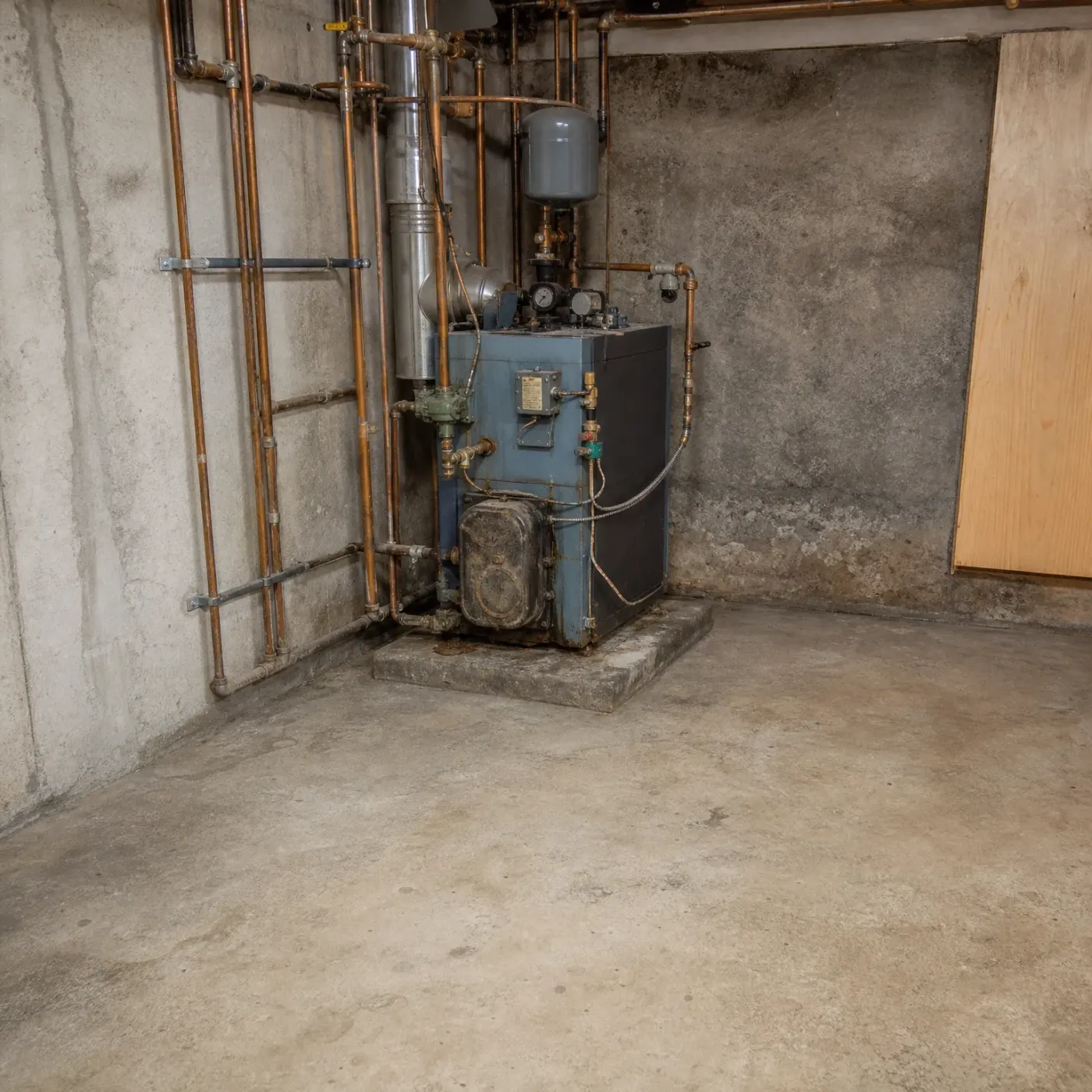
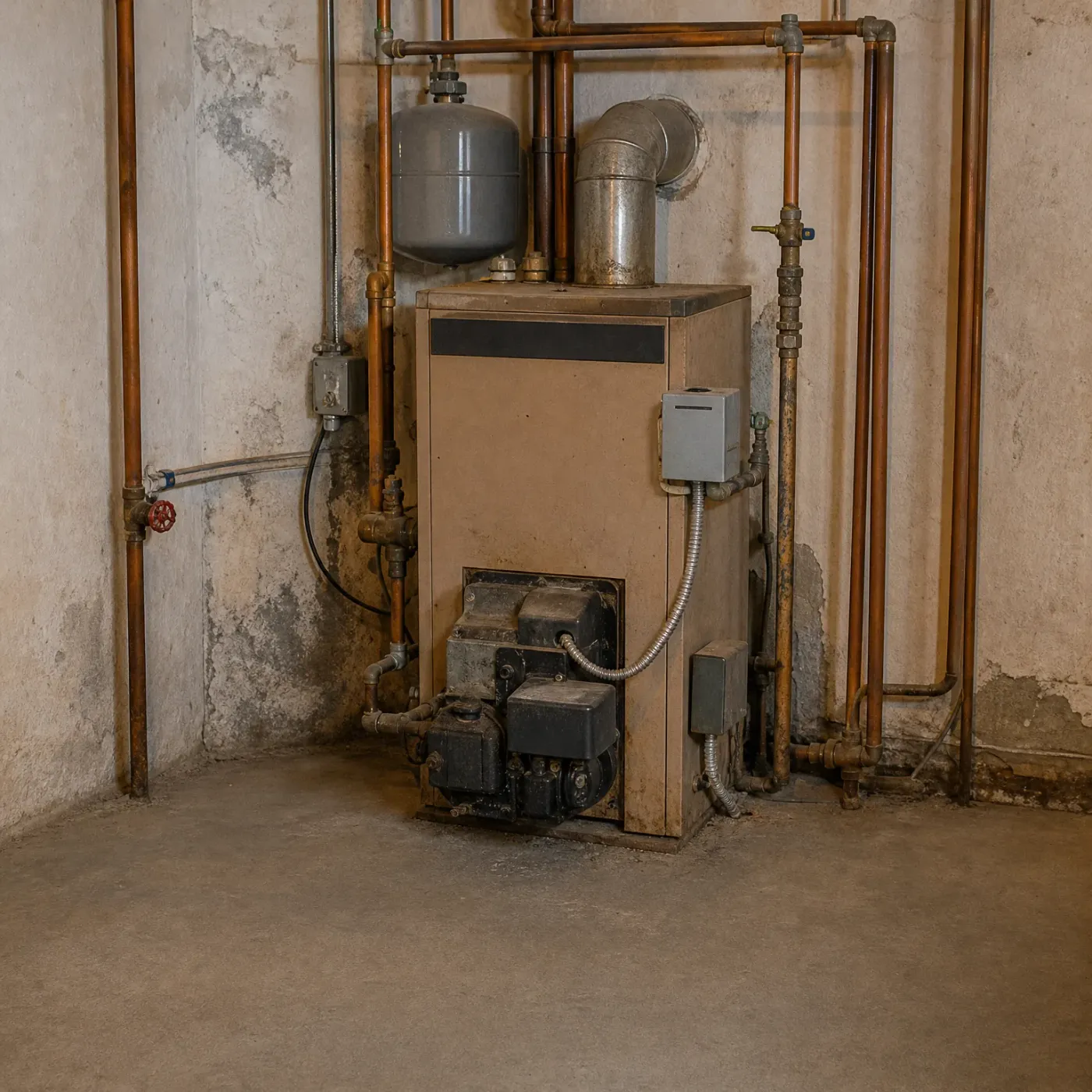
An older oil-fired boiler with a burner unit, flue pipe, expansion tank and copper piping stands in the corner of a concrete-floored basement with weathered plaster walls.
Before you get your boiler installation
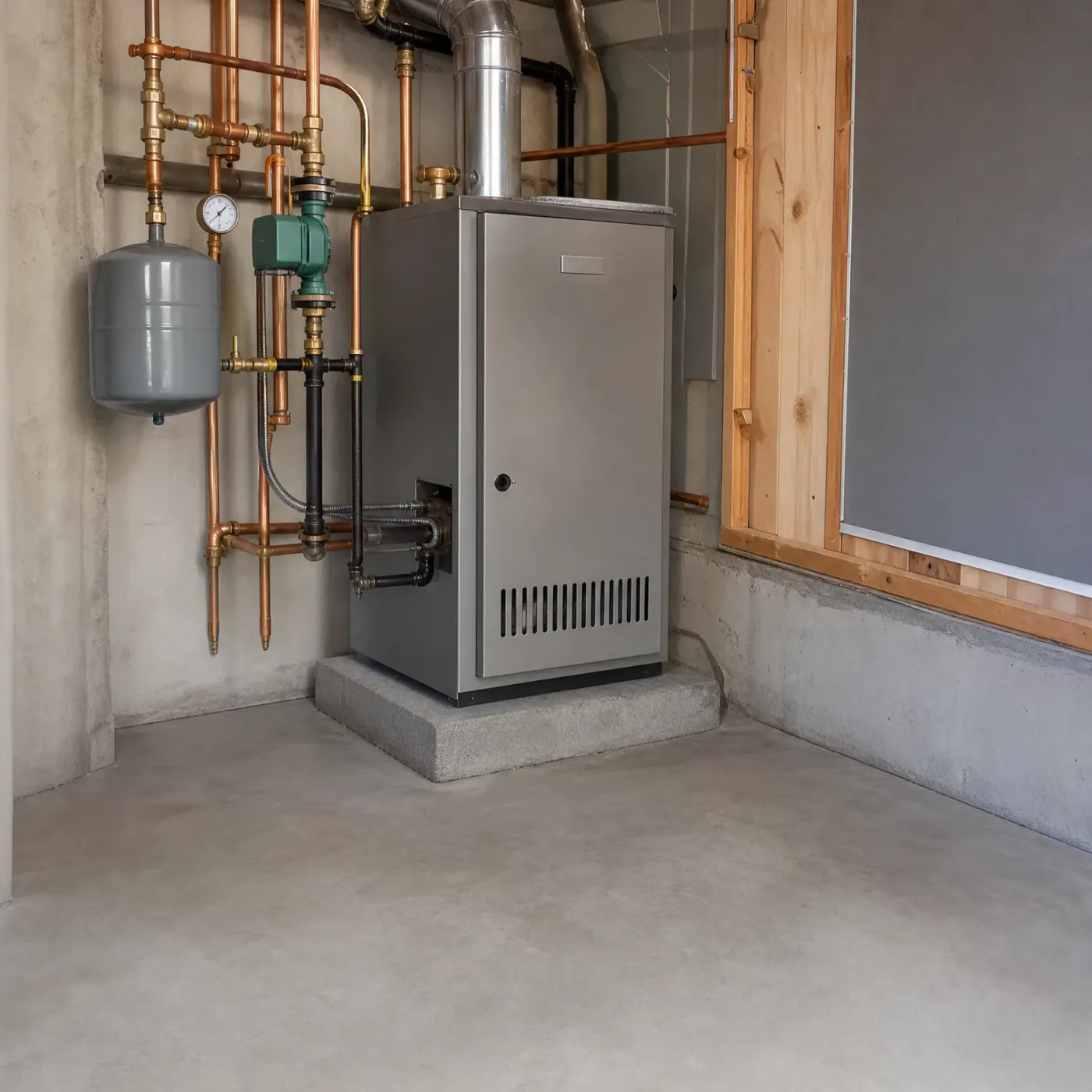
A gray boiler on a concrete pad in a basement corner, connected to copper and black pipes with a gauge, circulator pump, and gray expansion tank, beside a wood-framed wall.
After you get your boiler installation
  1. A high-efficiency boiler burns gas and sends exhaust into a secondary heat exchanger.

  2. That exchanger pulls heat out of the exhaust before it leaves the house.

  3. The exhaust cools enough that water vapor inside it condenses back to liquid.

  4. That condensation drains out through a PVC pipe instead of a metal flue.

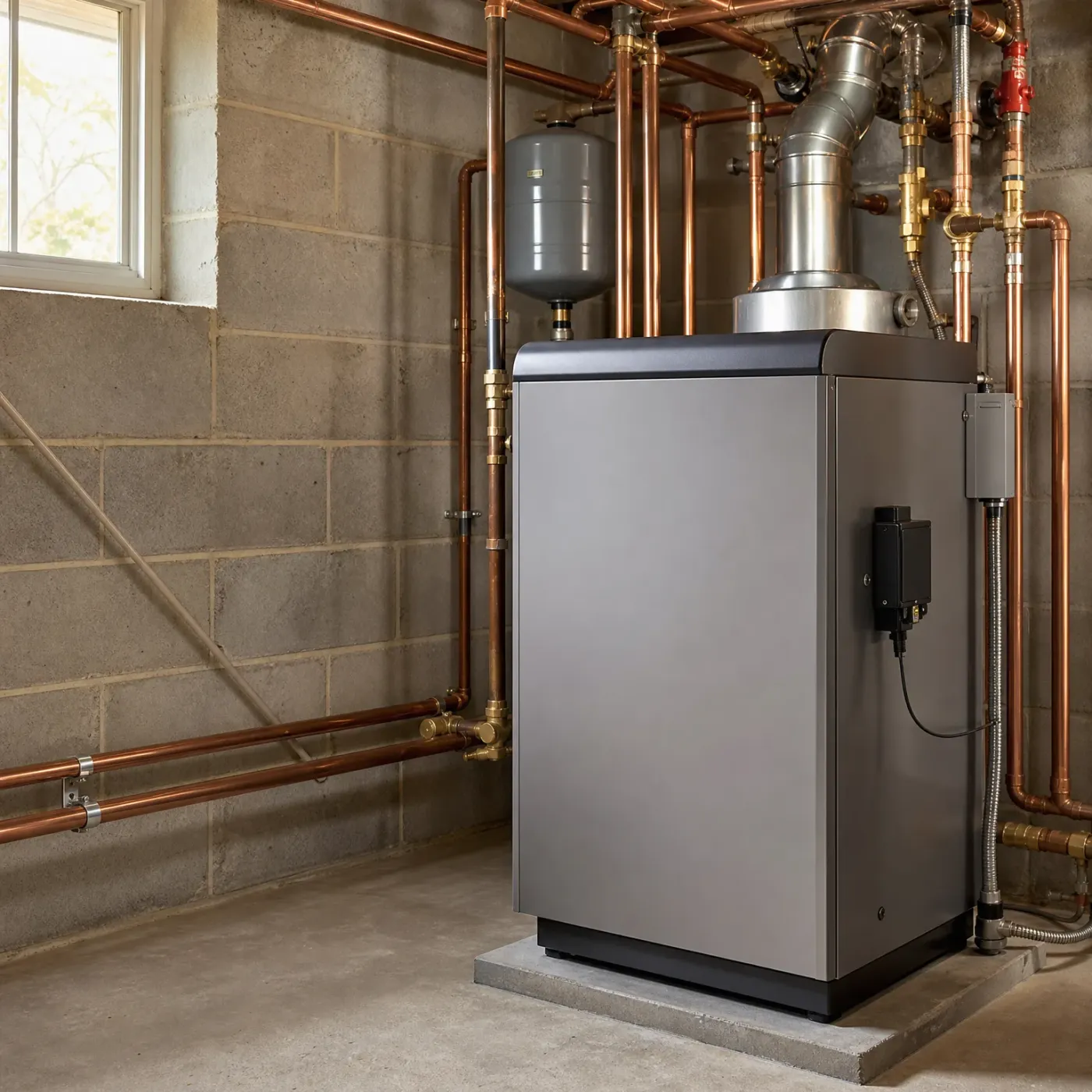
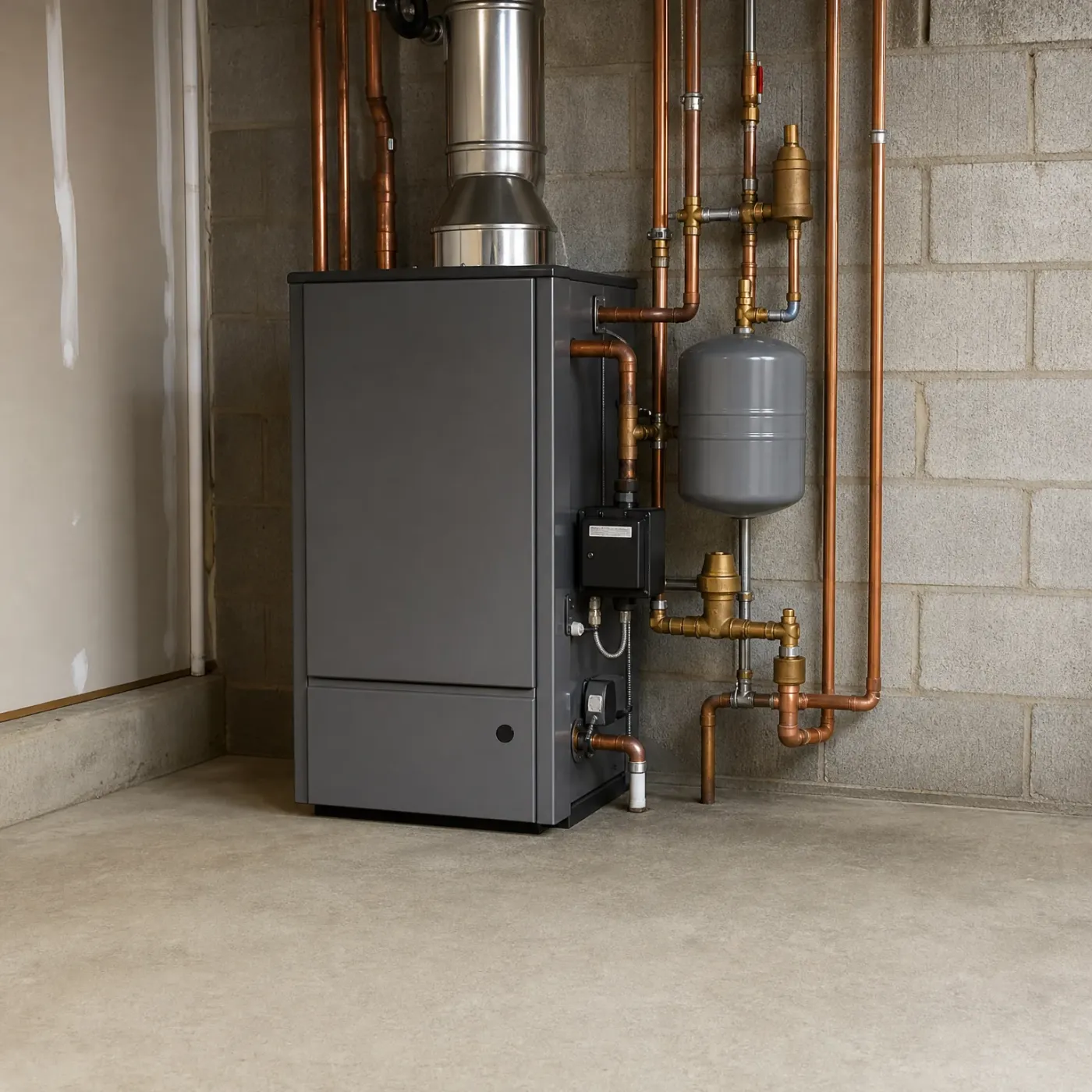
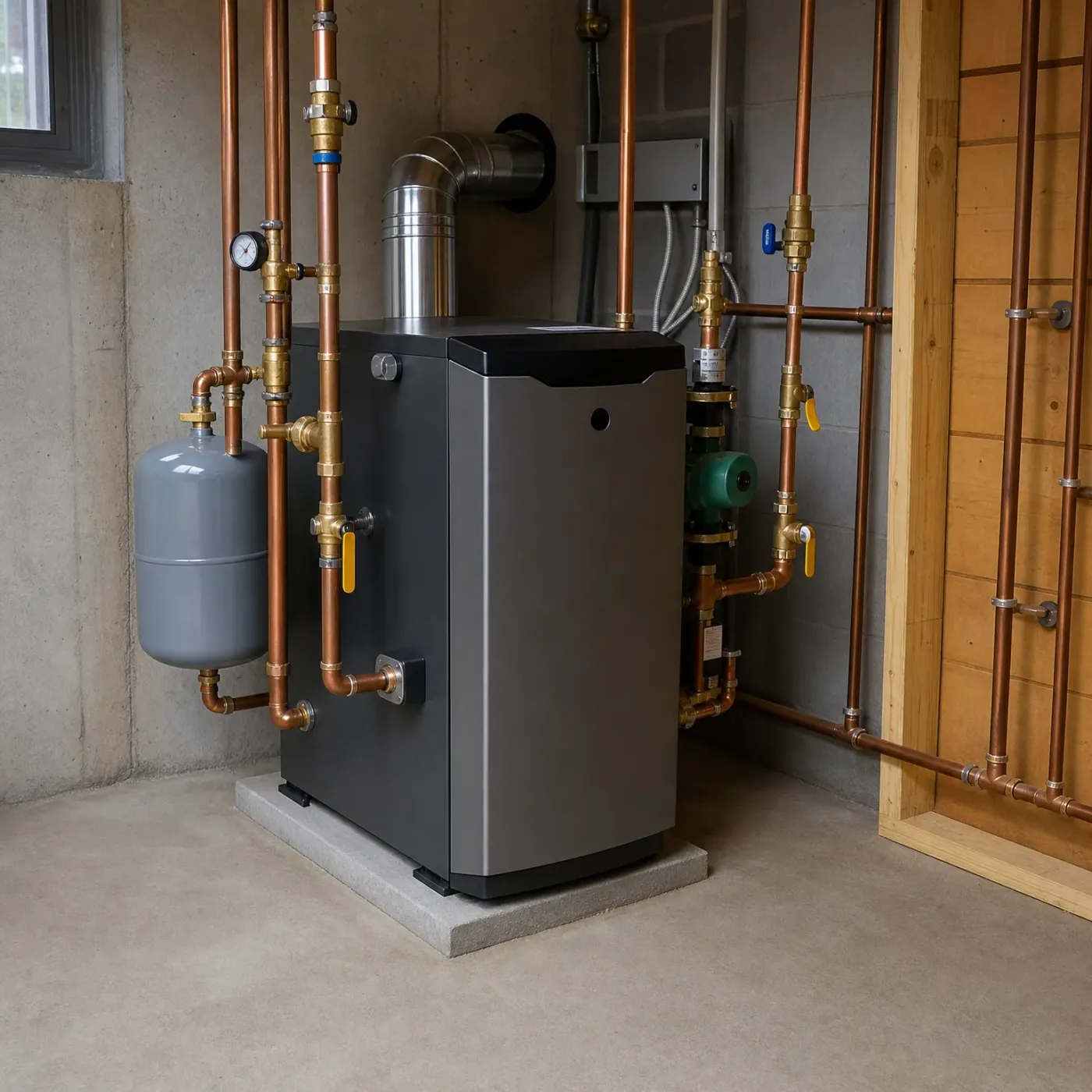
A gray floor-standing boiler with a metal flue stands against a concrete block wall, connected to copper pipes, brass valves and a gray expansion tank, on a bare concrete floor.
Copper lines, a wall-mounted expansion tank, a steel flue: this is what a high-efficiency boiler looks like running the way it should.
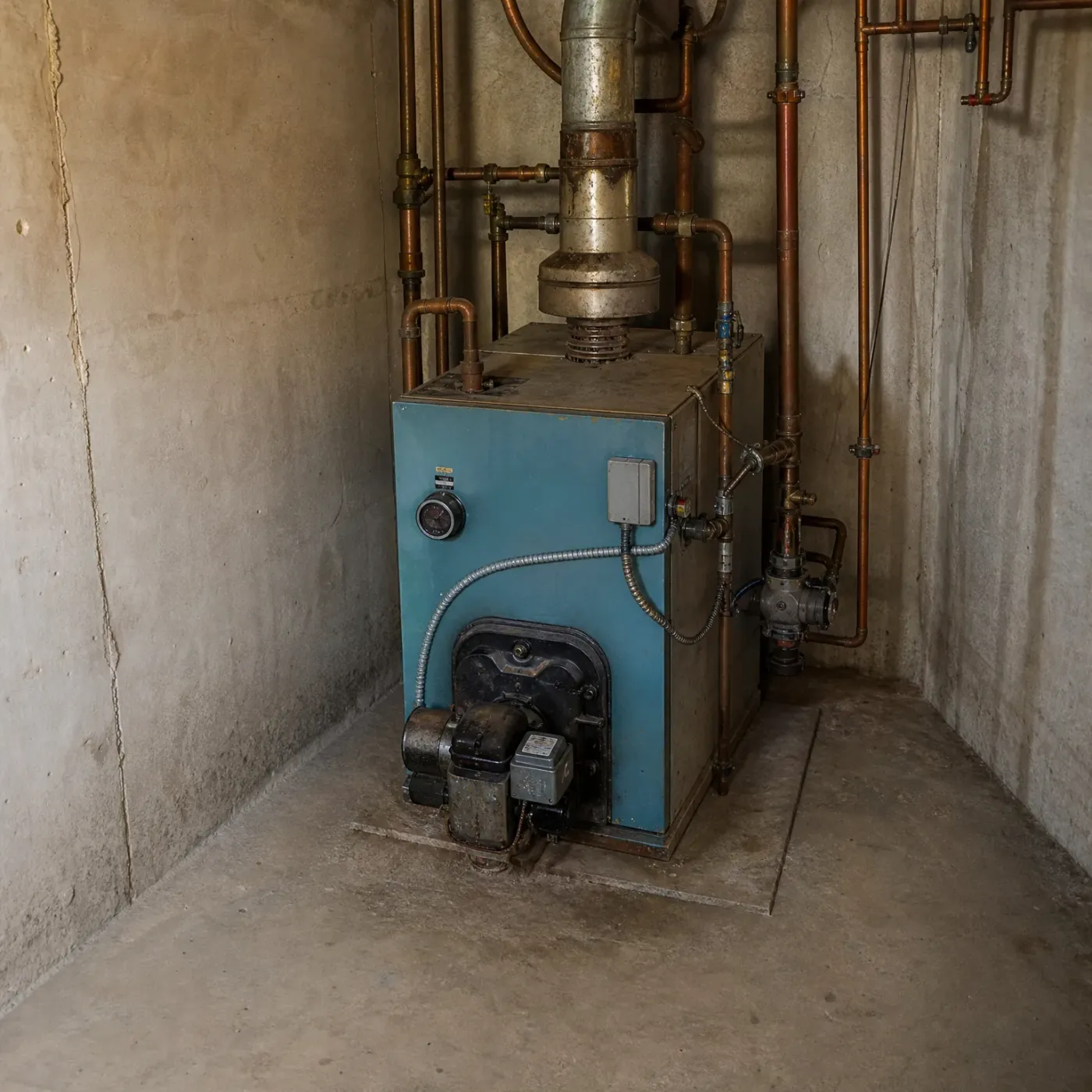
A blue oil-fired boiler with a burner unit and pressure gauge stands in a concrete basement corner, connected to copper pipes and a metal flue.
An older oil-fired unit like this one is already working harder than a new gas boiler would to heat the same rooms.

Keep It Running or Replace It

Keep the old boiler

  • A standard boiler that still runs doesn't need to be replaced on a schedule, only when it starts failing or costing you in gas.
  • Repairs on a standard boiler are usually straightforward, since most techs in Rhode Island have serviced these units for decades.
  • You skip the cost of a new installation and the work of running a new vent and condensate line.
  • A standard boiler sends more heat out the flue than a high-efficiency one, so your gas bills stay higher through the winter.
  • If the heat exchanger or block is cracked, patching it only buys time before a full replacement anyway.

Install a high-efficiency boiler

  • A condensing boiler pulls extra heat out of the exhaust before it leaves the house, so less gas does the same job.
  • On the cold nights Rhode Island winters bring, a boiler that runs long stretches benefits most from that extra heat recovery.
  • Installation means a new flue and a condensate drain, since the exhaust leaves cooler and wetter than a standard boiler's does.
  • With gas heating most homes here and power among the most expensive in the country, the gas savings carry more weight than they would elsewhere.
  • A new unit comes with a manufacturer warranty, so the parts most likely to fail early are covered from the start.
A smiling man in a dark navy sweater sits on a light sofa in a living room, with a glass bowl of popcorn on a wooden coffee table and bookshelves behind him.
A smiling man in a dark green sweater sits on a tan leather sofa in a dimly lit living room, with a bowl of popcorn in the foreground and a kitchen area blurred behind him.
A smiling middle-aged man in a dark shirt sits on a gray sofa in a living room, with a bowl of popcorn on a side table and shelves, a window and kitchen area behind him.
A smiling bearded man in a dark gray t-shirt sits on a gray couch in a living room, with a large glass bowl of popcorn on a wooden table in the foreground.
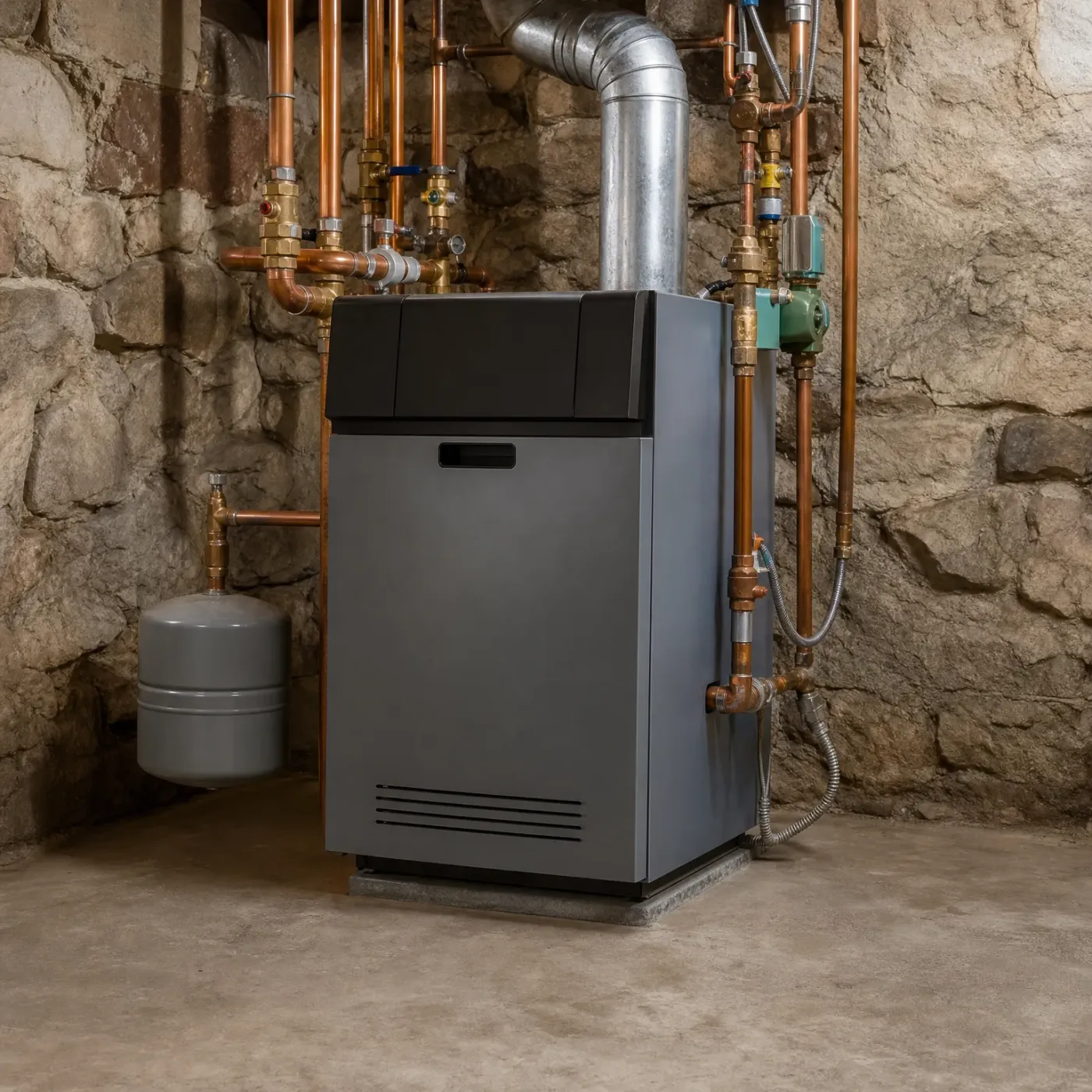
A gray residential boiler on a concrete pad in a basement with stone walls, connected to copper piping, brass valves, a circulator pump, an expansion tank, and a metal flue duct.

Running the way it should

This is a boiler keeping up without strain. The copper lines stay tight, the circulation pump moves water quietly, and the expansion tank handles pressure the way it's supposed to. Nothing here is working harder than it needs to.
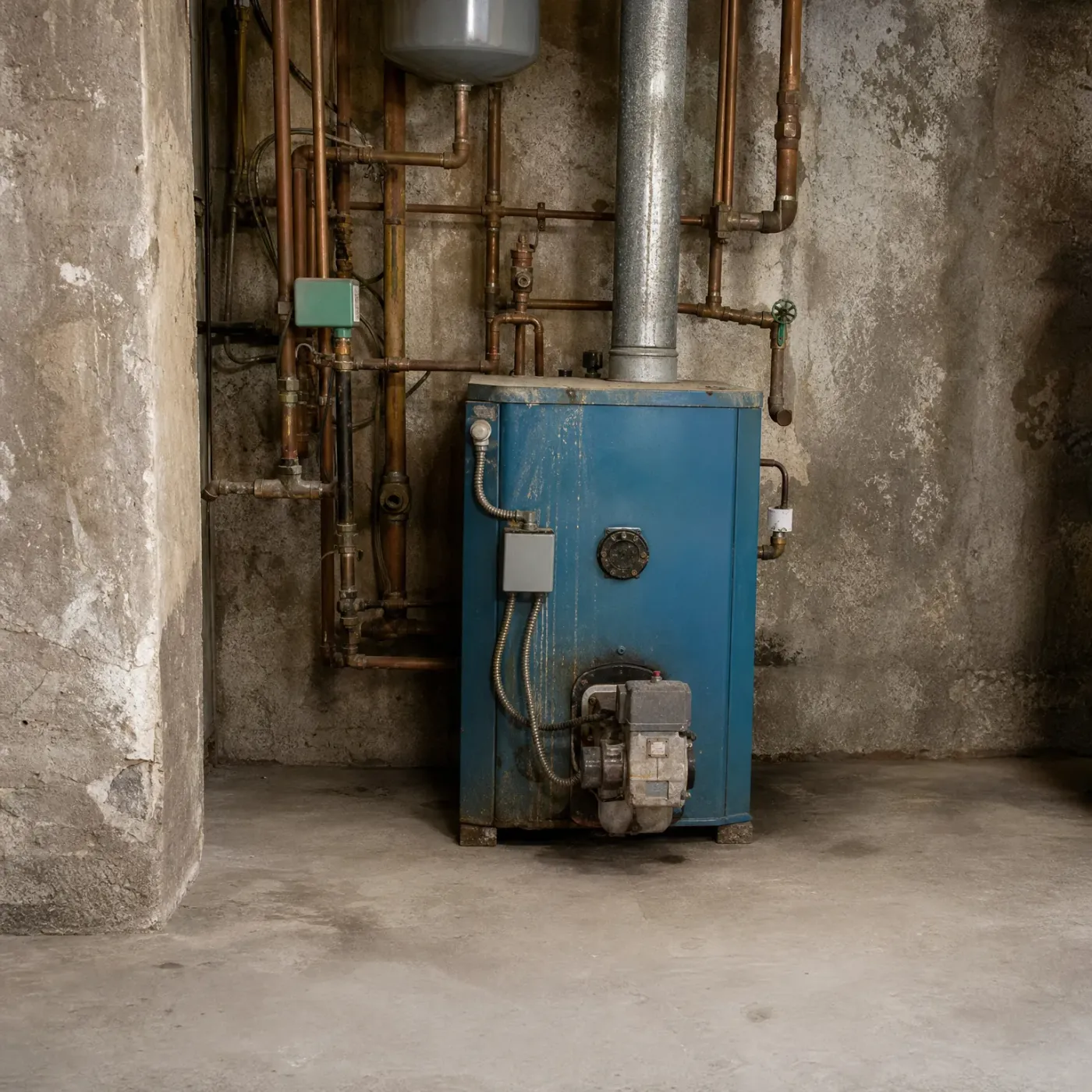
A blue cabinet boiler with a metal flue pipe and copper piping stands against a bare concrete wall in a basement with a concrete floor.

Running on borrowed time

That flue pipe is doing more work than it should. An old boiler like this burns more gas to heat the same rooms, and the burner assembly at its base has to fire longer to make up for what the unit loses out the flue.

Why does your heat bill keep climbing every winter

You turn the thermostat up and the boiler runs longer than it used to, and the bill shows it. In a lot of Rhode Island houses that's a standard boiler sending heat up the flue instead of into your rooms. You might notice the burner cycling on and off more than it seems like it should, or the basement staying warmer than the rooms it's supposed to be heating. Some homes have rooms that take a while to come up to temperature even with the thermostat set the same as always. None of that means the boiler is failing. It means it's spending gas to make heat that never reaches you, and with power here already expensive, that's money leaving the house through the chimney.

A dark gray floor-standing boiler on a concrete pad in a basement, surrounded by copper piping, brass valves, a gray expansion tank, a circulator pump, and a metal flue pipe against concrete block walls.

What a new install looks like

The pipework stays organized, the pressure gauge sits at a steady number, and the flue is sized for exactly what the unit puts out. A setup like this is sized to the house, not left over from whatever was standard decades ago.

A blue boiler on a raised concrete pad in a basement corner, with copper and steel pipes, a gauge cluster, an expansion tank, and a metal flue running up the bare concrete walls.

What an aging boiler looks like

Bare concrete, an old flue running overhead, and a boiler built before condensing technology was standard. It still heats the house, but it sends more of what you pay for straight up that flue instead of into your rooms.

A woman with dark hair in a bun reclines on a sofa with her eyes closed, wrapped in a cream fleece blanket, a closed blue hardcover book resting in front of her, with a lit lamp and a vase of dried flowers in the background.
A smiling bearded man in a navy sweater sits at a candlelit dinner table with a glass of red wine, a bowl of salad, and plates of food in the foreground.
A gray floor-standing boiler on a concrete pad in a basement with concrete block walls, connected to copper piping, a flue vent, and an expansion tank.

Send one request and you're done looking

Your request goes to one pro, not a list of companies.

After you send the request, you're done searching.

Hand off the search

It costs nothing to send, and you don't have to hire anyone.

How does a high-efficiency boiler actually save gas?

You've seen the pitch about saving money, but nobody explains what's actually different inside the unit. You're not against spending on a new boiler, you just want to know what's happening in there that a standard boiler doesn't do, before you decide it's worth the install.

It captures heat a standard boiler throws away

A standard boiler burns gas, heats the water, and sends the leftover hot exhaust straight up the flue and out of the house. That exhaust is still carrying usable heat when it leaves. A high-efficiency boiler runs that exhaust through a second heat exchanger first, so the heat it would have wasted gets pulled back into the water before anything exits the flue. Less gas goes in to reach the same water temperature, because less heat is leaving unused. That's the whole difference. No bigger burner, no extra pump working harder. Just one more step that catches heat on its way out instead of letting it go.

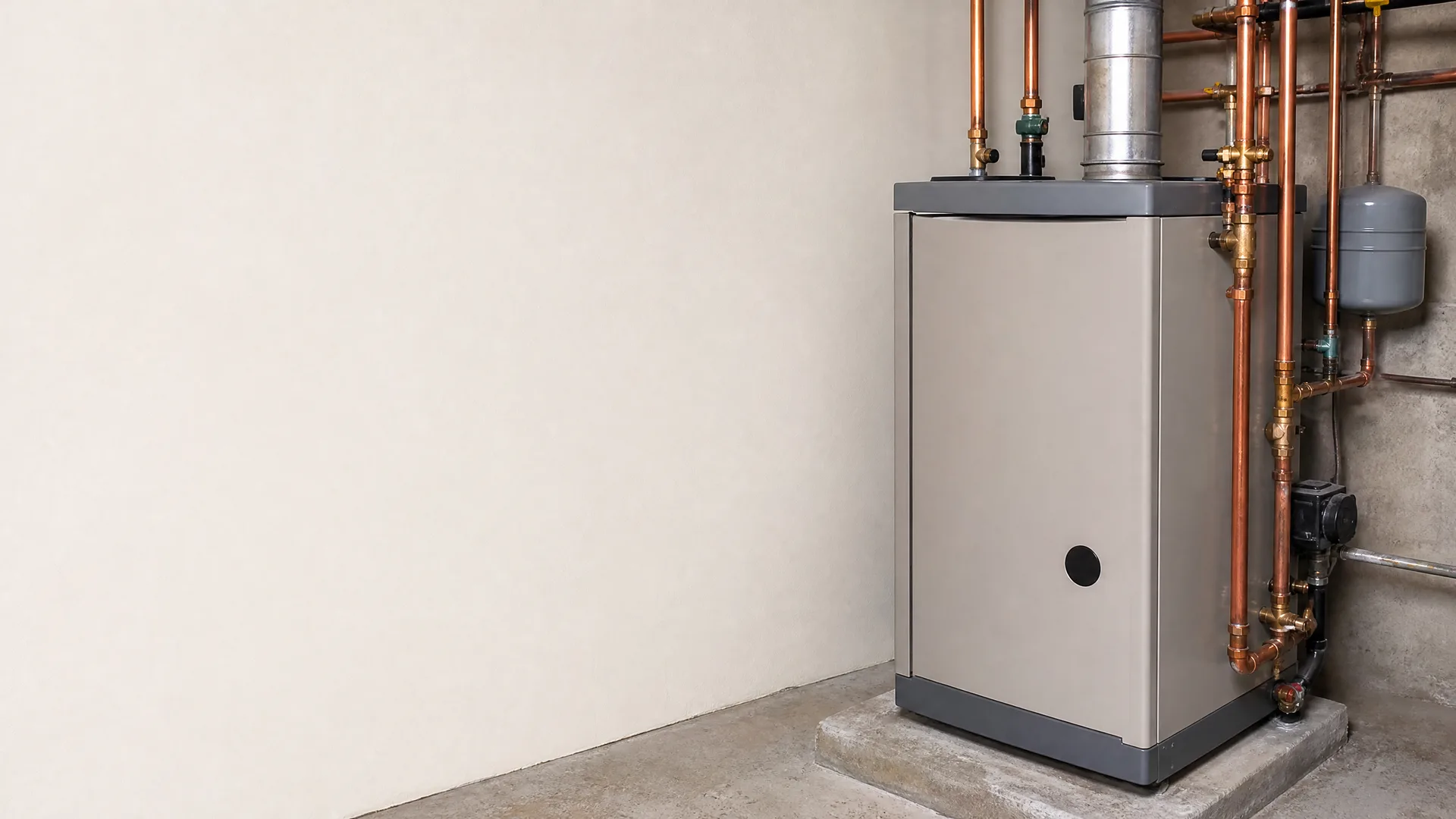
A gray floor-standing boiler with a metal flue pipe, copper piping, a circulator pump and a gray expansion tank, installed against a concrete wall.

What AFUE actually measures

AFUE is the percentage of fuel a boiler turns into heat for your rooms over a year, not just on a mild day. A standard boiler installed decades ago usually runs in the 60s or low 80s. A new high-efficiency model is rated in the mid-90s or better. That gap is the exhaust heat the old unit sends up the flue instead of into your radiators or baseboards.

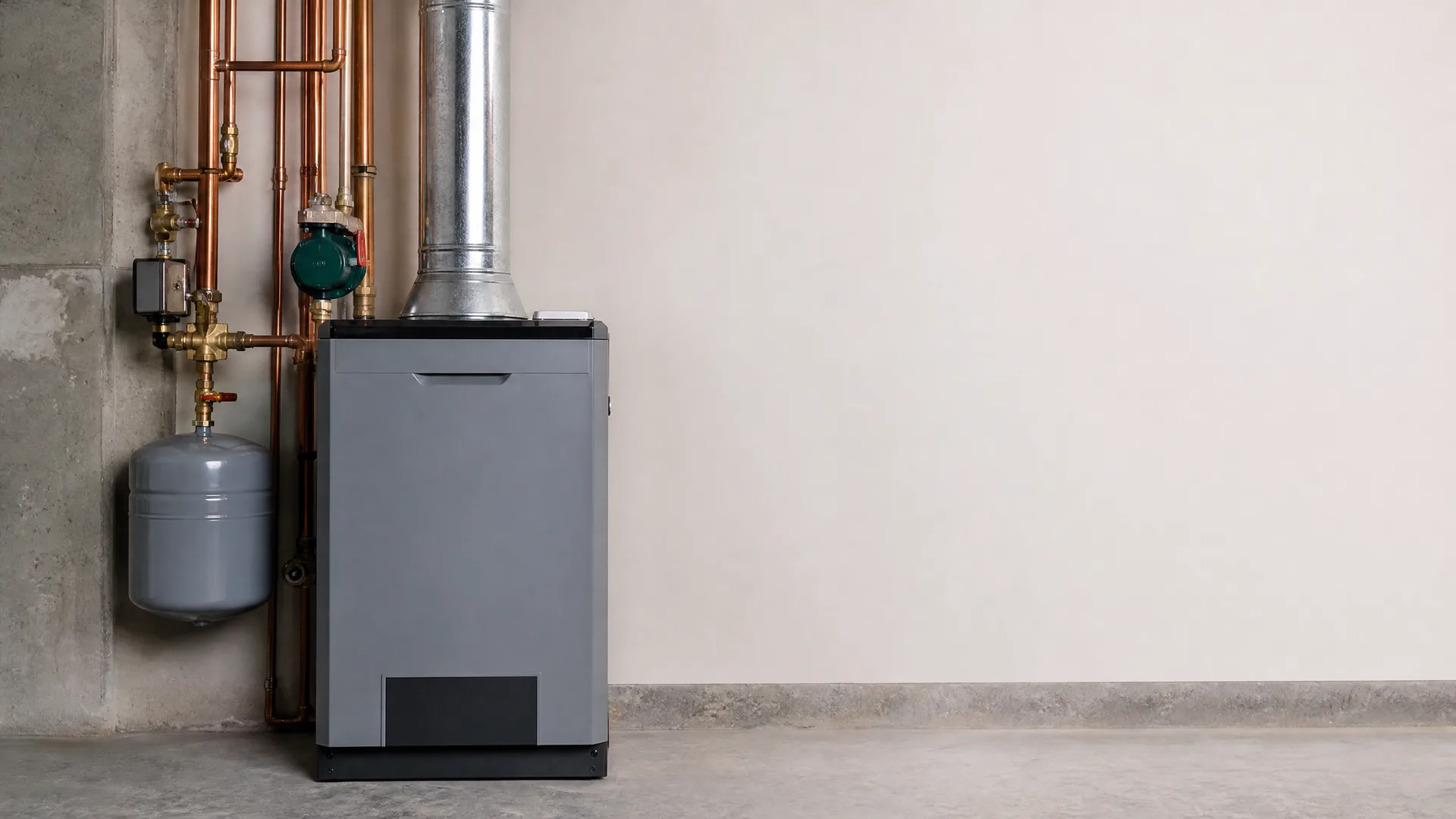
A tall grey floor-standing boiler on a concrete plinth in a corner of a room, with copper pipework, a flue, a circulator pump and an expansion vessel to its right, beside a plain cream wall.

Why the rating holds up here

Rhode Island winters give a boiler plenty of cold nights to run that rating against. A furnace that only kicks on a few times a week barely shows the difference between 80 percent and 95 percent. One that runs for hours most nights from December through February shows it on every bill. The AFUE number is tested, not estimated, so it's one of the few figures on a boiler you can actually check before you buy.

Winter nights average 23°F statewide

At 23°F your boiler isn't idling between bursts, it's running most of the night just to hold the thermostat where you set it. That's the stretch where an old standard boiler loses the most heat up the flue, and where a high-efficiency one keeps burning less gas to do the same job.

NOAA nClimDiv 1991-2020 county normals weighted by homes

Where this leaves you

  • A high-efficiency boiler costs less to run in Rhode Island because gas prices here reward burning less of it every winter.
  • The AFUE difference between a decades-old standard boiler and a new condensing one holds up across every cold night statewide, not just the mildest ones.
  • A licensed local contractor who services boilers all winter has already seen what fails on units your home's age and knows what to check first.
  • Sending one request means one contractor calls, not a handful of companies competing for the same job.
  • Whether the switch makes sense for your house still comes down to what's in the walls now, which only an in-person look will show.

Gas heats most Rhode Island homes, and a high-efficiency boiler is built to burn less of it than the standard unit sitting in your basement now. That holds on a mild night in November and it holds on a night at 23°F, which is what winter nights here average. The AFUE numbers back it up: a decades-old boiler losing a lot of heat up the flue against a condensing unit built to keep most of that heat in your rooms. Whether that gap is worth closing for your house is a question a contractor answers by looking at what you have, not by a number on a page.

That's where a local contractor matters. Someone who services boilers in Rhode Island every winter has already seen what tends to fail on a unit your home's age, and knows what to check first instead of working it out room by room. Sending one request puts you in touch with one contractor, not a handful of companies calling about the same job and asking you to repeat yourself each time.

The honest answer is still the one at the top: for most houses here, switching pays off, but what's actually behind your walls is the part nobody can answer without seeing it. An in-person look settles that, and it's the next real step if you want to know where your house stands.

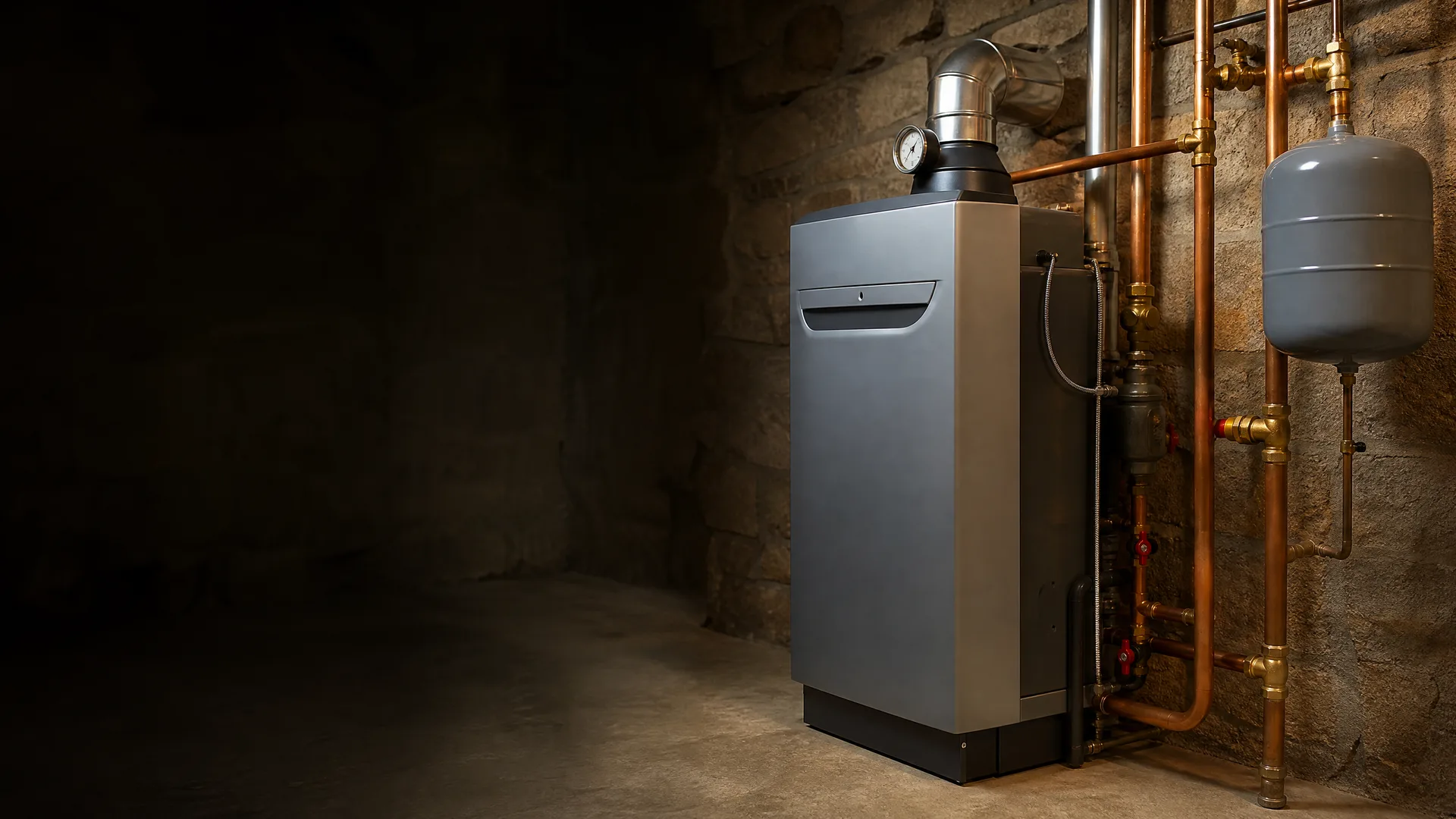
A gray floor-standing boiler with a flue pipe and pressure gauge stands against a stone basement wall, connected to copper and brass piping and a gray expansion tank.

Finding a pro stops being your job

Step 1 of 3: Equipment