










Profile view of a bearded man wearing a dark green baseball cap and a dark gray T-shirt against a plain light background.

How long a boiler lasts in Rhode Island

Step 1 of 3: Equipment

How long does a boiler last in Rhode Island?

Your boiler has been running for a while and you're wondering if it's getting close to the end, or maybe you just want to know what to expect before something goes wrong in the middle of a cold snap. Either way, it helps to know what a normal lifespan actually looks like before you start worrying about yours.

15 to 20 years, usually

Most boilers last 15 to 20 years before they need replacing. Cast iron boilers tend to hold up toward the longer end of that range, while some newer high-efficiency models wear out sooner if they haven't been maintained. What shortens that life more than anything is how hard the boiler works each winter. Rhode Island winters mean a boiler here runs for months at a stretch, and that steady demand adds up faster than it would somewhere with a shorter cold season. Gas is the fuel most homes here use to heat, and gas boilers generally hold up well over time. By year 15 or so, it's worth paying attention to how yours is running, since a boiler nearing the end often starts short-cycling or needs more frequent repairs before it finally fails.

A gray-haired, bearded man in a dark coat dusted with snow stands smiling in a dimly lit room with a lamp, mirror, framed art, and a sofa in the background.
An older man with white hair and a beard, wearing a dark snow-dusted coat and scarf, stands in a warmly lit interior hallway with a framed landscape picture, a table lamp and a potted plant behind him, and a snowy view through a window at left.
An older man in a dark snow-flecked overcoat and scarf stands smiling in a warmly lit home entryway, with a glass-paned door showing darkness outside and a lamp-lit room visible through a doorway behind him.
An older man with gray hair and a beard, wearing a dark snow-dusted jacket and scarf, stands smiling in a warmly lit interior hallway with a lit table lamp, a vase of dried branches, and a framed picture in the background.

What shortens a boiler's life here

A boiler wears out from the inside, through the heat exchanger and the connections that carry water through it. Rhode Island winters mean the burner is firing for months at a stretch, and that steady cycling is what puts the hours on the unit. Most homes here heat with gas, and a gas boiler that's sized right and vented properly will usually outlast one that's been struggling to keep up with a house it was never matched to. Hard water deposits inside the tank or heat exchanger make the burner work harder to push heat through, and that extra strain adds up over a lot of winters.

What a dying boiler costs you

An aging boiler doesn't fail all at once. It loses efficiency first, so the same gas bill buys less heat, and with power rates in Rhode Island among the highest in the country, that creeping inefficiency shows up fast. Leaks around fittings, a pilot that won't hold, or short cycling are usually signs the heat exchanger or controls are on the way out rather than something a quick fix solves for good. Once a boiler is past the point where repairs make sense, the choice is usually between patching it through another winter or replacing it before it leaves you without heat on the coldest night of the year.

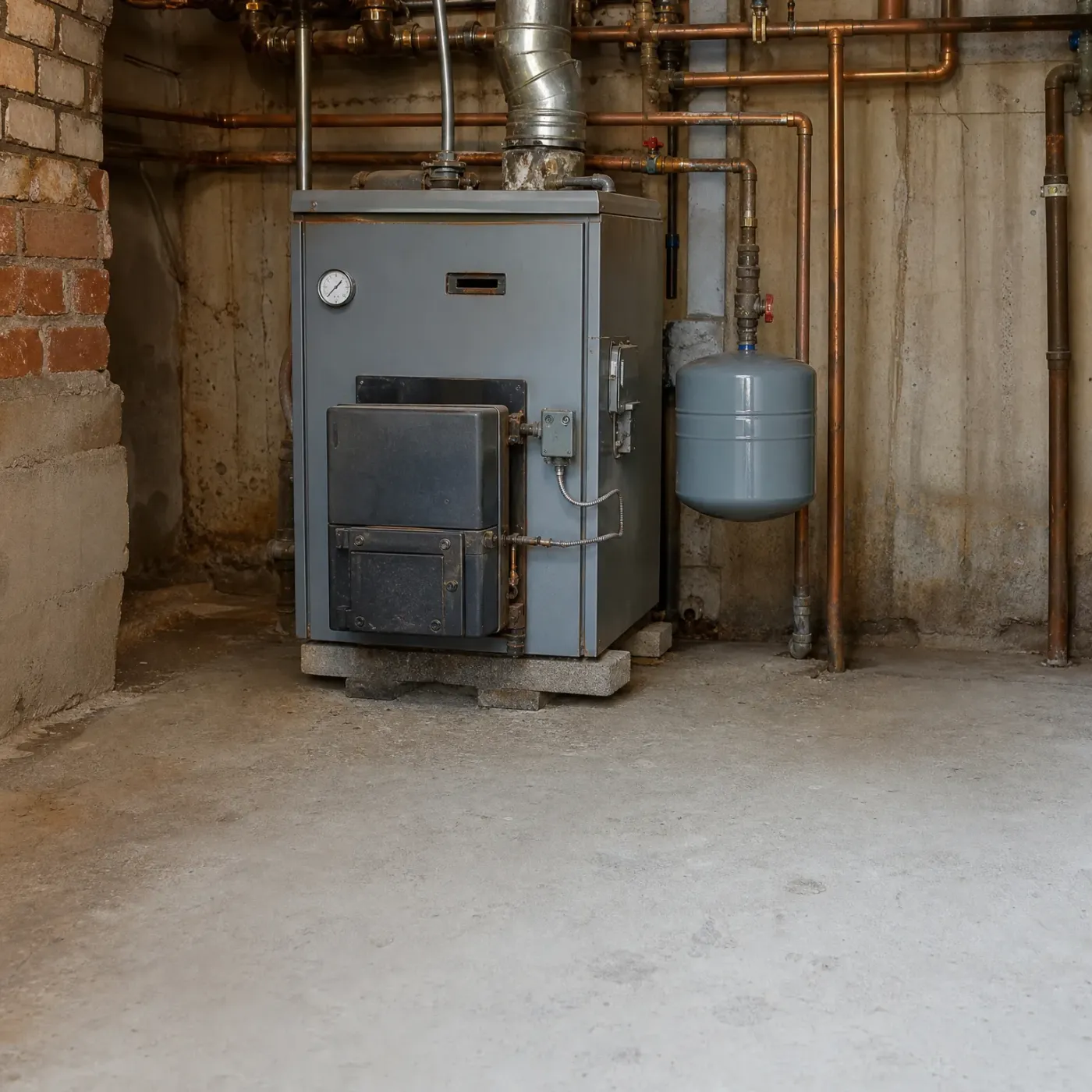
A gray boiler on a concrete block base in a basement, with copper piping, a metal flue, and a gray expansion tank mounted beside it against a concrete wall.
Before you get your boiler installation
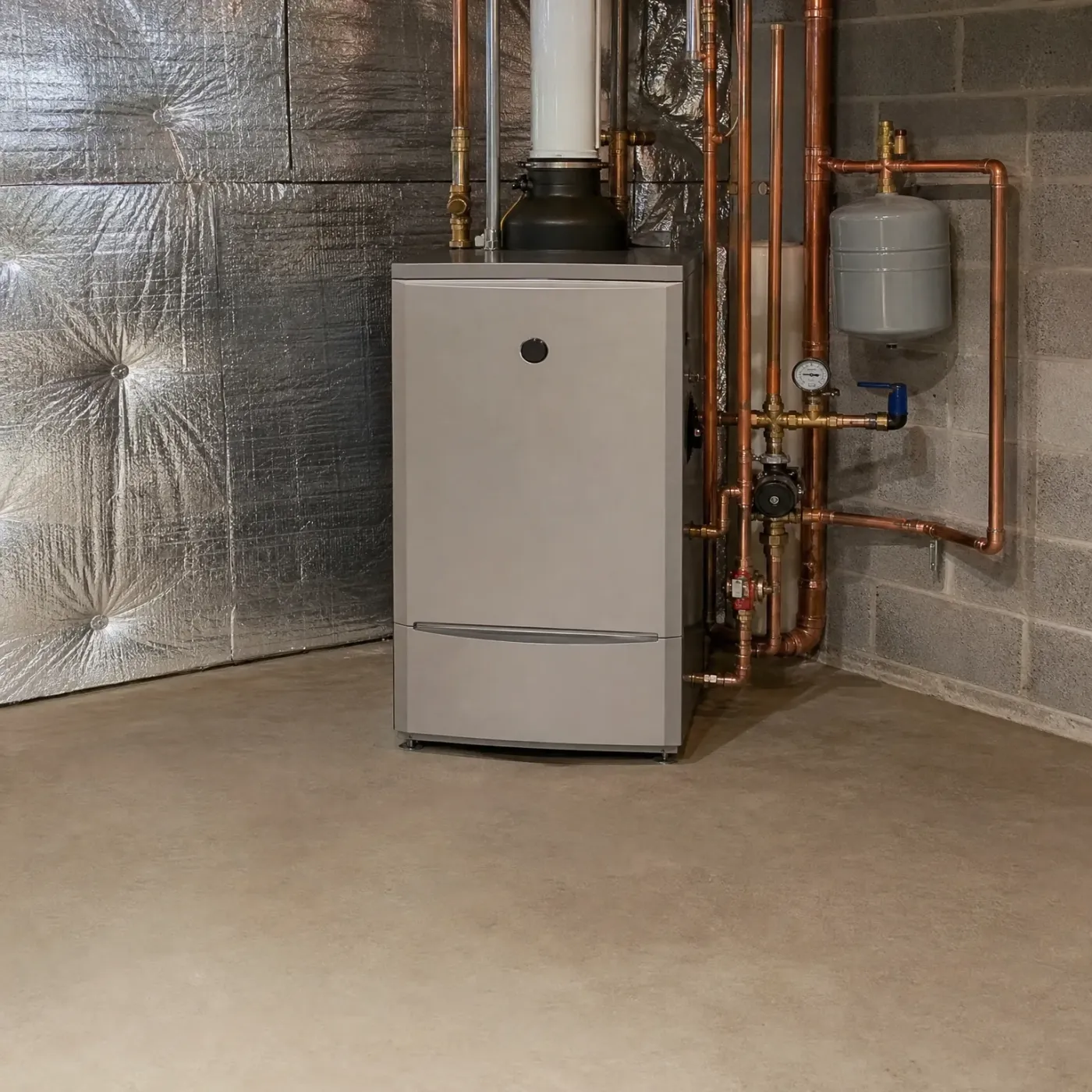
A gray residential boiler in a basement corner with copper piping, a circulator pump, pressure gauge, blue-handled valve and gray expansion tank against a concrete block wall, next to a foil-insulated wall.
After you get your boiler installation

How a Boiler Actually Wears Out

  • A boiler's rated life is measured in firing cycles, not just years on a wall calendar.
  • Steel and cast iron heat exchangers typically outlast the lighter exchangers in some newer high-efficiency units.
  • Hard water feeding the system leaves mineral scale on the heat exchanger that slows heat transfer over time.
  • A boiler that short-cycles, turning on and off instead of running a steady stretch, wears its ignition parts faster.
  • The expansion tank and circulator pump often fail years before the boiler itself needs replacing.
  • Sediment settling at the bottom of the tank or exchanger is what usually ends a boiler's working life.

A boiler doesn't fail because a calendar says it's old. It fails because of how many times it's fired and what's passed through it along the way. Every time the burner kicks on, the heat exchanger expands slightly, then contracts as it cools. Rhode Island winters mean that happens thousands of times a season, and each cycle is a small amount of stress on the metal and the joints connecting it. Cast iron and steel exchangers handle that stress longer than the thinner exchangers built into some newer high-efficiency models, which trade some durability for better fuel use. What's moving through the system matters too. If the water feeding your boiler is hard, it leaves mineral scale on the exchanger walls, and that scale acts like insulation, forcing the burner to work harder to push heat through. Sediment does similar damage from the inside, settling at the bottom of the tank or exchanger until it blocks water flow or scorches metal that's supposed to stay wet. A boiler that short-cycles, firing on and off rather than holding a steady burn, puts extra wear on the ignition system with every restart. And often the first failure isn't the boiler at all. The circulator pump or the expansion tank tends to give out years before the exchanger does, which is worth knowing before you assume the whole unit needs replacing.

A woman wrapped in a cream textured blanket sits in an armchair beside a lit lamp and a dark window, with an open book in the foreground.
A bearded man in a plaid flannel shirt stands indoors looking out a frost-covered window, with a steaming dark blue mug on the wooden sill and snow-covered trees outside.

Repair the Boiler or Replace It

Keep repairing

  • A circulator pump or zone valve replacement costs far less than a new boiler, especially if the boiler is under 15 years old.
  • A boiler that's still holding steady pressure and firing cleanly has no reason to go, even if a part has failed once or twice.
  • You avoid the disruption of an install, which for a boiler can mean a day or more without heat while the old unit comes out.
  • If the cast iron or steel heat exchanger is intact, a repair bill now is cheaper than a full replacement this winter.
  • Staying with the boiler you have means no decisions about venting, piping, or where a new unit sits in the basement.

Replace now

  • A boiler past 20 years is working harder to hit the same water temperature, and that shows up on a gas bill through a Rhode Island winter.
  • Repeated repairs on the same boiler, especially to the heat exchanger, add up to more than a new unit over a couple of seasons.
  • A new boiler comes with a warranty on parts that a 20-year-old unit no longer has.
  • If the heat exchanger itself is cracked or leaking, no repair fixes that and replacement is the only option left.
  • Rhode Island's high electric rates don't touch a gas boiler's running cost directly, but a newer unit still burns less gas to do the same job.
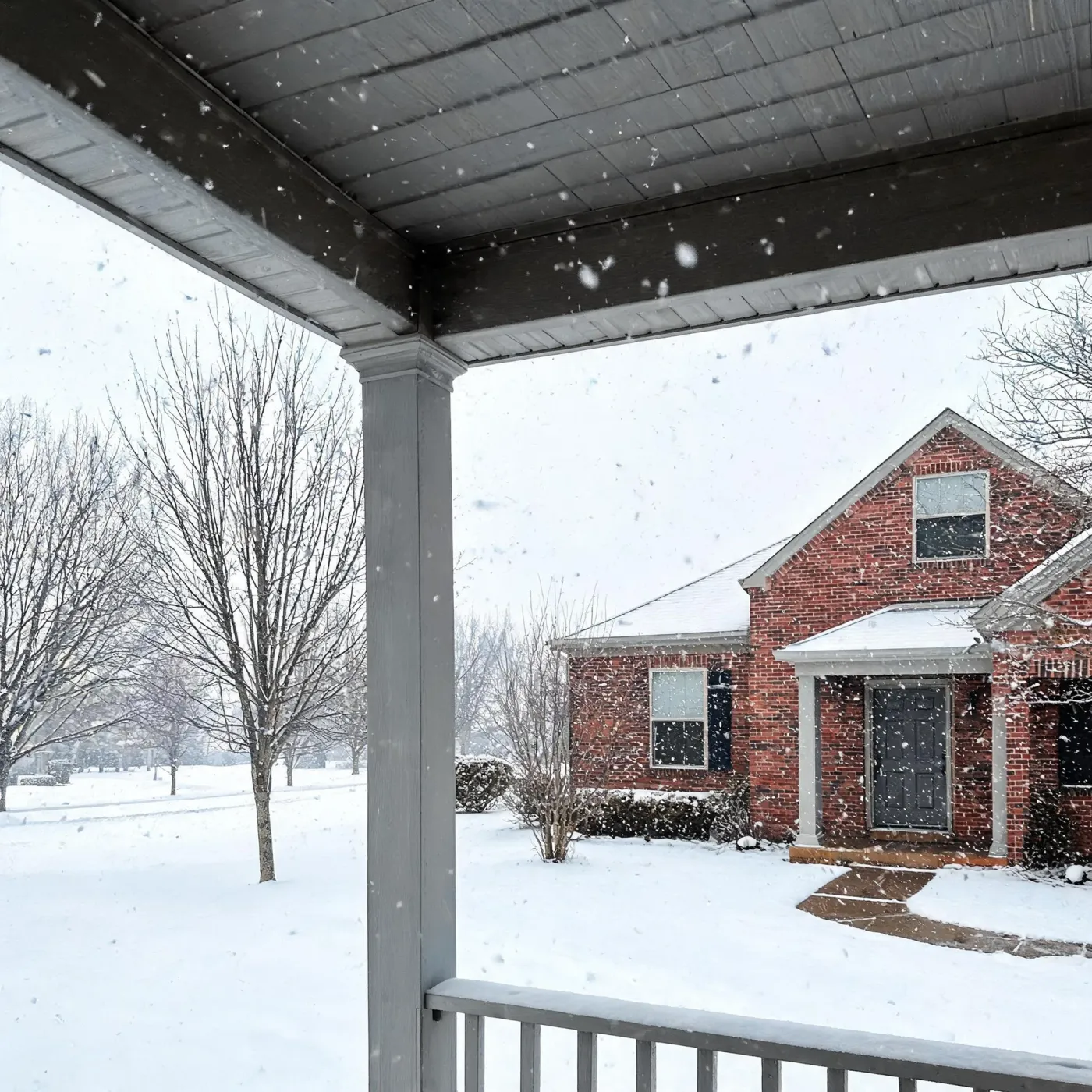
View from a covered porch with a white post and railing toward a red brick house across a snow-covered yard, with falling snow and bare trees.

Winter nights across Rhode Island average 23°F, according to NOAA climate data, and that's the number that drives how hard your boiler works. At that temperature the burner isn't just kicking on here and there, it's holding a near constant call for heat through the night, firing again and again to keep the water in the system hot enough to push back against the cold. That's a lot of cycles on the heat exchanger over a winter, and cycles are what age a boiler, not the calendar. If yours is older and you're noticing it running longer stretches than it used to, or short cycling more than it should, that's worth a second opinion from someone who can look at the actual unit. Getting matched with a contractor who knows Rhode Island winters means you're not starting from scratch explaining your system to someone new.

NOAA nClimDiv 1991-2020 county normals weighted by homes

The right pro for this job

Skip collecting and comparing quotes for the new boiler.

No fee to send it, and nothing to sign.

  1. Cold water enters the boiler through the return line first.

  2. The burner fires and heats water inside the exchanger.

  3. A circulator pump pushes hot water out to each zone.

  4. Water passes through radiators or baseboards, giving off heat.

A man in a dark blue shirt stands in an open front doorway of a stucco and wood-clad house, facing a blond woman seen from behind in the foreground on a stone walkway.

What an aging boiler means for your house

You'd notice it first in the rooms farthest from the boiler room. One zone takes longer to warm up, or never quite catches up on the coldest nights. You might hear more clanking or kettling from the heat exchanger, or see the pressure gauge creeping up between calls for heat. None of that means the boiler is done, but it means it's working harder to do what it used to do without effort. With power costs in Rhode Island among the highest in the country, a boiler losing efficiency shows up fast on the gas bill, since gas is what most homes here run on.

If yours is getting old, the risk isn't just comfort, it's timing. Heat exchangers and circulator pumps tend to fail in the dead of winter, right when you need them most, not in a mild stretch when you'd have room to shop around. Instead of calling several contractors, explaining your system's age and symptoms to each one, and waiting on quotes to compare, you can get matched with a contractor who installs boilers and knows what to look at in a house like yours, and they'll reach out to you directly.

Interior corner of a living room with a beige upholstered sofa and dark cushion in the foreground, a ceramic vase of leafy branches on a dark side table by a curtained window, a framed picture on the wall, and a wood-surround fireplace at right.
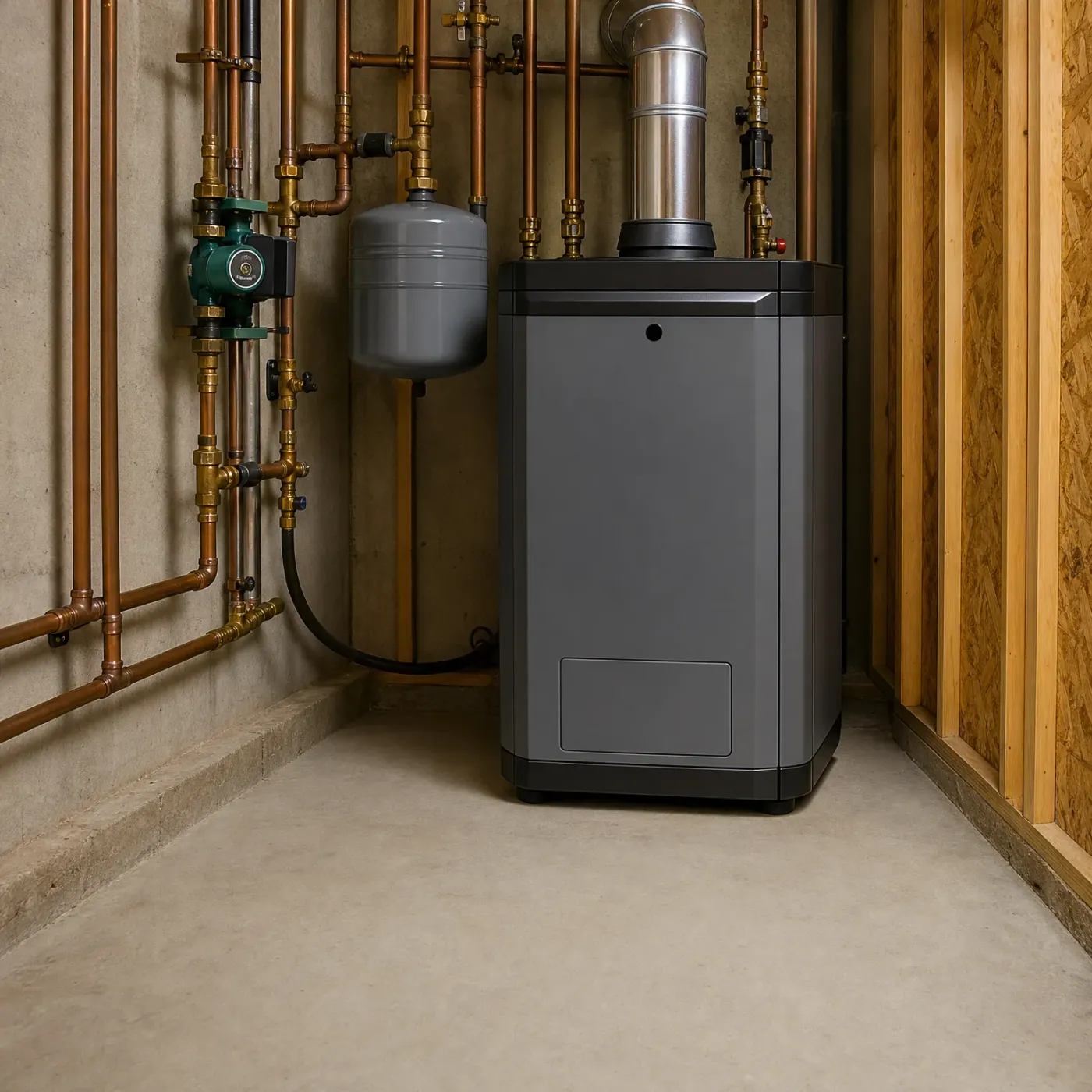
A gray floor-standing boiler with a metal flue pipe stands in a basement corner beside copper piping, brass valves, a green circulator pump, and a gray expansion tank on a concrete wall, with exposed wood framing and sheathing at right.

Running the way it should

This is a boiler keeping steady pressure, clean copper joints, and a flue vent with no rust streaking down it. The circulation pump runs quiet. Nothing here tells you to worry tonight, but it still helps to know what's ahead and line up a contractor before you need one.
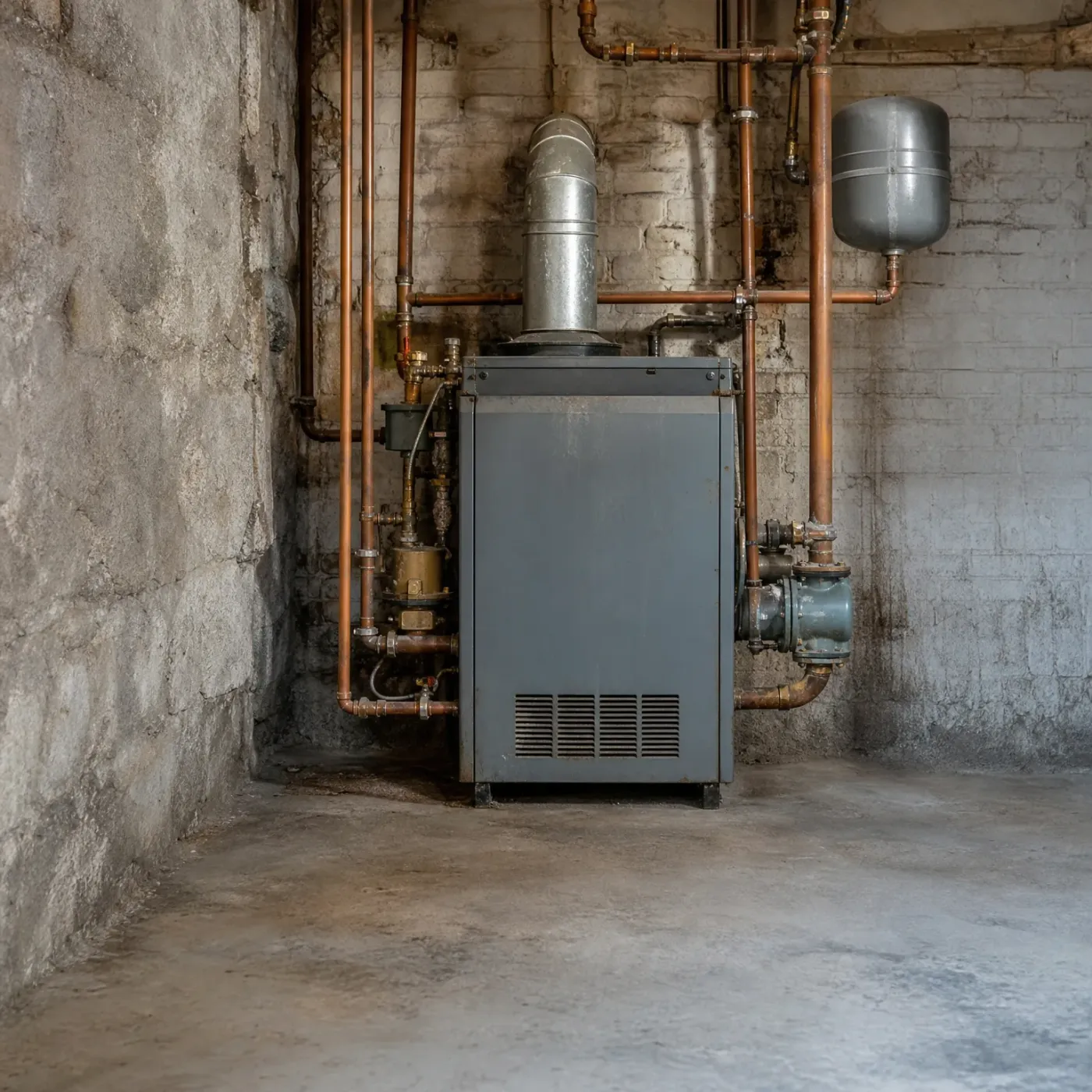

A gray boiler with a metal flue pipe and copper piping stands against a weathered painted brick basement wall, with an expansion tank mounted overhead and a bare concrete floor in front.

Showing its age

Cast iron like this can run a long time, but galvanized flue pipe corrodes from the inside and you often can't see it until it fails. Check the fittings for green or white buildup and watch the floor around the base for water. A boiler installer can tell you what the corrosion means for yours.

Winter nights average 23°F statewide

At 23°F, your boiler isn't cycling on and off, it's holding a long call for heat most of the night. That kind of steady firing adds up in cycles faster than a mild winter would, which is part of why age alone doesn't tell the whole story.

NOAA nClimDiv 1991-2020 county normals weighted by homes

A gray boiler on a concrete pad in a basement corner, connected to copper and black pipes with a gauge, circulator pump, and gray expansion tank, beside a wood-framed wall.

Holding up fine

This boiler sits clean on its pad, copper piping tight, pressure gauge steady, expansion tank doing its job. The flue pipe runs straight with no rust at the seams. A setup like this can still have years left, especially if someone's kept an eye on the pressure and the pump.

An older oil-fired boiler with a burner unit, flue pipe, expansion tank and copper piping stands in the corner of a concrete-floored basement with weathered plaster walls.

Showing its age

This is an older oil-fired boiler, pipes crowding the walls and ceiling around it, the burner and pump exposed at the base. Nothing here says it'll quit tomorrow, but a unit like this has logged a lot of winters, and that history is worth knowing before the next cold snap tests it.

What's your boiler telling you right now

Go down and look at it. Is there rust around the base or weeping from a fitting? Is the pressure gauge holding steady or creeping up and down on its own? Listen for banging or a kettle-like rumble when it fires, that's often scale built up inside the heat exchanger. Check the flue pipe for rust streaking down the outside. If a room on the far end of the house takes longer to warm than it used to, or never quite gets there on a cold night, that zone is working harder than it should. None of this means you're stuck without heat tomorrow, but a boiler showing two or three of these signs at once is the one that tends to fail on the coldest night of the year, not the mildest.

A gray floor-standing boiler with a metal flue stands against a concrete block wall, connected to copper pipes, brass valves and a gray expansion tank, on a bare concrete floor.
Copper joints tight, the flue running clean, pressure holding where it should, no reason to think about replacement yet.
A blue oil-fired boiler with a burner unit and pressure gauge stands in a concrete basement corner, connected to copper pipes and a metal flue.
A teal casing like this is often a sign the boiler and its burner assembly are original to the house.

A boiler in Rhode Island holds up for somewhere between 15 and 20 years, less if the water feeding it is hard, more if someone's kept the pressure and the connections in check. Past that point you're watching for the signs: rust at the base, a pressure gauge that won't hold, a zone that never quite warms. None of that tells you the exact day to replace it, but it tells you which side of the line you're on. When you do decide it's time, the slower part isn't the decision, it's finding someone to call, waiting on quotes, explaining the same setup to three different contractors before you get a number you trust. Getting matched with a contractor who already knows what a Rhode Island winter does to a boiler skips that part. You still have the same system, the same rust or the same clean copper joints, the same choice about repairing or replacing. What changes is that you're not the one doing the legwork to find someone qualified to look at it.

A wooden front door with six small glass panes and a narrow sidelight, set in a shingled house entry with white trim, reached by stone steps flanked by a planted urn with purple flowers and leafy branches in the foreground.
Exterior corner of a house with beige horizontal lap siding and a black-framed window, with white hydrangeas, ornamental grasses and low plantings along a flagstone patio.
Corner of a house with tan lap siding and a window, a brick step edge, flowering white hydrangeas and green shrubs beside a flagstone walkway leading to a white picket fence and a tree in backlit sunlight.
House exterior with cream horizontal lap siding, a dark-framed window, a black wall lantern beside a wood door, potted shrubs on stone steps, and white and pink hydrangeas in the foreground garden.
Corner of a cream lap-sided house with a white-framed window and dark shingled roof, beside a white-flowering hydrangea shrub, a clipped hedge, mulched bed and lawn.

Matched to your boiler job

Skip the round of in-home estimates for a new boiler.

Skip the calls

Sending the form costs nothing.







