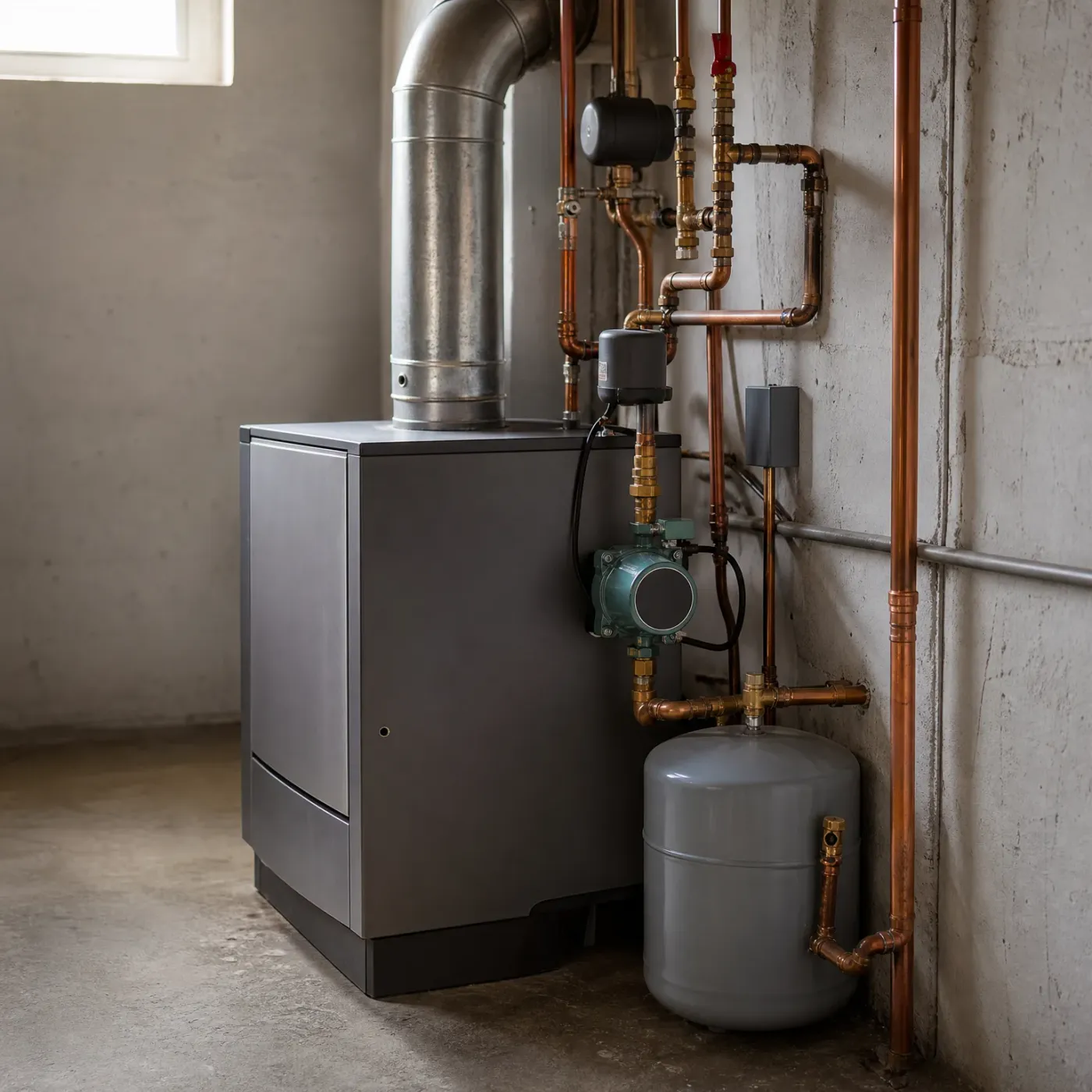
A Worn Thermocouple, Not a Fluke
- A pilot that won't hold is the thermocouple telling the gas valve the flame is out, even when it isn't.
- The valve is doing its job by cutting the gas off rather than letting it flow unsupervised.
- Relighting the pilot over and over doesn't fix a worn rod, it just buys a few more hours before it drops again.
- Replacing the thermocouple is a small, well-understood repair that stops the outages instead of working around them.
- Cold nights push the boiler to fire more often, which means more chances for a weak rod to fail when the house needs heat most.
- Once you send the form, you're done hunting for someone, a contractor who handles this gets in touch with you.
A pilot that keeps dropping out isn't bad luck and it isn't something you did wrong lighting it. It's a rod that's worn past the point of reading the flame correctly, so the gas valve plays it safe and shuts down. That's the valve working as it should. The actual problem is a part that's cheap to replace and straightforward for a contractor to diagnose, which means this isn't a mystery your boiler is presenting you with. It's a known failure with a known fix.
Right now, with temperatures dropping into the low 20s overnight, your boiler is cycling on and off more than it would on a mild day, and every cycle is another chance for a rod that's already failing to drop out again. Relighting it yourself buys you a few hours, not a solution. The outages will keep coming back until the thermocouple itself gets swapped out.
None of this is urgent in the way a gas leak is urgent, but it's not something to leave for a stretch of warmer weather either. A boiler that won't hold its pilot through a cold night is a house that loses heat right when the people in it need it most. Once you send the form, the search for who handles this is off your plate. A contractor who works on this gets in touch, and from there it's a matter of getting the part swapped, not guessing at what's wrong.