A local pro who services boilers gets in touch about the tune-up.
Most boilers in Rhode Island run fine set between 165 and 180 degrees at the aquastat, with a lot of homes landing comfortably around 170. If you have an outdoor reset control, it adjusts that number automatically as the temperature outside drops, so a mild January day and a single-digit night don't call for the same setting. Push the water temperature higher than you need and you're not heating the house faster, you're just paying for heat that goes up the flue instead of into your rooms.
Where that number should actually sit depends on things a search result can't see. A cast iron radiator system wants different water temperature than one running baseboard, and a house with the original boiler still in it behaves differently than one with a newer, more efficient unit. Getting this right for your house means someone looking at your specific setup, not a number pulled from a chart.
That's the kind of judgment call a local boiler contractor makes every day, because they're in Rhode Island homes all winter adjusting these same systems for the same cold snaps you're dealing with. They know which settings tend to run too hot on older systems, which thermostats fight the aquastat instead of working with it, and what usually needs attention before it fails on the coldest night of the year.
When you ask for help through this page, you're matched with one contractor, licensed and working in Rhode Island, not a handful of companies competing for your callback. They'll reach out to you directly about your boiler, your heating setup, and what makes sense for your house this winter. With power costs here among the highest in the country, getting the boiler's temperature and maintenance right isn't a small detail. It's worth having someone who already knows Rhode Island heating systems take a look at yours.
Most boilers in Rhode Island do fine set between 165 and 180 degrees at the aquastat, with a lot of homes landing around 170. That range gives the water enough heat to push through your baseboards or radiators on a cold January night without making the boiler short cycle, which is when it fires on and off too often and wears down the igniter and pump faster than it should. If your system has an outdoor reset control, the setting moves on its own as it gets colder outside, so a 20 degree day calls for less from the boiler than a single digit night does. Going higher than 180 doesn't heat the house faster. It just means the boiler works harder than the day actually requires. If a room still runs cold at 170, that's usually a sign of air in the lines or a thermostat that needs a look, not a reason to push the aquastat up.
A boiler running at the right setting cycles on, heats the water, and shuts off again without strain on the pump or the pipes.
Run it too hot for too long and you get scale on the heat exchanger, a pump working harder than it should, and higher bills than the temperature justifies.
A setting that's right on paper can still leave you cold on the third floor or sweating you out on the first, and that's usually not the aquastat number, it's the balance of the system behind it. Zone valves that stick, air trapped in a radiator, a circulator losing strength, these push a boiler off the range that should work fine for your house. Figuring out which one it is takes someone who's inside Rhode Island boilers all winter, not just reading a dial. A local contractor who services this equipment season after season has a good sense of what tends to go wrong in homes around here, and with power costs what they are in this state, getting it right matters more than it would somewhere cheaper. Asking means one licensed contractor looking at your system, not a handful of companies working your number. Once your boiler's actually matched to your house, that 165 to 180 range stops being a guess and starts being the number that keeps you warm without running up the bill.
Running right
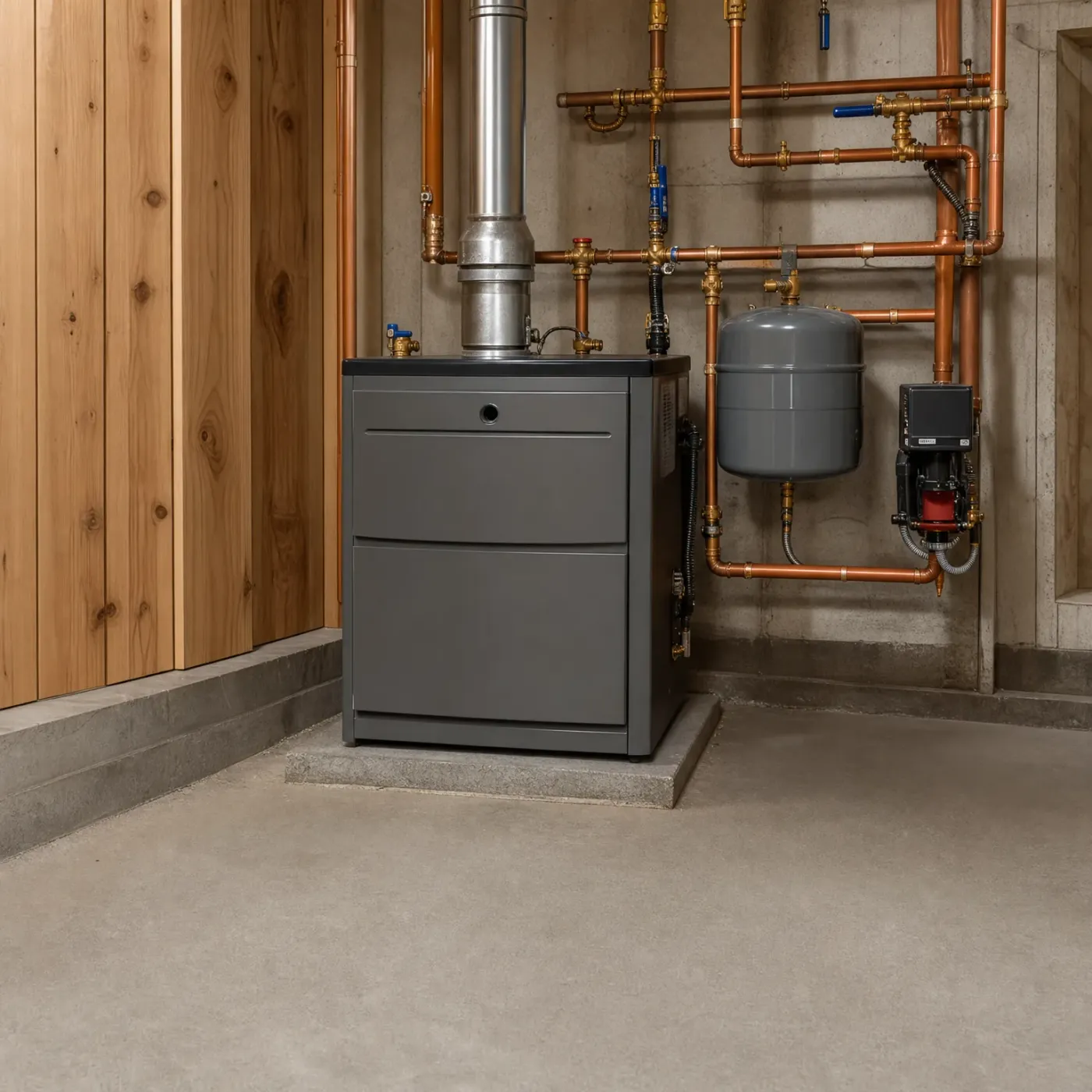
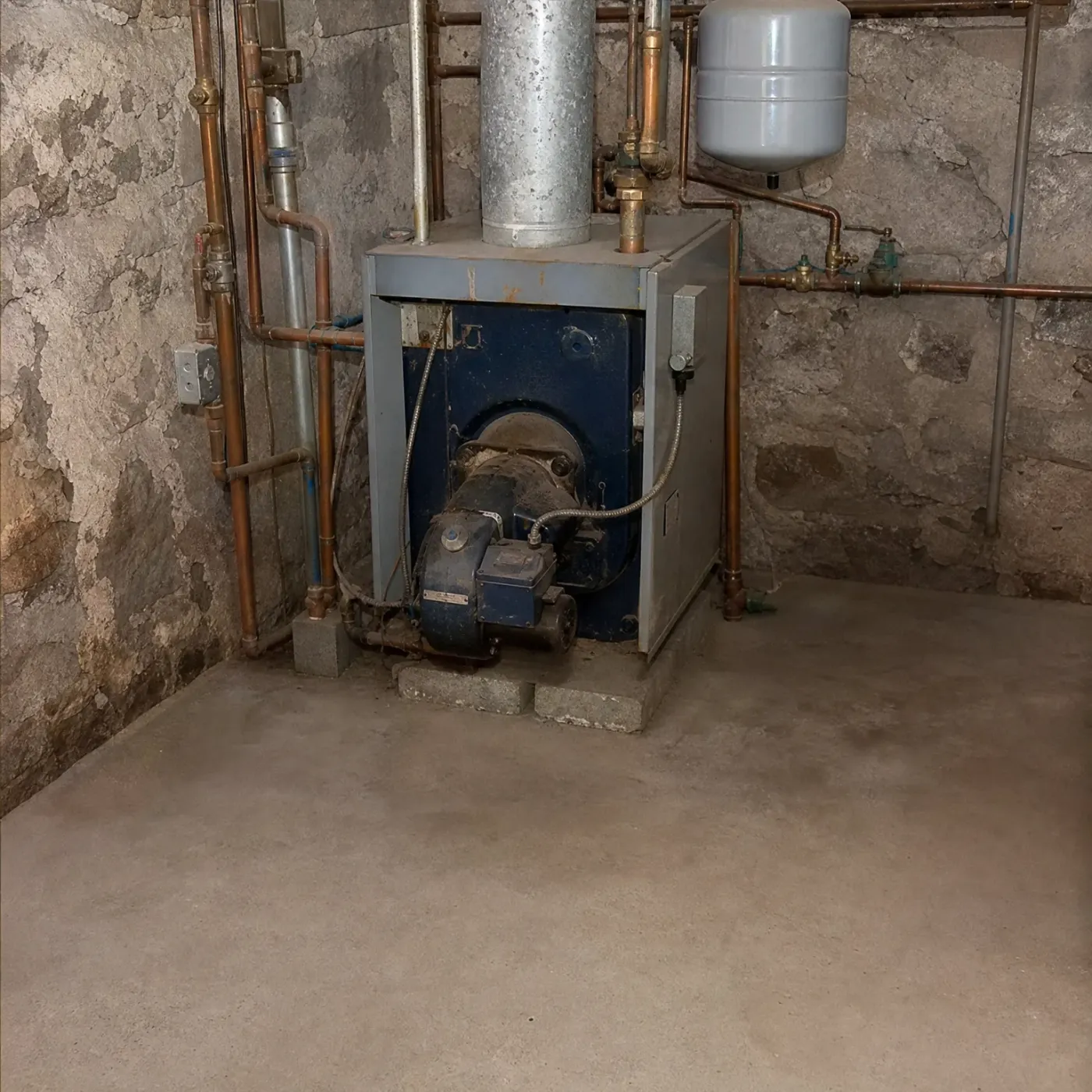
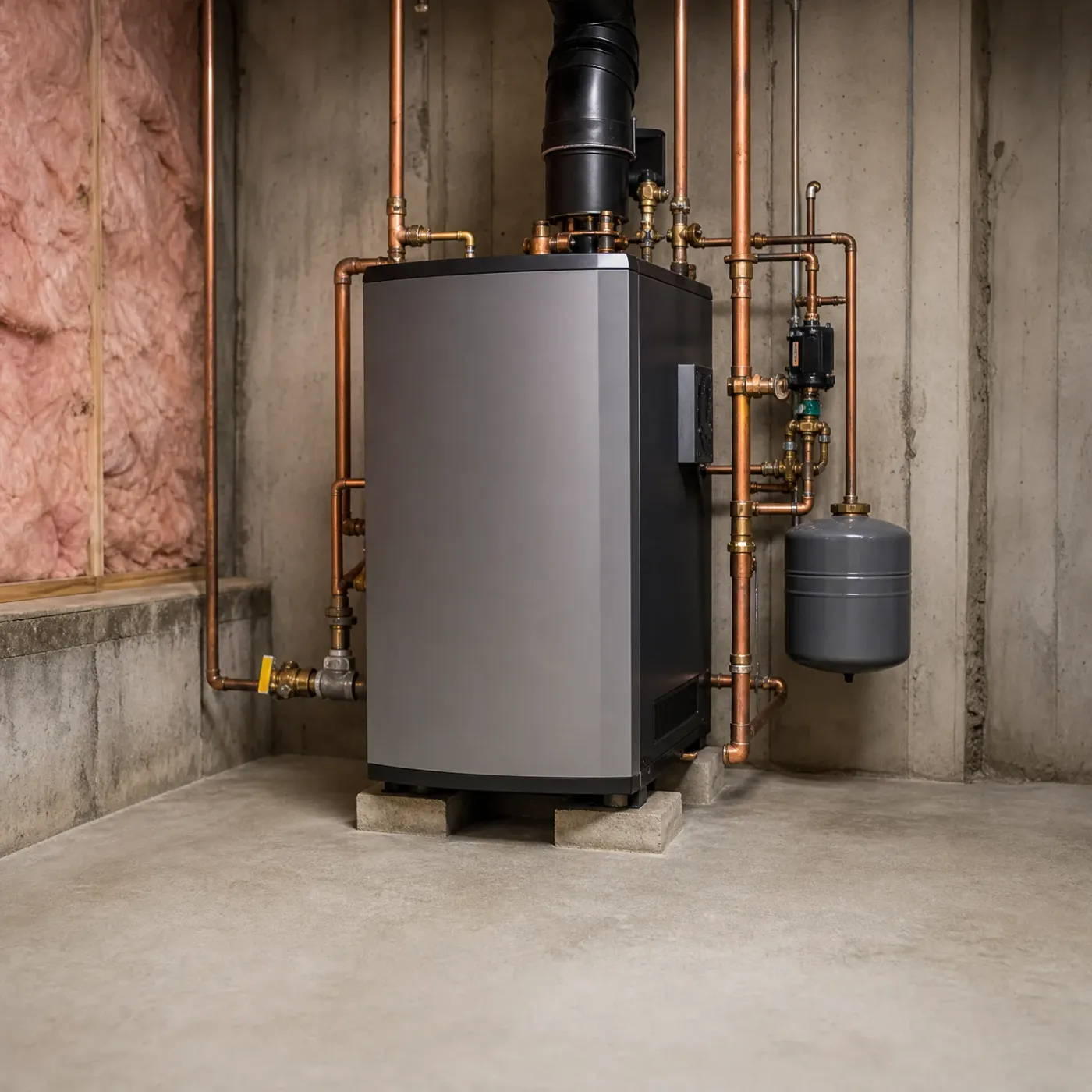
This is a boiler set where it should be. It fires, pushes hot water through the copper lines to the baseboards, and shuts off clean. The pressure gauge holds steady, the expansion tank does its job, and the exchanger inside stays free of scale because the water never runs hotter than it needs to.
Running too hot
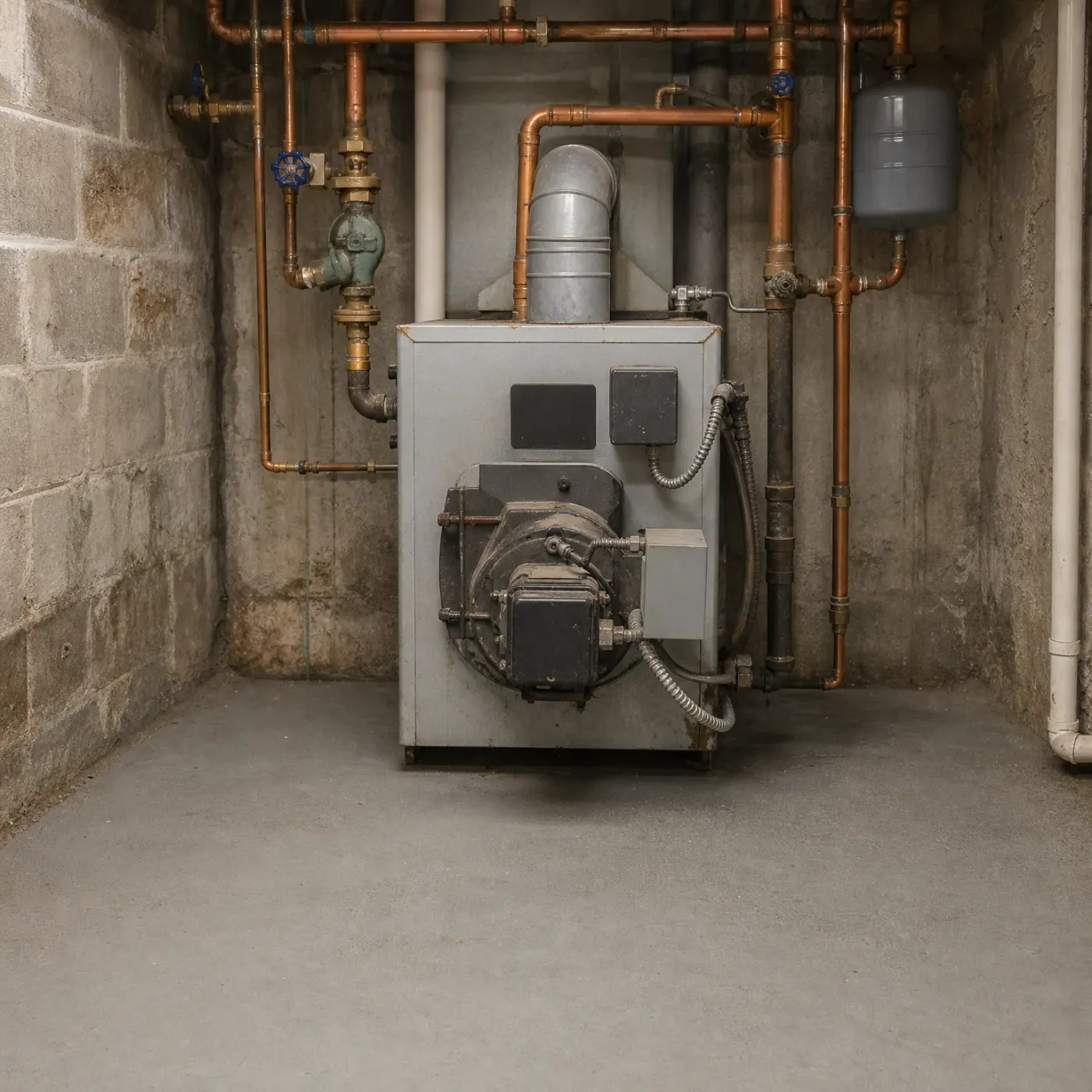
This is what that same work looks like under a setting pushed too high for too long. The burner cycles more than it should, the circulator pump strains, and scale builds on the exchanger where the water sits hottest. None of that shows up on the aquastat dial. It shows up on the gas bill and, eventually, as a repair call.
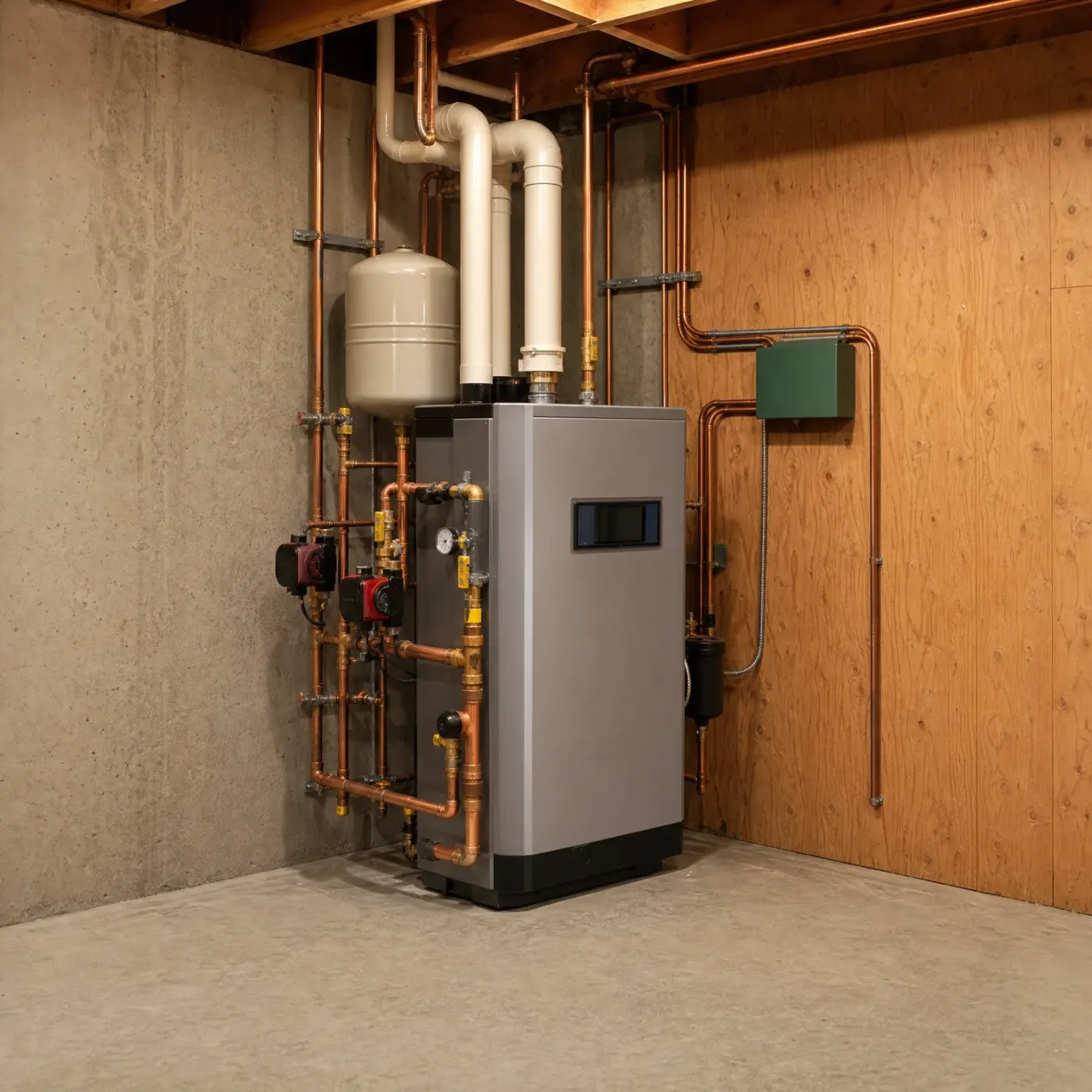
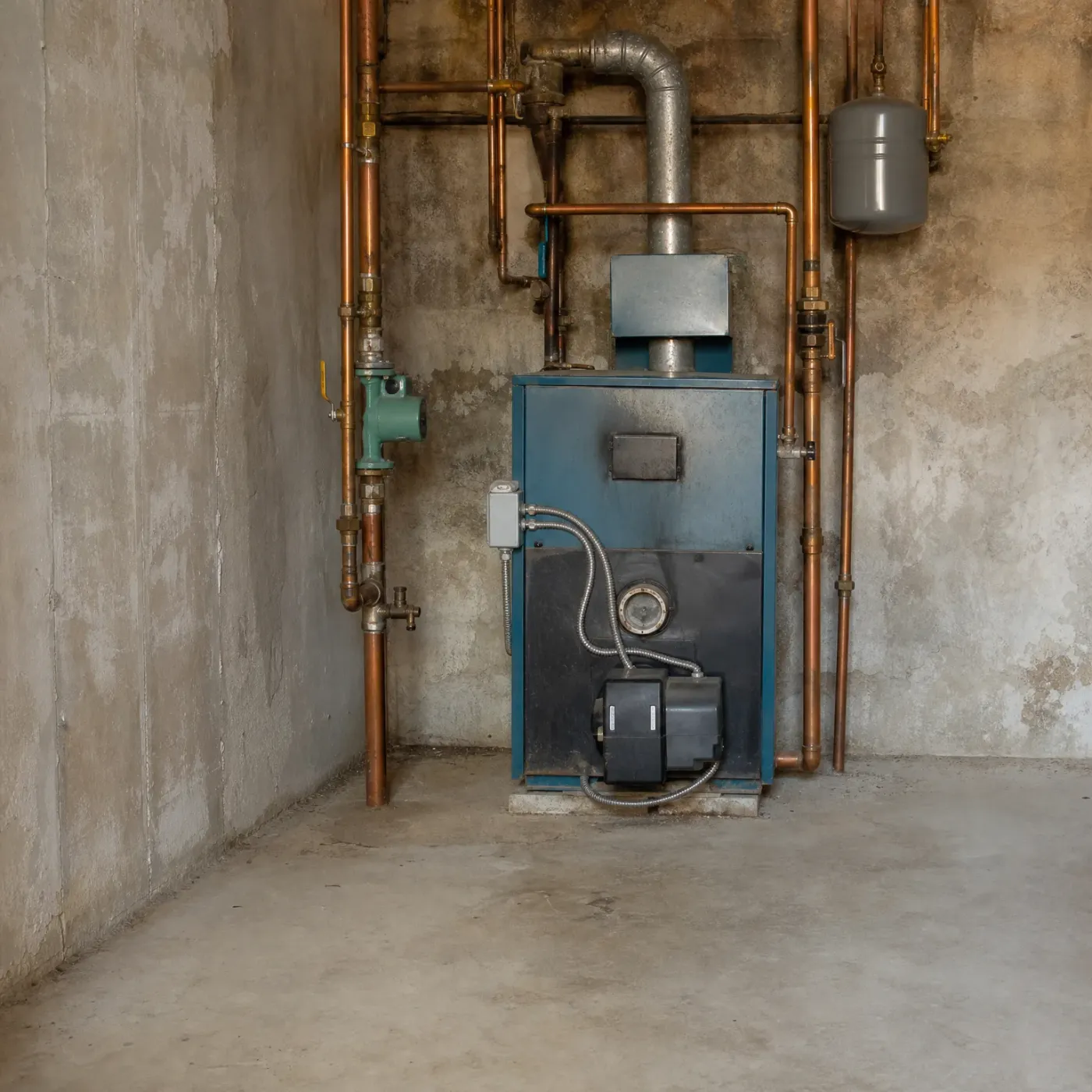
Before you get your boiler maintenanceAfter you get your boiler maintenance
20 degrees of swing
Outdoor reset controls track the outside temperature and adjust the aquastat setting on their own, so the boiler isn't holding 180 degrees on a mild March day.
Annual maintenance checks the aquastat calibration against what the dial actually reads, so the number you set is the water temperature you're really getting.
At 23°F overnight, your boiler is firing often through the night to keep up, not just on the coldest snaps. That's the load it's built for here, and it's also why a sticking zone valve or a weak circulator shows up as a cold room fastest on nights like these.
NOAA nClimDiv 1991-2020 county normals weighted by homes
170 or so, and a system that backs it up
Set the aquastat somewhere in that 165 to 180 range, let an outdoor reset control do its job if you have one, and the number takes care of itself. What decides whether that setting actually keeps you warm is everything downstream of it: the zone valves, the circulator, the air that may be sitting in a radiator on the third floor.
A boiler that gets looked at every year by someone who works on these systems all winter tends to hold its setting instead of drifting into the problems that show up as a cold room on a 23 degree night. That's the kind of thing a local contractor catches before it costs you anything, and when you're matched with one through this page, it's a single licensed contractor who knows this equipment, reaching out to you directly, not a list of names to sort through.
Boiler Maintenance
Get your boiler to the right pro
Step 1 of 3: Equipment
Send the form, and lining up the boiler tune-up stops being yours to chase.
Send the form and the boiler tune-up stops being something to remember.
Fill out one form instead of calling around for a boiler tune-up.
Skip calling around to set up a boiler tune-up.
Your request goes to one pro, not a list of companies.
The pro who reaches out is licensed in Rhode Island.